

At the Massimo Theater in Cagliari, the story of civil disobedience with "The Suitcase of Freedom"
Valentina Petrini's play on the right to choose one's own life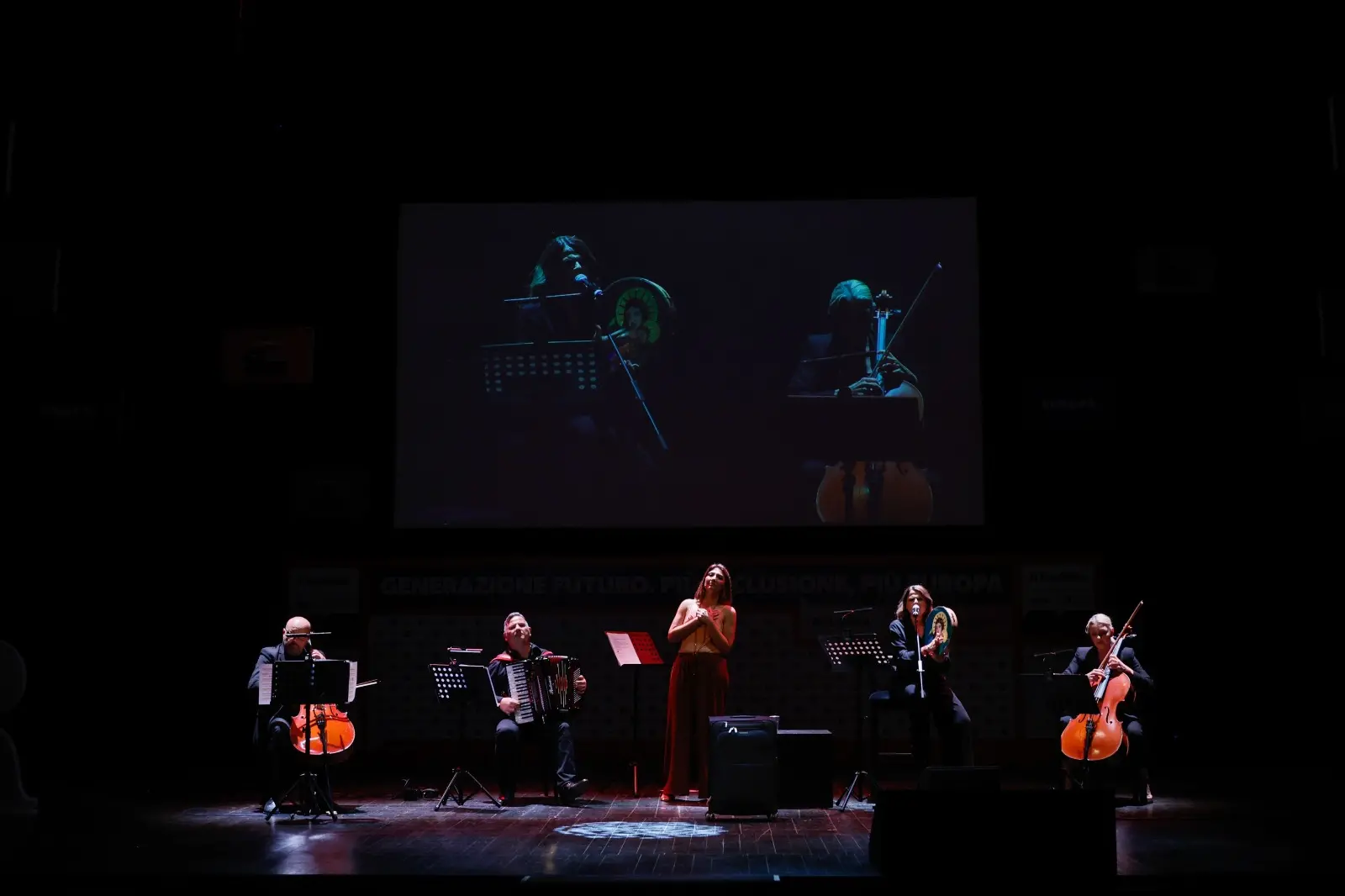
Per restare aggiornato entra nel nostro canale Whatsapp
The story of a personal battle, one that concerns us all: the right to decide about one's own body and life. " The Suitcase of Freedom - Story of a Civil Disobedience " is the play written and performed by Valentina Petrini , which will be performed tomorrow at the Teatro Massimo in Cagliari. The performance is at 9 pm in Room M2, part of Medinsard's winter program.
Based on Petrini's podcast "Disobbedisco," the play reconstructs the true story of Sibilla Barbieri , a screenwriter, producer, and mother who chose to transform her own death into a conscious act of courage and freedom . It all begins when Sibilla (already suffering from cancer) discovers she has only three months to live, and the institutions refuse to grant her the right to assisted suicide , which was only introduced in 2019 by the Constitutional Court . Sibilla does not give up, but takes legal action and asks Petrini to tell the world her story, that of civil disobedience cultivated in love for herself and others, in the vindication of a choice that cannot be denied.
The story of a society that denies the most fundamental self-determination , documented by Petrini through Sibilla's recordings and her participation in meetings with lawyers and doctors, as well as through the collection of documents on the battle between Sibilla and the Italian state. And Petrini, recounting the woman's preparations before her final journey to Switzerland, asks the question that gives the show its title: " What do you pack when you go to die ?"
Accompanied on stage by the music of Pasquale Filastò (compositions and cello), Alessio Podestà (accordion), and Fabia Salvucci (vocals), Petrini navigates the intersection of investigative journalism and civic engagement in a dialogue that becomes both memory and testimony, not to the memory of a single individual, but to the collective need for the affirmation of a right.
