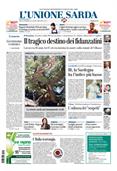


Magnifica Humanitas, Leo XIV's encyclical arrives: "Let us remain human."
The pontiff asks to "disarm AI" and "promote dignity". Then the reference to Tolkien and PlatoPer restare aggiornato entra nel nostro canale Whatsapp
"The magnificent humanity created by God today faces a decisive choice : to erect a new Tower of Babel or to build the city where God and humanity dwell together." This is the opening line of Magnifica Humanitas , Leo's encyclical, over 200 pages and 5 chapters, to say that justice and fraternity are possible. "In the age of artificial intelligence, in which human dignity risks being obscured by new forms of dehumanization, we have the urgent duty to remain profoundly human ." We must " disarm AI ," insists Leo XIV, to free it from the logic of military, economic, and cognitive competition.
In his encyclical Magnifica Humanitas, the Pope points the finger at the growth of the war industry , the nuclear arms race, and the emergence of new armed actors, including jihadist groups, who aim to perpetuate conflict as a source of power and profit. He also clearly warns against the use of AI-based weapons because " there is no algorithm that can make war morally acceptable ." Indeed, technology "does not free conflict from its intrinsic inhumanity; it can only make it more rapid and impersonal, lowering the threshold for resorting to violence and transforming defense into operational foresight, with victims reduced to data. Thus, it accustoms us to the idea that violence is inevitable and must simply be optimized."
Therefore, rigorous ethical constraints are needed, shared internationally, because "every technology that makes it easier to strike without seeing the other's face lowers the moral threshold of conflict." The Pope also emphasizes that "the promotion of the common good can never be separated from respect for the right of peoples to exist, to preserve their own identity, and to contribute their uniqueness to the family of nations." Therefore, " any attempt or plan to eliminate or subjugate a nation is gravely immoral and therefore unacceptable ," Leo XIV states bluntly in the encyclical Magnifica Humanitas.
But the encyclical also contains a phrase from “The Lord of the Rings” by John Ronald Reuel Tolkien . It is the passage in which the wizard Gandalf says: “It is not for us to master all the tides of the world; our task is to do what we can for the salvation of the years in which we live, uprooting evil from the fields we know , in order to leave healthy and clean land for those who come after to cultivate.” Among the quotations are also those of the great philosophers : certainly St. Augustine , but also St. Thomas and Plato . The most recent Popes are all mentioned , starting with Leo XIII and his “Rerum Novarum” which inspired Prevost for this first important magisterial document. But there are also Pius XI, Pius XII, John XXIII, Paul VI, John Paul II, Benedict XVI and Francis.
There are people who have changed the course of their countries' history ( Martin Luther King and Nelson Mandela ) and women who have changed the way of thinking, in their various fields of expertise: Saint Laura Montoya, Saint Teresa of Calcutta, Dorothy Day, Maria Curie, Maria Montessori, Elisabeth Elliot, Wangari Maathai, Benzir Bhutto . There is no shortage of martyrs: Maximilian Kolbe, Oscar Romero, Enrique Angelelli, Francois-Xavier Nguyen Van Thuan . And again, in Magnifica Humanitas, Pope Leo also cites Hannah Arendt, Romano Guardini, Viktor Frankl, Giorgio La Pira . Finally, there are references to the UN Charter of Nations , to the documents of the Second Vatican Council , to which the Pontiff is dedicating the catecheses of the Wednesday general audiences, and to the Compendium of the Social Doctrine of the Church.
(Unioneonline)