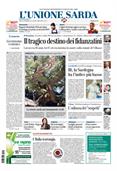


Brazil, Lula's victory is historic. Bolsonaro Jr. disputes the result: "I will ask for it to be annulled."
For the latest icon of the global left, a miraculous comeback that sends a message to Trump ahead of the midterm elections.Luiz Inacio Lula da Silva (EPA/ISAAC FONTANA)
Per restare aggiornato entra nel nostro canale Whatsapp
Lula triumphed in the Brazilian elections. "I thank the generosity of young Brazilians who fought to defend democracy," he said immediately after the election, in a celebration-filled São Paulo. After a historic comeback, the latest icon of the global left defeated Trump's candidate Flavio Bolsonaro in the runoff election, confirming his fourth term as president of Brazil. He ultimately won 51.74% of the vote, to Flavio's 48.2%, a clear margin, far exceeding the tight race predicted on the eve of the election.
Bolsonaro isn't having it. Jair's son has announced he will ask for the vote to be annulled, which he believes was distorted by the judge's decision to delay the closing of polls by two hours, a measure he also requested. "It's impossible to recognize the result of this vote under these conditions. I will ask for the vote to be annulled. For the first time in Brazilian history, a judge has extended the voting process, changing the rules underway," he commented excitedly. A potentially coup-like stance, however, currently appears isolated: the two Speakers of Parliament had already ratified the election results before he spoke. This triumph for Lula also sends a strong message to the world: just days before the midterm elections, his victory halts the hitherto unstoppable advance of the Trumpian right in Latin America.
But Lula, who admitted he had never owned a smartphone, also defeated Meta, accused by many of interfering in the election campaign by unsuccessfully attempting to curb the spread of his content on social media. This is also good news for the LGBT community, for defenders of the rights of minorities, indigenous people, and the most vulnerable who depend on public social policies. It's also good news for environmental policies protecting the Amazon, the lungs of the world. It's a historic victory, not least for the way it came about: never in the history of Brazilian politics had a candidate who had lost the first round managed to overturn the result in the second. And never before has a candidate won so many votes, over 64 million.
Behind the victory of this highlander of global progressivism is undoubtedly the boom in voter turnout: abstention rates dropped by two percentage points, a sign that even those who stayed home in the first round voted for him. But this time, he went to the polls, perhaps driven by fear of another Bolsonaro as president. And thanks to them, the most Catholic country in the world will not be led for the first time by an evangelical. In three weeks, thanks to a popular mobilization in the streets and online—the contribution of his online "army" was crucial—Lula managed to recover from a situation that seemed absolutely impossible : on the night of the first round, he was about two million votes behind his opponent, knowing he had victory in his pocket, partly because he was convinced he could collect the nine million votes of the excluded candidates, all center-right. But this time too, the elderly leader (he will turn 81 in a few days), as he did four years ago with Jair, defeated another Bolsonaro.
Now he will have to govern a country with a right-wing parliament. He already addressed this point pragmatically in his first speech after his victory: "Many say Lula will have difficulty governing, but this right-wing congress was elected by the people, and I will work with them to pass things," he cut short. Meanwhile, the celebrations have already begun: millions of Brazilians took to the streets overnight for the working-class president, who lost a finger on his hand when he was 17, crushed by a press. They invaded Copacabana like São Paulo's Avenida Paulista with a river of red shirts, as if Brazil had won its sixth World Cup.
(Unioneonline)