

Women's Bodies as Battlefields, starting August 28th at the MuA in Sinnai
The winning project for the World Press Photo 2025 has arrived.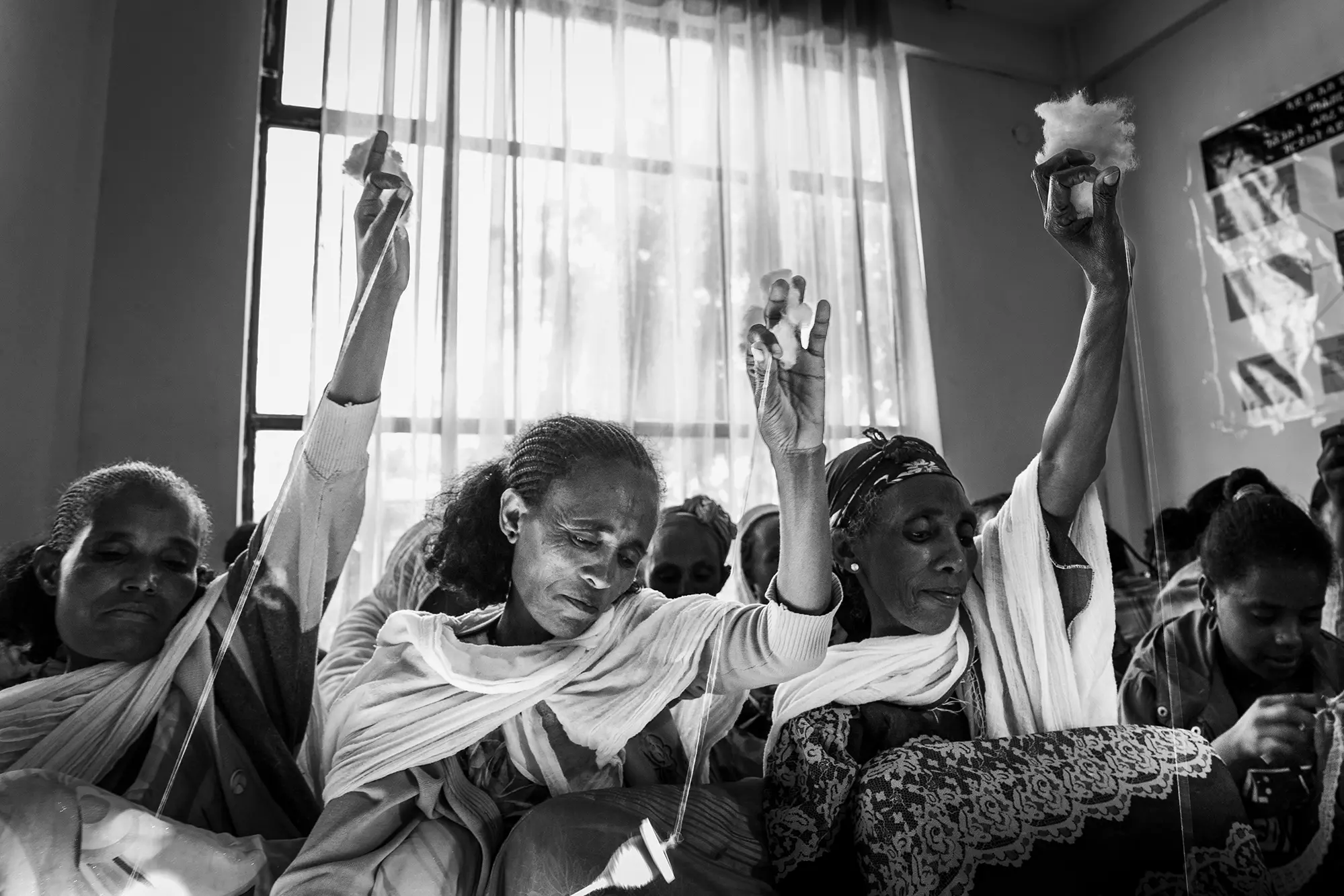
Per restare aggiornato entra nel nostro canale Whatsapp
What remains of a war in the bodies and lives of those who experienced it? And how can photography recount violence without once again transforming people into objects exposed to the gaze?
These are some of the questions posed by Women's Bodies as Battlefields , the long-term project by Italian photojournalist Cinzia Canneri, which will be hosted at the MuA – Sinnai Museum and Archive from August 28th to October 4th. The work, the regional winner for Africa at the World Press Photo 2025 in the Long-Term Projects category, recounts the experiences of Eritrean and Tigrayan women forced to move between Eritrea, Ethiopia, and Sudan, in territories marked by political repression, war, and forced migration.
The project began in 2017, when Canneri began following the stories of women fleeing Eritrea and heading to Ethiopia. Many were leaving a country where national service can be extended indefinitely, crossing the border, exposing themselves to detention and various forms of violence.
With the outbreak of the Tigray war in November 2020, the research expanded to include Tigrayan women. The photographer thus brought together within a single narrative the stories of women belonging to different groups, yet united by the experience of rights violations, displacement, and sexual violence used as a tool of repression and war.
The project's title is clear: women's bodies become battlefields. It's not just a metaphor; it's the female body that military and political power exerts its control, affecting the individual and, through her, the entire community. In the stories collected by Canneri, the body retains the visible and invisible consequences of conflict, but it isn't represented exclusively as the site of the wound.
This is one of the most important aspects of the project. The women photographed are not reduced to the role of victims, nor are they mere images of a distant tragedy. They have a name, a story, family relationships, desires, and plans. The photography documents what they have endured, but also seeks what continues to exist beyond the violence: care, solidarity, the will to rebuild one's life, and, when necessary, the capacity to resist.
Canneri also questions the overly simplistic use of the word "resilience." Not all wounds can be overcome, and pain doesn't necessarily have to be transformed into a positive story. Strength can coexist with fragility, fear, anger, and grief. Portraying these women, then, means conveying the complexity of their experiences, without asking them to always appear strong and without using suffering as an emotional shortcut.
The project's long duration allowed the photographer to build a relationship of listening and trust with the people she encountered. Unlike emergency images, which often focus on the most dramatic moment, Women's Bodies as Battlefields also observes what happens before and after. The war continues in its consequences for health, separation from families, the difficulties of motherhood, travel, and the arduous search for a new daily life.
The photographs, therefore, are born from a relationship. They don't simply record an event, but accompany people to the places where they try to rebuild their lives. The World Press Photo jury recognized the depth of this commitment, emphasizing the trust established with the women photographed and the ability to alternate the burden of violence with moments of intimacy, beauty, and tenderness.
There's another issue running through the project. Canneri is an Italian photographer who works in territories deeply marked by Italy's colonial history. The author doesn't hide the vantage point from which she observes, but questions it. Photography is not a neutral act: it means choosing what to show, how to narrate it, and which words to associate with the images.
To prevent the Western gaze from reproducing the very gaps it seeks to expose, the work was developed through engagement with local communities and the Eritrean and Tigrinya diasporas. From this experience, Cross Looks was born in 2024, a collective of Italian, Eritrean, Tigrinya, and Sudanese women committed to building a shared narrative on inequalities of gender, class, and cultural belonging.
Canneri's background also helps explain the nature of the project. With a degree in psychology, she worked for about twenty years in the social sector and mental health services, focusing on inclusion and community building. Her subsequent transition to professional photography didn't represent a break from her career, but rather the continuation, through images, of her research on people, relationships, and human rights.
Bringing Women's Bodies as Battlefields to the MuA therefore means presenting an internationally recognized photographic project, but also opening a space for discussion on the value and limits of testimony. Making violence visible is necessary, but not sufficient. We must ask ourselves how it is narrated, what kind of relationship is built with the people photographed, and what responsibility is entrusted to the observer.
The exhibition will open on Friday, August 28th, with a discussion with Cinzia Canneri about the project's origins, her field experience, and the ethical responsibilities of photojournalism. On Saturday, August 29th, the photographer will also lead the workshop "Who I Am, Who You Are: Portrait, Self-Portrait, and Relationship as Forms of Healing ."
The images exhibited at the MuA don't ask us to passively contemplate pain. They ask us to recognize the people who continue to exist beyond what has been done to their bodies. It is in the transition from wound to presence, from image to relationship, and from vision to responsibility that Cinzia Canneri's project finds its deepest strength.