War in Iran: Sardinian businesses raise alarm: "€150 million in annual exports at risk."
Since 2020, the eight countries bordering the Gulf have represented the island's third largest foreign market. Among the most exposed sectors are manufacturing, but also the chemical and machinery industries.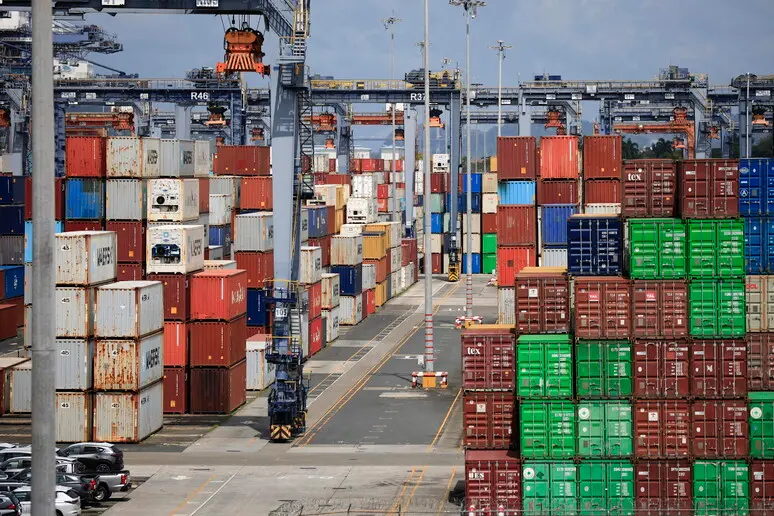
(Ansa photo)
Per restare aggiornato entra nel nostro canale Whatsapp
Not just an energy crisis and skyrocketing fuel prices: among the consequences of the war in Iran are fears of a slowdown in exports to the Persian Gulf countries, which could severely impact Sardinian companies.
This is what the new report from the Confindustria Sardegna Research Center, entitled "Sardinia's Exports to the Persian Gulf Countries," highlights.
"The potential closure of the Strait of Hormuz is being interpreted almost exclusively in terms of energy, and understandably so, but for Sardinia, there's another element that deserves equal attention: exports," says Andrea Porcu, director of the Confindustria Sardegna Research Center. "By examining the risks deriving from the war in Iran, our research has revealed that the island is much more exposed than Italy to trade repercussions in the Gulf region. We're not just talking about energy supplies and costs, but also about outlet markets, which are absolutely crucial for some sectors of the Sardinian economy. This is an aspect that hasn't been considered until now, but which could have significant impacts on production, revenue, and growth prospects."
According to the study, while the Sardinian economy's exposure to imports appears limited, even from an energy perspective, its exposure to exports is surprisingly much more significant. From 2020 to date, the eight countries bordering the Gulf—and whose trade routes therefore pass through the Strait of Hormuz—have collectively represented Sardinia's third largest foreign market, after the United States and Spain. The cumulative value of Sardinian exports to the region amounted to €901 million, €755 million of which were non-oil products : a share equivalent to 10% of the region's non-oil exports and almost 20% of those outside Europe. This exposure is significantly higher than the Italian average, which allocates 3% of total non-oil exports to the same region and less than 10% of those outside Europe.
Among individual markets, Qatar purchased goods from Sardinia worth over €300 million between 2020 and 2025 , with a particularly significant role for manufactured goods and a continued presence in the chemical, machinery, and stone sectors . Saudi Arabia , the region's second-largest market, with over €200 million in the same period, has shown marked growth, initially driven primarily by chemical products and, more recently, also by metal products and machinery. The United Arab Emirates is also very significant, with a cumulative €83 million since 2020 and over €24 million in 2025 alone, thanks primarily to growth in the chemical, machinery, agri-food, and marine sectors.
In 2025, the region's main partners were Saudi Arabia and Bahrain, both among the top ten importers from Sardinia, with €40 million and €38 million, respectively , followed by the United Arab Emirates with over €24 million. Exports to Qatar, however, remain significant, reaching nearly €10 million.
The report also highlights how some sectors of the regional economy are particularly highly exposed to Gulf markets. Between 2020 and 2025, manufactured goods sent nearly a quarter of their total exports to the region , worth close to €400 million. Chemicals also show significant dependence , with over €250 million exported in the same period, 20% of the sector's total and a third of non-European exports. Machinery also has a significant impact, with €46 million, and stone products.
(Unioneonline)