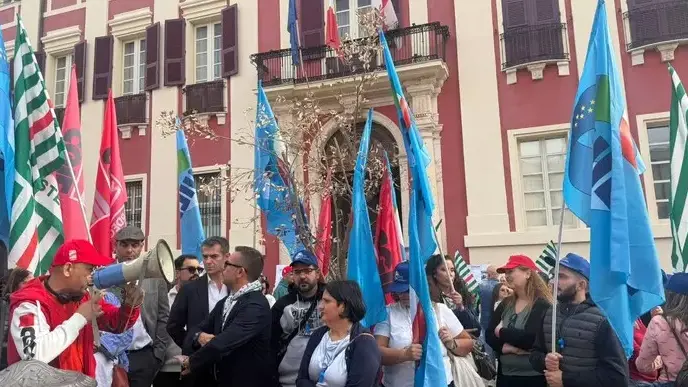


The debate on the need to make the anti-covid 19 vaccination compulsory, which indeed seemed to be dormant by now, comes back into vogue after the so-called Austrian "squeeze". And with it, the multiple expressions of social "rebellion" against the new and (in) existing "health regime" also return, more fiercely than ever.
That the "protest" to the bitter end has become a real political "resource" in the hands of small groups of "social disintegrated", alleged bearers of unprecedented "absolute rights" of lower rank, appears undeniable in the contingent socio-juridical context. The subtle "blackmail", as a tactical-strategic tool of an unspecified "bargaining power" of exchange within the political process, seems to be expressed entirely in the "violent" potential of the protest, in the "dissent" carried to the extreme consequences by " de-qualified minorities "without representation and therefore unable to exert the necessary ideological and political pressure in different forms. Consequently, the choice between tolerance and repression, or the right reconciliation between the two systemic "responses" to dissent, passes through any prior evaluation of the very high cost of repression: in the tolerance of dissent, in fact, the Government would so far seem to have glimpsed the possibility of containing in the political context of reference, and in any case in a marginal position, those "groups" of individuals who have escaped from the social "wholes" of the various communities, that is, more simply, "outside" the range of action of the system; in the tolerance of dissent, moreover, and paradoxically in wanting to consider everything, the alleged and more intense form of social stability seems to have been rooted (and erring in this).
But the point is another, and politics does not seem to have the courage to recognize it and then face it: can "dissent" continue to survive as an instrument of political persuasion beyond and beyond any form of legality? Evidently not. But preventing its expression, wanting to impose a "muzzle" (because in this way the decision would be maliciously perceived) to any form of (the) legitimate "civil disobedience", would lead to the crisis of the system, and its collapse, despite Mario Draghi and indeed, precisely due to the political work of Mario Draghi who, like Mario Monti (nominated sunt homina), seems to have appeared to most, and probably is, only as a cold regulator of accounts in the service of Brussels.