

The "Trame al vento" exhibition in Olbia features fifty traditional Sardinian costumes.
A six-stage journey through fabrics, colors, embroidery, gestures, and symbols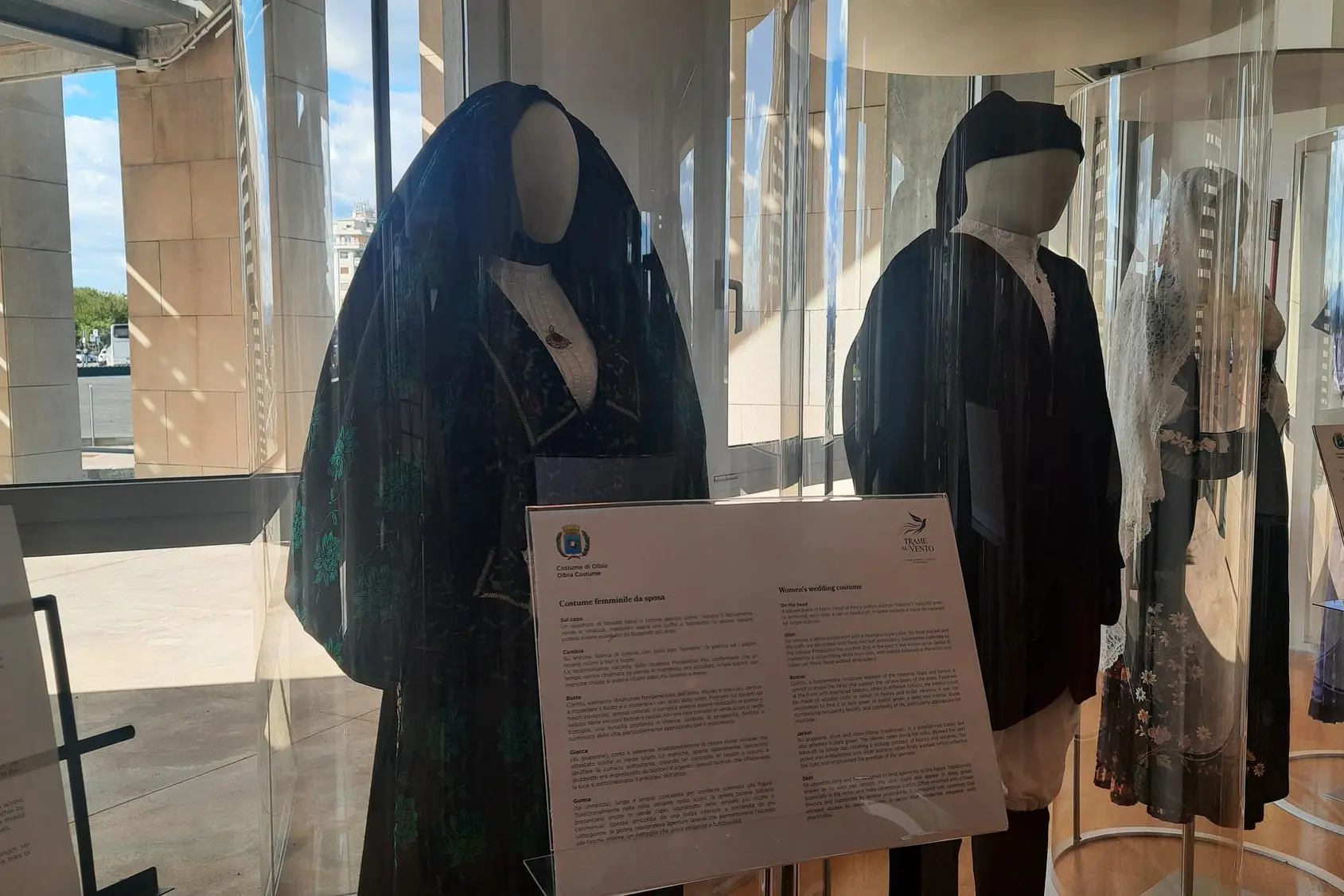
Per restare aggiornato entra nel nostro canale Whatsapp
Threads that intertwine and become fabrics. Fabrics that are sewn and become clothes. Clothes that preserve a centuries-old history and perpetuate the identity of the Sardinian people. "Trame al vento - A journey through matter, life, celebration, ritual, and memory" is born, an exhibition of traditional costumes that opened yesterday at the Archaeological Museum of Olbia and is on display until December 31st.
A six-stage journey through fabrics, colors, embroidery, gestures, and symbols, displaying fifty traditional costumes spanning regions, people, and generations, telling stories of everyday life and serving as bastions of collective memory. Organized by the Accademia Sardegna nel cuore association, with the patronage of the Regional Department of Education and Cultural Heritage and the Municipality of Olbia, the exhibition of costumes (from a private collection) was presented by Giovanna Derosas, president of the association, founded to promote and enhance the island's cultural heritage, along with Deputy Mayor Sabrina Serra, economist and university professor Carlo Marcetti, and the director of the Ethnographic Institute of Sardinia, Marco Mulas. The event was accompanied by a musical performance by singer-songwriter Daniele Gala.
"The exhibition is an opportunity to keep tradition alive: behind every costume lies a community, and it is from there that our present and our future are born," said Serra. "The costume, understood as a thread that weaves together shared meanings, the exhibition is not just an exhibition but a cultural journey into Sardinian identity," explained Mulas. "Traditional Sardinian dress is the most complex recognized heritage of identity in the Mediterranean; it is a thing that speaks, that transmits a memory, and that bears witness to the identity of each community: it is a cultural resource that can become an economic asset to be promoted, not sold," concluded Marcetti.
In Sardinia there are 350 houses in 377 municipalities.