

The Nuraghe map expands with artificial intelligence and online reporting.
The new Nurnet association portal, which aims to promote cultural heritage through AI agents, is now online.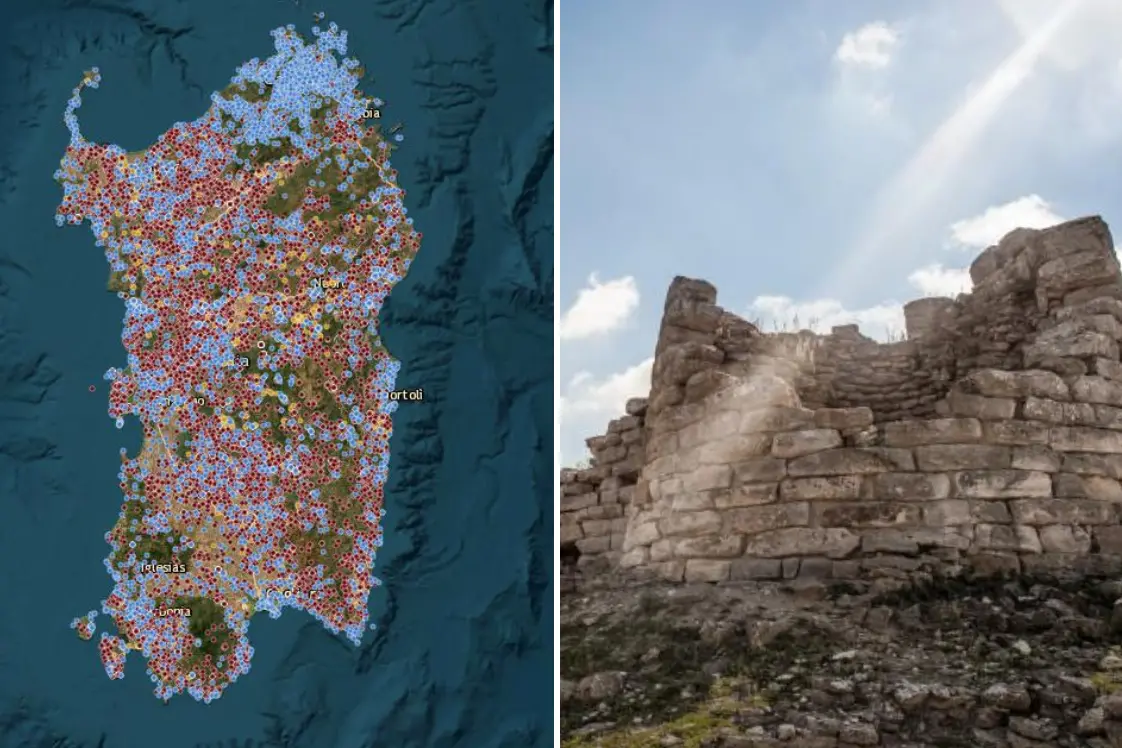
Per restare aggiornato entra nel nostro canale Whatsapp
This map of Sardinia gathers together thousands of pieces of information on the island's rich heritage in a single online site. It contains approximately 16,000 entries, including over 9,500 Nuragic sites (more than seven thousand nuraghes), over a thousand monuments including domus de janas, dolmens, and menhirs, nearly 3,600 churches and historic sites, and over 1,700 artifacts, with their museum locations indicated.
For each location, a page with news, photos, and local data. You can browse by name or municipality and overlay the map with historical maps and aerial photos from the 1940s to the present.
Nurnet , an association founded with the aim of publicizing and promoting Sardinian archaeology, has published its new geoportal online (available at geo.nurnet.net).
A map with the Nuragic sites has existed for years but the novelty of the new look lies in the artificial intelligence: «The geoportal is born in a new way. Alongside the people of Nurnet worked a small team of intelligence agents "NurAI, the technical coordinator, organized the data and built the map," writes Antonello Gregorini of the association. "NurnetAI provides the content for the Nurnet Catalog, Nuraxi works with Mark Altaweel of University College London, JaNur and Lila support Renzo Trenta and the president, while Lucio Pascarelli's Okami manages the infrastructure that runs the artificial intelligence and general computer science part."
"All data comes from sources," he continues, "every change is tested first in a test environment and goes live only with the go-ahead from a human. When an agent makes a mistake, another agent or a human notices it and corrects it. Machines do the repetitive, procedural, and tedious work, while decisions remain with people. We've made a vast collection of public sources available to the agents, primarily scientific articles and academic studies . This collection has helped us clean the data and anchor it in scientific research. Our agents already respond by citing these sources. But the entire team is also working on a new, even more robust version that strengthens this capability and subjects it to scientific verification, so that sources are presented in order of reliability, as a researcher would."
Citizens who can report errors and highlight unlisted sites are also invaluable .
