

The long BookLab season begins at the IED in Cagliari
The series of meetings with authors begins on Thursday to explore the world of narrative and design, from communication and visual culture to nature and the territory.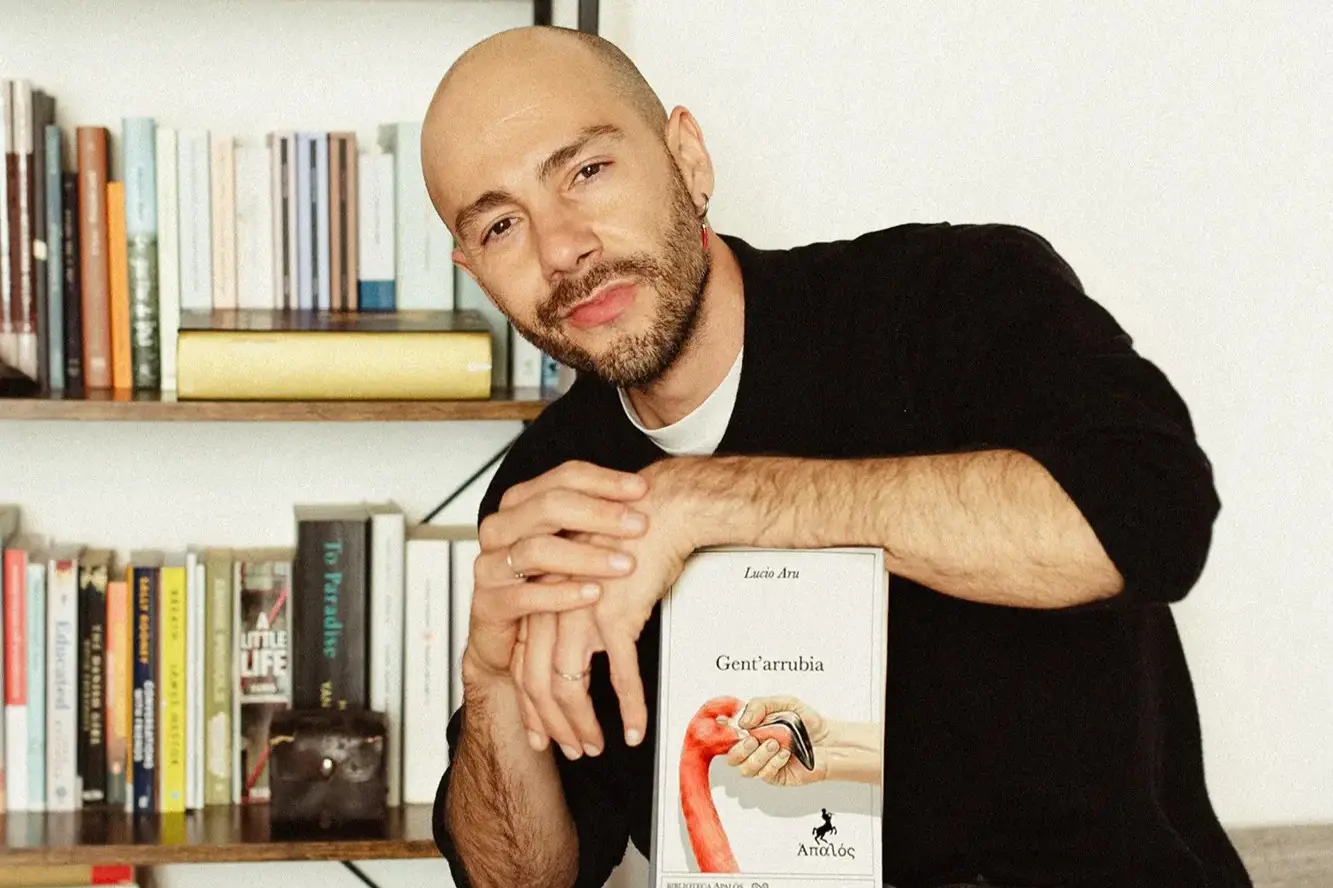
Lucio Aru
Per restare aggiornato entra nel nostro canale Whatsapp
From autumn to late spring, IED Cagliari opens its doors to the city. BookLab kicks off on Thursday, October 29th, a series of meetings with authors exploring the worlds of fiction and design, communication and visual culture, nature and the local area.
In the splendid spaces of Villa Satta on Viale Trento, between the garden and the classrooms, books aren't just presented: they're opened up, discussed, and become a starting point for new ideas. It's the way a design school approaches reading—learning by doing, creative thinking—bringing writers into dialogue with students, faculty, and the community.
Guests at the event include Diego Fontana, Massimo Lumini, Francesco Abate, Benedetta Gori, and Costanza Brogi.
But the first to kick things off will be Lucio Aru, who on Thursday, October 29th, starting at 6 pm, will be in conversation with Ciro Auriemma about his Gent'Arrubia, for an event in collaboration with the Le affinità elettive association and bookcorner curated by La Feltrinelli Cagliari (via Roma).
Gent'Arrubia, published by the independent Sicilian publisher Apalós, is the acclaimed debut novel by Lucio Aru, an author who comes from a long and fruitful career in photography and creative direction, particularly in the fashion industry. The novel tells the story of Pietro, a prison officer in the Asinara superprison, who lives in the silence and order of his uniform to keep the ghosts of a broken family at bay. The arrival of Nikolaj, a fragile and magnetic Russian prisoner, shatters all his certainties: initial distrust turns into an attraction neither can control. Between the strict rules of prison, the tension of a riot, and the island's winds, Pietro must choose whether to continue hiding or face what is.
"With BookLab," explains Diana Bertinetti, director of IED Cagliari, "we want Villa Satta to become a home open to the city, with books as an opportunity for discussion for our students, faculty, and the community. For a design school, reading already means designing: each author we host brings a perspective, a language, a territory, and our task is to transform these meetings into laboratories of ideas—this is what the very name of the event suggests. I thank all the guests and partners who have chosen to accompany us in this first year of BookLab."
BookLab continues in December with Diego Fontana, copywriter, teacher, and author, for a discussion on the most pressing and controversial current affairs, thanks to the book "Offline: The Power of Artisan Intelligence in the Age of Algorithms." Through surprising stories spanning communication, film, literature, and marketing strategies, the book explores the possibilities of existing outside of digital platforms, whether by ethical choice or pragmatism, ultimately arriving at an alternative concept of innovation: Artisan Intelligence.
Opening the new year will be Massimo Lumini, architect, professor, and independent researcher, an expert in eco-sustainable product design. In his WunderCAD-CAMmer, Lumini explores the world of technoscience, opening a dialogue between nature, technology, and the artificial creations that shape our era.
In February , Francesco Abate, the dean of Cagliari's writers, will take the stage to present his latest, highly successful novel: Gli indegni, a compelling and melancholic tale of a youth as an irregular immigrant in the 1980s.
In March, the spotlight will be on Hidden Botanics and its young author: Benedetta Gori, a researcher, influencer, and science communicator who has been working for years to raise awareness and curiosity about the complex relationships between plants and humans. Through a lens that blends ethnobotany, cuisine, and autobiography, Hidden Botanics explores the ecological and nutritional value of plants capable of adapting to poor soil, drought, and extreme climates.
In April, we'll be hosting another event with Costanza Brogi, an author and scholar of Japanese culture who has been studying horimono, the traditional Japanese tattoo, for over ten years. Her book, The Art of Japanese Tattooing - History and Culture of Wabori, is an engaging journey into the world of traditional Japanese tattoos, where the skin becomes a veritable canvas on which stories, identities, and symbols are painted.
(Unioneonline)