

Stefano Bollani and Valentina Cenni: "Jazz in this film is a metaphor for life."
The two will be in conversation this evening with Francesca Serafini at the Marina di Villasimius festival.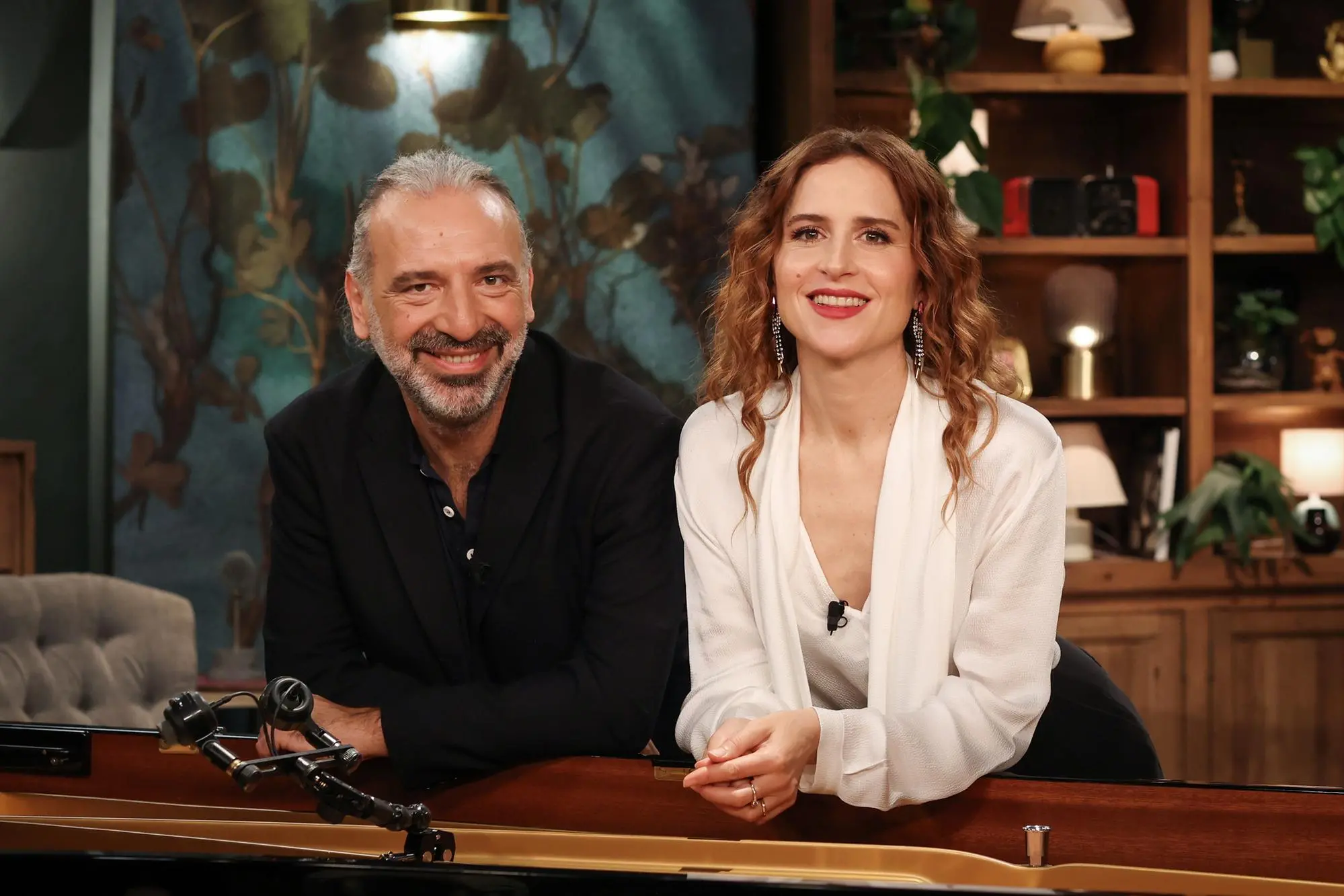
Per restare aggiornato entra nel nostro canale Whatsapp
At the halfway point, the Marina di Villasimius festival, now in its eighth edition, hosts this evening at 9:30 pm, with the media partnership of the L'Unione Sarda publishing group, Stefano Bollani and Valentina Cenni, in conversation with artistic director Francesca Serafini about "Tutta vita," Cenni's first feature film.
How did the idea for a documentary about jazz come about?
Cenni: "From my desire to tell the story of a jazz musician's way of experiencing music, which is very interesting because it's full of freedom, awareness, and wisdom. It's a courageous approach to things, so for me, jazz in this film became a metaphor: if we experienced events in life the way a jazz musician experiences music, everything would be better. This is the premise, and then it turned out to be a meeting between people who love each other deeply and who love music in such a way that it becomes the protagonist of their lives."
A transgenerational encounter: from 21 to 86 years old.
Cenni: «That was what interested me: bringing them together to show that in that way of experiencing music, age or origin doesn't matter... everyone is there in a very horizontal way, experiencing music and interacting with each other with great curiosity».
What did you discover by looking at yourselves through the lens of the documentary?
Bollani: "They're all good people. I mean, for me, they're great musicians, or extraordinary young talents, like Mascetta and Mancuso, whom I know a little less well; one of them is actually my daughter, so there's a different kind of intimacy, but overall, they're great musicians, great friends, people I feel good with, but I'd never realized they're truly wonderful people. Beautiful souls, happy with what they're doing."
Cenni: «I was struck by their ease and the ease with which they created something new together».
In short, we should all try to be a little more jazzy.
Bollani: "I'll sign this for you. In my limited experience, an artist who is happy with their success, who is content with the role they are playing in society and the artistic community, is necessarily at peace. Unhappy people put on airs: they might be incredibly famous, but there's something they feel they haven't achieved. Peaceful and happy people are those who are content with what they've achieved or what they're doing."
It is no small lesson to seek happiness in what we do.
"This is why we must be indulgent when we meet them: they are people who have a problem with themselves, not just with the rest of the world."
Bollani, you'll be playing in Tharros on July 29th. What's the status of the schedule?
"Let's see, I should do it, but I'm not sure I'll follow it. Then, as always, at the end of the concert, I'll ask the audience what they wanted to hear and I'll try to play a medley of the ten songs they'll be shouting at me. It's a game, but that's also what happens the rest of the evening, because I suggest things, but I'm always listening because I'm playing for them, who, among other things, have already shown enormous trust by even paying for a ticket."
Cenni, how do you see this way of being on stage?
I love it, because being able to improvise on stage in front of so many people requires wisdom. There must be no judgment because you can't judge yourself and you can't feel judged, otherwise you'll freeze. You really learn to listen, you practice authentic listening to yourself because you have to improvise, so you're in the present and listening. They're moving on slippery ground, yet they skate over it instead of being afraid of falling.
Bollani: "Valentina's description of jazz and what she's learned is exactly how you might describe her direction of the documentary, because she's constantly listening, doesn't judge, and isn't afraid of being judged. Valentina threw herself into it with a jazz spirit: she had a lot of things prepared, a sort of very tight script, and then she followed us and listened."
Via dei Matti No. 0 will return in 2027. Did you expect the public's reaction to the announcement that it would be suspended?
Cenni: "It was an extraordinary outpouring of support. We weren't expecting so much affection, and it stunned us all, I imagine even at RAI. We're overjoyed by this expression of gratitude and love. We felt part of a community that wants to experience beauty, to listen to music that feels good and uplifts you. That nourishes you."
There's an audience for beautiful, composed TV made with a smile.
Bollani: "I'd add that another myth to dispel is that music on TV doesn't work if it's talked about, or that classical music and jazz don't work. Baricco, Bosso, and Augias have proven that their programs have always worked, even in terms of audience ratings."
Bollani, I know you have a passion for Sardinia.
I first played with Antonello Salis in '98, and I've known Paolo Fresu since I was 15... on the album "I Visionari," I wrote a song called "Sardità," where we all sang in chorus in a completely invented Sardinian dialect, a kind of Dario Fo-style gibberish where you could only understand a few words, including "Paolo Fresu." Paolo was very self-deprecating and came to guest on this song. And then I grew up with Benito Urgu's 45s; as a child, I knew the famous "Sexy Fonni" by heart; he and Sergio Atzeni, a writer I love dearly, could only be products of your land.
You don't mean to tell me you also know the "Gambale twist"...
«Curre curre a ti cambiare, pro su twist ballare!»