

Sergio Bernal arrives in Sant'Antioco: "Dance is my way of speaking to the world."
The "King of Flamenco" will perform on July 18th at the Arena Fenicia with the triptych "Rango, Bolero, Suite Flamenca"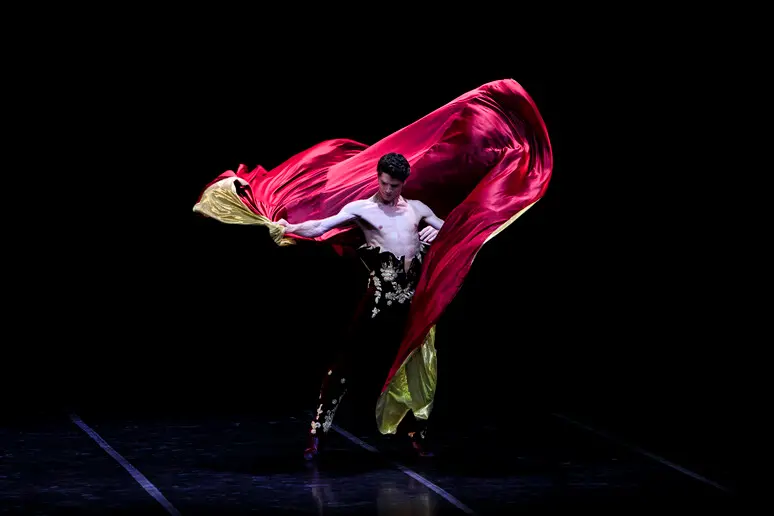
Per restare aggiornato entra nel nostro canale Whatsapp
Known as the “King of Flamenco,” Sergio Bernal will perform on July 18th at 9:30 pm on the stage of the Arena Fenicia in Sant'Antioco, as part of FestArtes - Sulky Jazz.
The Madrid-born dancer and choreographer, former principal dancer of the Spanish National Ballet, presents the triptych “Rango, Bolero, Suite Flamenca,” accompanied by live guitar, percussion, and singing.
Sergio Bernal, you come from a classical background, right?
"I actually started in the world of flamenco when I was just four years old. I have a twin brother, and my mom was very tired and needed some time alone, so she decided to take us to dance at a flamenco school very close to our house. After a week, my brother said, 'Mom, that's enough, dance isn't for me... I want to play soccer.' But I stayed, because I immediately understood that it was my way of communicating with the world, my way of speaking. The first time I stepped on stage, I knew that was my vital space of freedom and communication."
It was after this experience that he trained at the Royal Conservatory of Madrid.
"Exactly. There I really began to learn classical dance, ballet, a little contemporary dance... especially I began to delve deeper into Spanish dance and flamenco. It was already a professional career, where every day I had to take lessons in classical ballet and all the styles that make up Spanish dance."
But he never stopped loving his origins…
Because flamenco makes you search for the emotions inside you, it stirs all the emotions you've experienced in life since you were a child, in all the experiences you've had, the beautiful ones and the hardest ones, and it stirs that emotion inside you. When you dance flamenco, you don't just have to explode with life, you don't just have to tap your feet. No, flamenco dance makes you put all the emotions you have inside on stage, and in some ways it makes you a more honest, more emotional person. It forces you to come to terms with the viscerality inside you.
There is room for improvisation, or even flamenco requires the same discipline that ballet, for example, requires.
Both. Flamenco requires discipline because it's a professional style, so you have to work a lot on your feet, on the sound, on the rhythm, on the style, on the technique. But there's still room for improvisation, because within improvisation you also find things that arise naturally within you.
Flamenco is a style that has undergone many influences. In an era marked by identity divisions and rhetoric about purity, could it be an invitation to cross-fertilization?
Of course, because you can influence flamenco, you can incorporate different styles. But there's one very important thing: flamenco must always be born from the viscerality of emotions. If you don't do that, if you don't bring the honesty and purity of your emotions, you're doing a ballet, a dance, but not flamenco. For example: the solea is very sad, so before dancing it you have to know yourself very well to bring all that sadness, all those emotions you've experienced in life, onto the stage and into the choreography.
The flamenco movement, as she understands it, is always narrative.
«Flamenco always says something about those who dance it».
The first time in Sant'Antioco but not the first in Sardinia.
"No, I've been there at least five or six times. I was really struck by its natural beauty, the beauty of the sea, and the beauty of the people. I think it's a very rich people because it has so many influences; it reminds me of the Balearic Islands, which for me are one of the most beautiful places in the world."
It's a bit like flamenco: very contaminated.
“Exactly: maybe that’s why I love her.”