

Sedilo, Chantal Pinzi's Women on Horseback Arrive: The World Press Photo winner exhibits at the Circolo S'Ena
Appointment from June 30th to July 19th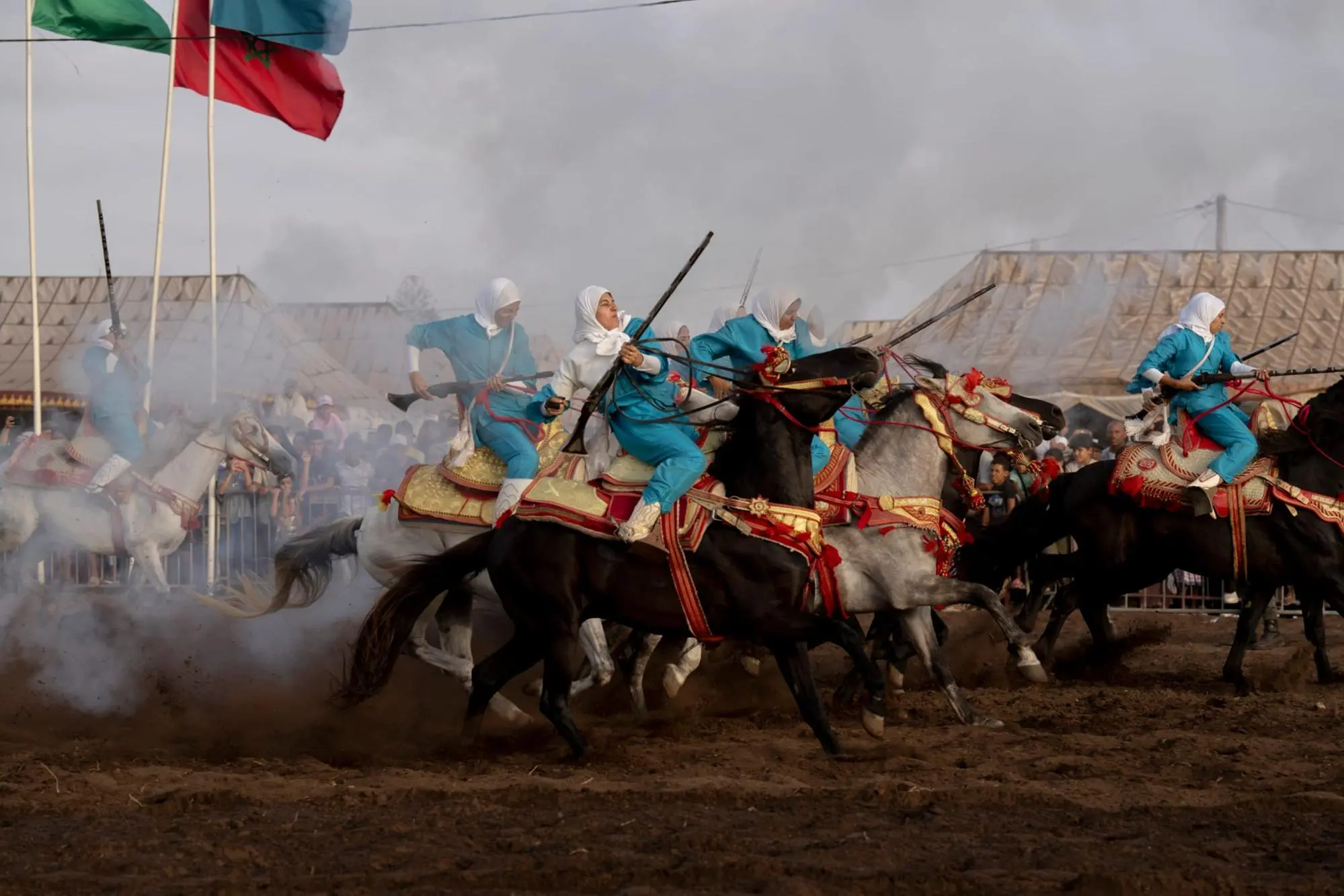
Per restare aggiornato entra nel nostro canale Whatsapp
Chantal Pinzi's Moroccan women on horseback, wrapped in gunpowder, arrive in Sardinia amid preparations for the Àrdia di San Costantino. From June 30th to July 19th, the Circolo S'Ena in Sedilo , at its headquarters on Via Eleonora, will host the reportage with which the Como-born photographer won the World Press Photo Contest 2026 , the most prestigious award in international photography, which she received at the end of March. The exhibition is organized by the Paesaggio Gramsci association in collaboration with the Circolo S'Ena, the Pro-loco of Sedilo, the Suq Association, the Pio Alferano Foundation, and the Sinisterrae cultural association of Cabras, with the support of the Sardinia Region's Department of Culture. The curator is Mauro Raponi, the exhibition design is by architect Rossella Sanna, and the graphic design by Francesco Sogos.
"We invited Chantal Pinzi to exhibit in Sedilo as soon as we saw some of her photos published in the press," says Umberto Cocco, president of Paesaggio Gramsci and former mayor of Sedilo. "She immediately agreed. After the Palazzo delle Esposizioni presented some of them in Rome in recent weeks, it is Sardinia that is offering them. They tell, with a highly original and engaging perspective, the drive of Moroccan Amazons to participate in the traditional horse race that until a few years ago excluded them. Women have been racing in the Ardia for several decades, although not in the leading positions, and in small numbers. But many images of the Tbourida bring to mind the Sedilo festival. In the great theater of the Mediterranean, there are dozens and dozens of traditional equestrian games and rites, and although with different origins and backgrounds, they belong to the same culture, the same civilization—I would say of shepherds—to the same dust, the same light. But Chantal Pinzi's perspective on women's leadership is striking: I wouldn't say it's a transformation of tradition, but rather what she calls "women's right to occupy a place in Moroccan cultural heritage." Women "enact" tradition, they don't betray it.
The title of the reportage, "Farīsāt: Gunpowder's Daughters," aptly sums up the tension that runs through it. The Tbourida is an equestrian show that evokes the horseback fighting techniques of the Arab tradition, historically and strictly male. Until recently, this was explicitly the norm: the family code in force reserved the role of knights for men. Since 2024, women have been able to begin practicing it, grouping together in autonomous troupes called sorbas . Pinzi followed and photographed them, restoring to them a prominence that history had long denied.
This isn't the photographer's first reportage on women on the margins of power systems . In Colombia, she documented the resilience of Wayuu women against mining exploitation, rural women fighters in India, and young women skateboarders in Morocco, a context that has historically excluded them. "There will be an opportunity to discuss this, including with Chantal Pinzi," Cocco concludes, "who will be in Sedilo for four days. We need to reflect on this for everyone, and let the images inspire wonder and reflection."
