Sassari: A stroke victim saved by his neighbors' prompt intervention: "Here's the FAST rule everyone should know."
Alessandra Sanna, of the AOU Stroke Unit: "Time is of the essence and can make the difference between life and death."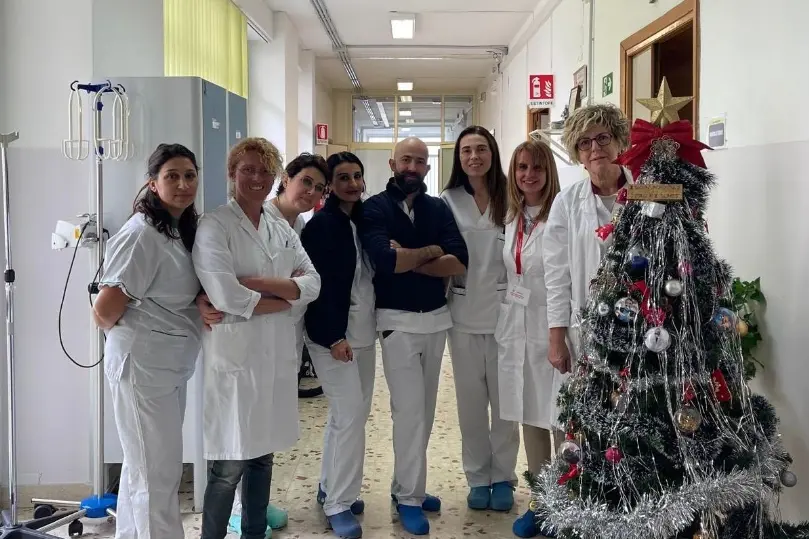
Per restare aggiornato entra nel nostro canale Whatsapp
In Sassari, a man suffering a stroke was saved thanks to the prompt intervention of his neighbors, who understood the gravity of the situation and alerted emergency services.
"During a stroke, every minute can save or change a life. Yet only a fraction of patients reach the hospital in time to receive the most effective treatments," explains Alessandra Sanna, director of the Stroke Unit at the AOU Sassari, commenting on the incident.
"Early recognition of stroke symptoms, rapid arrival of emergency services, and prompt initiation of treatment can make the difference between life and death," adds Sanna. "Our priority is to ensure rapid and coordinated treatment pathways. We therefore need to shorten the timeframe: in a stroke, we're talking minutes, not hours. The speed of the call allows 112 (118) to pre-notify, which immediately alerts the stroke network and allows the Stroke Unit to organize itself before the patient arrives."
The Stroke Unit at the AOU of Sassari is a second-level center and, together with the one in Cagliari, serves as a regional reference for cerebrovascular diseases. "For strokes, it is important that, as soon as the patient arrives at the hospital, there is strong collaboration between the various emergency care providers: the emergency room physician, the stroke unit physician, dedicated nurses, the radiologist, the interventional radiologist, the anesthesiologist, and later, during the patient's hospital stay, the physiatrist, the physical therapist, and the speech therapist. Once the patient is discharged, residential rehabilitation in the hospital or community is necessary."
But how can you recognize the symptoms of a stroke? "The FAST rule allows you to recognize a stroke in seconds. The FAST scale is an international acronym that allows anyone, even non-medical experts, to identify a possible stroke," emphasizes Dr. Sanna. "In particular, F (Face) means you should ask the person to smile: if one side of the face is drooping or the mouth is crooked, it's a warning sign. A (Arms) indicates you should ask them to raise both arms: if one doesn't raise, it could be a stroke. S (Speech) means you should ask them to repeat a simple sentence: if the language is slurred or incomprehensible, you need to act. T (Time) means you should call 112 immediately; early intervention increases the chances of recovery."
The Sassari Stroke Unit has also started using tenecteplase, a latest-generation thrombolytic drug that acts in a few seconds and is administered via a single intravenous injection , introduced more recently in the treatment of ischemic stroke. Sardinia was the first Italian region to use it regularly since last August.
"It began at Arnas G. Brotzu in Cagliari, while our operating unit used it for the first time on August 20th of this year. Tenecteplase has been successfully used to treat acute ischemic stroke, and significant clinical improvement was observed within hours of administration," explains Dr. Sanna. " Drugs are essential, but no therapy can be effective if the patient doesn't get to the hospital immediately. Millions of neurons can be lost in just a few minutes following a stroke, but if we intervene quickly, we have a greater chance of saving the patient's life or reducing their disability."
"Our commitment, as the AOU of Sassari, is to support the work of the Stroke Unit and promote a culture of prevention and accurate information for citizens," says Mario Palermo, Special Commissioner of the university hospital. "Rapid recognition of stroke symptoms and immediate access to treatment are crucial. This is why we are investing in the development of innovative therapies and the ongoing training of our professionals, with the goal of ensuring increasingly timely, safe, and effective care for patients."
Stroke, the data:
17 million events per year worldwide
200-250,000 new cases per year in Italy
4000 discharges per year in Sardinia (2000 strokes per year in Southern Sardinia)
400,000 acute stroke patients transported by emergency services every year
Symptoms not to be underestimated
• Crooked mouth
• Arm that does not lift
• Difficulty speaking
The FAST rule
• F – Face: does one side of the face droop?
• A – Arms: one arm not raised?
• S – Speech: difficulty speaking?
• T – Time: call 112/118 immediately
Because time is of the essence
• Every minute lost can compromise millions of neurons.
• The aim is to start therapy within 60 minutes of arriving at the hospital.
• 118, using code 56, immediately alerts the Stroke Unit.
(Unioneonline/lf)