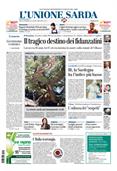


Journalists strike for contract renewal
Press releases from the Italian National Federation of Trade Unions (FNSI) and Fieg: newspapers will not be available on newsstands tomorrow.Per restare aggiornato entra nel nostro canale Whatsapp
Today, March 27, journalists will strike to demand a renewal of the Fieg-Fnsi contract, which has been lacking for ten years. The Sardinian Press Association is organizing a demonstration at 11 a.m. in front of the Bastion of Saint Remy in Cagliari.
The Fnsi Press Release
Today, journalists are striking again for the renewal of their employment contracts, which expired ten years ago—the only category of employed workers in Italy. This is the second day of strikes in a five-day series; the third has already been announced for April 16th. Having a renewed contract is not a privilege. Being paid a decent wage, both inside and outside the newsroom, is not a privilege. Working without permanent precariousness is not a privilege. Providing free, professional, and independent information, free from financial blackmail, is a right. Ensuring dignified conditions for those who work, for those entering the profession and for those leaving it, is an obligation. Ensuring the future of information, a common good protected by the Constitution, by Article 21, closely linked to Article 36, is a social duty. Publishers, on the other hand, prefer to pass the costs of labor onto the community. The numbers speak for themselves: between 2024 and 2026, they received €162 million in public contributions for paper sales; in the same two-year period, another €66 million for 1,012 early retirements; between 2022 and 2025, they saved approximately €154 million on paper purchases; and between 2024 and 2026, they will receive another €17.5 million for investments in innovative technologies. These are privileges enjoyed by a very few, and moreover, paid for by all Italians. Since April 1, 2016, when the last contract expired, everything has changed: workloads and pace have increased dramatically, multiplatform services, and editorial staffs have virtually disappeared. Wages, however, have remained stagnant, further eroded by inflation or even reduced by uncontrolled lump sum payments. Recognizing the dignity of work is the starting point for a serious discussion. Instead, it is described as excessive. This is a flawed and dangerous narrative, one that undermines the very foundations of work and the quality of information. Without rights and protections, journalism dies. And with it, democracy. This strike isn't defending privileges. It's defending a simple principle, a right: our work matters.
The Fieg press release
In a context of severe structural crisis for businesses and workers, public funding has enabled publishing companies to continue producing and distributing quality information and address the challenges of digital technology and artificial intelligence. Despite a decline in average daily sales from 2,500,000 in December 2016 to just over 1,000,000 today and a halving of revenues over the last decade, FIEG publishers have deployed significant resources to ensure information pluralism, product investment, and, above all, job protection, allowing the sector to be one of the few in Italy where mass layoffs have not occurred. Layoffs have been prevented without invoking privileges, but through the use of industry regulations—which require both significant investments and new hires—and this has always been done with the union's approval. Early retirement funding has not been "received" by companies, but directly finances journalists' access to early retirement. The situation has worsened with competition from free content distributed by digital platforms and social media. These platforms, without the responsibility and expense of publishers, are allowing an increasing number of users to receive information, often of questionable quality, without directly accessing publishers' websites, thus decreasing the user base and decreasing advertising revenue. Even in this case, the path of responsibility has been pursued, avoiding drastic measures to reduce employment levels. Despite the serious difficulties facing the sector, which publishers certainly cannot blame, given the similar challenges in other countries, we find ourselves faced with a union that has shown no willingness to sit down to address the challenge of modernizing the national labor contract, preferring to hide behind financial demands to recover inflation, which is already guaranteed by the contract's automatic pay mechanisms. Publishers therefore believe the FNSI's position to call a new strike during a difficult time like today and to unilaterally break off negotiations by rejecting, with the contract unchanged, a sustainable salary offer that is in any case higher than the last renewal, is unconstructive.