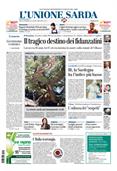


«Going beyond the Prison Island»
A proposal for Sardinia from civil society and the third sectorPer restare aggiornato entra nel nostro canale Whatsapp
"Sardinia shouldn't be the place where the country relegates its prison problems," but rather "the place where Italy experiments with a more intelligent, constitutional, and far-sighted response: a system in which punishment isn't just separation, but responsibility; not just custody, but reconstruction; not just social cost, but civil investment."
These are the final sentences of the document released by 26 Sardinian intellectuals and professionals on the island's penal system. They encapsulate the essence of the appeal letter addressed to all institutions (from the government, with the Ministry of Justice and the Department of Prison Administration, to the Region and local authorities): "Overcoming the prison-island" to promote "a penitentiary system capable of security, responsibility, and civil development."
The document
We, the undersigned, drawn from institutions, culture, academia, justice, prison administration, the professions, social work, and civil society, believe it is necessary to open a public discussion on prison enforcement in Sardinia. This is not a sectoral issue, reserved for insiders. How a community views prison affects the quality of democracy, the relationship between security and rights, the fate of local communities, and the ability of institutions to foster trust.
Sardinia has long been portrayed as an unfair and reductive island-prison. For too long, the relationship between penitentiaries and their territories has been conceived almost exclusively in terms of isolation, control, separation, and burden on local communities. This approach has impacted the island's image, its public policies, and the way citizens have perceived the presence of prisons in their communities. Today, a new phase is needed.
A new setting
We believe that criminal justice in Sardinia must be rethought within a different paradigm: no longer prison as a foreign body, no longer as penitentiary institutions as simple burdens to be borne, but as institutional presences capable of engaging with communities, contributing to security, legality, employment, education, the care of common goods, and the civil development of the territories.
This perspective is not born of naivety and does not deny the need for security. A serious penitentiary system must also include areas designated for the custody of inmates subjected to high or maximum security regimes, when necessary. But security cannot encompass the entire meaning of penal execution. The most solid security is that which arises from credible institutions, accountability programs, genuine opportunities for reintegration, and positive relationships with the community. A closed system breeds distance, mistrust, and increased crime; a system capable of engaging with society can foster responsibility, employment, legality, and cohesion.
Sardinia as a national laboratory
Sardinia can become a national laboratory for this new approach. Its history, its insularity, the presence of penitentiaries with diverse characteristics, the tradition of penal colonies, and the richness of its landscapes allow us to envision an advanced model of penal execution: more humane, more useful, and safer because it is more rooted in society. The point is not to transform prison into something other than itself, nor to ignore the custodial function it is designed to perform. The point is to reposition penal execution within a broader public vision, in which each institution is called to question its relationship with the local area and the concrete ways in which it can generate social value.
The penal colony model
From this perspective, it is necessary to recover and valorize the historical and current experience of penal colonies, which have represented and can continue to represent an original model on the island. They demonstrate the possibility of intertwining labor, the environment, agriculture, land defense and maintenance, professional training, and personal responsibility with the demands of penal enforcement.
Penal colonies, if reinterpreted with modern tools and with full respect for constitutional rights, can point to a concrete path: institutions that are not self-contained, but capable of producing public value; not enclaves separated from communities, but institutions that participate in the life of their territories; not symbols of marginalization, but opportunities for social, environmental, and economic regeneration. They can contribute to landscape conservation, the prevention of disasters, the maintenance of common goods, the enhancement of agricultural and environmental supply chains, the development of professional skills, and the creation of truly valuable reintegration pathways after incarceration, while combating depopulation and desertification of inland and rural areas.
Security, Constitution and responsibility
Security is an essential public good. But it cannot and must not be placed in opposition to the rehabilitative purpose of punishment, the dignity of individuals, the protection of rights, and the prospect of social reintegration. The Constitution requires that punishment not only be affliction, but also the possibility of change, responsibility, and a return to society. Even high- and maximum-security units must be located within a balanced, transparent, and respectful system. Their presence cannot determine the overall identity of prison enforcement in Sardinia, nor revive the idea of the island as a separate place where problems decided elsewhere are concentrated.
The territories as protagonists
Municipalities, local communities, and the Sardinia Region must be able to participate in defining prison policies that impact the island. The presence of a prison cannot be viewed as an imposition, but must become part of an institutional pact based on transparency, shared responsibility, and concrete benefits for the region.
Penitentiaries must be enabled to collaborate consistently with local authorities, universities, schools, businesses, associations, social cooperatives, cultural organizations, and third-sector organizations. Prisons should not be walls that separate the community, but public institutions capable of assuming responsibility for the communities in which they operate.
Our requests
We ask the Government, the Ministry of Justice, the Department of Penitentiary Administration, the Sardinia Region, local authorities and all competent institutions to open a public and operational discussion aimed at:
● define a regional strategy on penal enforcement in Sardinia, shared with the territories;
● overcome any logic that proposes the island as a place of mere penitentiary concentration;
● enhance penal colonies as places of work, training, responsibility, environmental protection and social utility;
● promote stable agreements between penitentiary institutions, local authorities, universities, schools, businesses, cooperatives and the third sector;
● strengthen education, professional training, work and reintegration paths;
● connect prison work to the real needs of communities and the care of common goods;
● ensure that high and maximum security needs are placed within a balanced, transparent system that respects the territories;
● recognize local communities' effective role in choices regarding the prison presence on the island.
An appeal to Sardinia and the country
Sardinia must not be the place where the country relegates its penitentiary problems. On the contrary, it can be the place where Italy experiments with a more intelligent, constitutional, and far-sighted response: a system in which punishment is not just separation, but responsibility; not just custody, but reconstruction; not just social cost, but civil investment. For these reasons, we sign this appeal. To overcome the prison-island. For a penal system that engages with the local communities. For a Sardinia capable of transforming a difficult history into a model of justice, security, and community.
The list of signatories, in alphabetical order, begins with Domenico Arena, regional superintendent of prison administration. Many signatories are from the judiciary and sector associations: the president of the Cagliari Surveillance Court, Cristina Ornano; Irene Testa (prisoners' ombudsman); Carlo Renoldi (a Supreme Court judge); Matteo Pinna and Erika Dessì (president and human rights representative of the Cagliari Bar Association); Maria Grazia Caligaris (Socialism, Rights, Reforms); Daniele Pulino (Antigone); and sociologist Luigi Manconi, who has long studied these issues. From the university, the rector of Cagliari, Francesco Mola; and Cristina Cabras (criminologist at UniCa); Andrea Vargiu (sociologist at UniSS); and Emanuele Farris (delegate for the UniSS prison center). Representing the third sector and information sectors were Ugo Bressanello (Domus de Luna), Simonetta Selloni (Sardinian Press Association), Giuseppe Meloni (Order of Journalists), Sabrina Mura (Association for Legal Studies on Immigration), Andrea Pianu (Third Sector Forum), and Franco Uda (Arci Sardegna). Among the political figures, in addition to Todde and Comandini, were the mayors of Cagliari, Sassari, and Nuoro (Massimo Zedda, Giuseppe Mascia, and Emiliano Fenu), the president of the Province of Nuoro, Giuseppe Ciccolini, and the secretary of the Democratic Party, Silvio Lai.