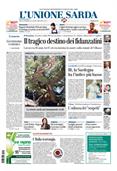


Cagliari's new stadium: "The project needs to be revisited, too many risks for the municipality."
Giuseppe Farris, lawyer and leader of Civica 2024, said: "A 25,000-seat facility would be better. I disagree with the decision to build a hotel."Per restare aggiornato entra nel nostro canale Whatsapp
Memorandums filed with the City Council. Not a single line of the economic-financial plan has been overlooked. Numbers and clauses under scrutiny. Giuseppe Farris, the lawyer and leader of CiviCa 2024, continues to fight for the new Sant'Elia.
They signed her up to the anti-stadium party.
"I've said it in every way: I want the stadium. And in fact, I'm working hard to make the project a reality. But while safeguarding the community's interests."
Isn't it happening?
"Just look at the numbers. The procedure is flawed, however: the economic and financial plan still needs to be evaluated."
From whom?
"From the municipal offices. But in my opinion, the PEF presents obvious critical issues."
Explain it to us.
Meanwhile, the risks are borne by the grantor, the Municipality, and not the concessionaire, Cagliari Calcio. If, for example, the cost of raw materials increases during construction, the administration will be exposed to higher costs. It is expected that it will also issue guarantees to credit institutions.
Councilor Macciotta says there won't be any.
The public sector is investing much more in this project than is commonly believed. The project bond issued by SFIRS, the regional finance company, guarantees the proponent preferential, non-market interest rates. The loan is repaid not at fixed terms, as with a standard mortgage, but when cash flows are generated. All this shifts the risk from the private sector to the public sector. Furthermore, the municipality is waiving fifty years of TOSAP, the tax on the occupation of public land, on 100,000 square meters: the revenue loss will be enormous. Add to this the provisions the administration will have to make.
For what?
When a project as significant as the new Sant'Elia Stadium is completed, an investment of over €218 million, future generations cannot be left with the burden of modernizing or demolishing it. In anticipation of this scenario, a public entity is required by law to set aside a fund to cover those expenses. For the stadium, the annual budget to be set aside will be around €800,000.
When you said all these things in the Chamber, who in the Council answered you?
"No one. I have filed a written statement, however. It's also unacceptable that for the entire fifty-year term of the concession, inflation will be at 1.8%. In the Bank of Italy's May report, it was 2.6%. Nor is the profit margin of 0.2% credible; it's truly laughable. What private individual would invest given such a low estimate of the profit percentage? The stadium project can't sustain itself with these numbers; it's intrinsically unsustainable. It hasn't even been subjected to a stress test: no plausible extreme events are foreseen that could radically alter the operational and therefore financial dynamics. Costs and revenues are running as if nothing were ever going to happen. Yet the pandemic and lockdown teach us that it's necessary to measure the resilience of a commercial operation."
Do you like the multipurpose stadium model?
No. We should continue to focus on a 25,000-seat stadium, as Giulini originally envisioned. Instead, they've gone beyond 30,000 to pursue the madness of Euro 2032, which, at most, will bring two matches to Cagliari. I don't even agree with the decision to build the hotel: a five-star, sea-view establishment in an area deemed unattractive. Again, what entrepreneur opens a luxury hotel in an area deemed unattractive? Too many things don't add up.
(4 – continued)