

Cagliari Underground: The S'Avanzada quarry opens for the first time.
A place hidden for centuries that becomes accessible thanks to "Paths in the Dark"Per restare aggiornato entra nel nostro canale Whatsapp
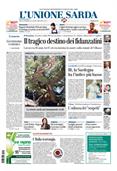
An unusual line winds its way up the slope of the Public Gardens today: everyone is waiting to descend underground, where the doors to the S'Avanzada quarry open for the first time. A place hidden for centuries, it's now accessible thanks to "Paths in the Dark. 50 Years of Speleological Research and Outreach by the Giovanni Spano Speleological Archaeological Group," an initiative celebrating half a century of the association's activity, sponsored by the Region and the Municipality.
The extraordinary opening of the quarry, accessible from Via Ubaldo Badas, marks a historic moment: never before has this artificial underground site been open to visitors. It is the largest underground quarry for construction materials in the city.
"We started visiting it in the 1980s," says Diego Vacca, vice president of the Group. "We'll see a little more than half of it: a lake blocks access to the other areas, which can only be reached by diving. I did it in '89, when I wasn't a cave diver yet. It was quite a daring experience."
The site holds many mysteries. Its use is thought to date back at least to the 13th century, with the arrival of the Pisans and the construction of the fortified city . "It could have been used in even earlier times, even during the Roman period," explains Vacca, emphasizing how the extraction techniques remained virtually unchanged until the introduction of dynamite, making precise dating difficult.
"We began research at the Archaeological Superintendency, but not much information emerged," says archaeologist Annalisa Colombu. "The area of the niches is very mysterious: one might think it was an underground church from the dawn of Christianity, but there's no written source that tells us this story." The experience's direct impact is conveyed by the gaze of the youngest member. "It's very humid, and water drips on you," says Emanuele Costantino Porru, 19, "but it has landscapes, places that are worthwhile."
The program includes other special openings of artificial underground sites: the Well of San Pancrazio on April 18 and 19 and the Roman Aqueduct on May 24. From May 3 to 29, a photographic exhibition dedicated to the group's explorations will be held, enriched by videos and 3D viewers for virtual visits to some of the caves.
There will also be opportunities for in-depth scientific study, with a conference on the state of speleology in Sardinia and future prospects, and a series of seminars through December in collaboration with the University of Cagliari and schools. Among the most anticipated activities is the fall speleology course, now in its forty-first year. "It's a first-level course; anyone can participate," emphasizes Vacca. It's a chance to discover a hidden heritage emerging from the darkness for one day only: the quarry will be open to visitors until 8:00 p.m., with free admission.