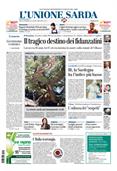


A new Giant's Tomb in Bortigali: it remained buried in vegetation for centuries
It dates back to 1,500 BC and was found in the Carrarzu Iddia areaPer restare aggiornato entra nel nostro canale Whatsapp
A new Giant's Tomb has been discovered in Bortigali. For over two millennia, the structure, dating back to 1500 BC , has remained well preserved, protected by dense vegetation.
In a position of extraordinary strategic and scenic value, in the Carrarzu Iddia area, on the southern slope of the mountain locality of Crastu Littu , the tomb, built in trachyte blocks, preserves the burial chamber and the monumental exedra placed in front of the entrance intact.
Of particular interest is the presence, within the chamber, of a subdivision of the space into two levels near the entrances, considered a rarely documented feature, which will be the subject of further studies.
"A significant heritage," says Monica Stocchino, of the superintendency of Sassari and Nuoro, "the Marghine continues to provide us with interesting surprises, and we consider this discovery a true revelation."
Details of the discovery were explained by Gianluigi Marras, an official and archaeologist with the Superintendency, and archaeologist Luca Doro. This exceptional find is part of the Superintendency of Cagliari and Sassari's excavation and study efforts, which have focused particularly on the Carrarzu Iddia area, where two protonuraghes, a village, a cistern well, likely of sacred purpose, and the giant's tomb were uncovered.
"A fortunate construction site," Elena Boldetti of the Cagliari Superintendency calls it, "which represents a great opportunity for the area." This discovery rewards the reconnaissance efforts of the two Superintendencies of Archaeology, Fine Arts, and Landscape of Sardinia, engaged in the excavation and restoration of the nuraghe at this important site. The cleaning operations have made the tomb visible again.
"This is a strategic discovery for the community," says Patrizia Tomassetti, mayor of Bortigali and an official at the Ministry of Cultural Heritage, "because through management, it becomes a central asset and develops experiential and cultural tourism . These discoveries therefore foster a high-quality, intelligent form of tourism."