

Santa Cristina, great success for the screening of the film on Antonio Zara
Also attending the evening was Giuseppe Mellai, over ninety years old, the last surviving collaborator of the important season of archaeological excavations.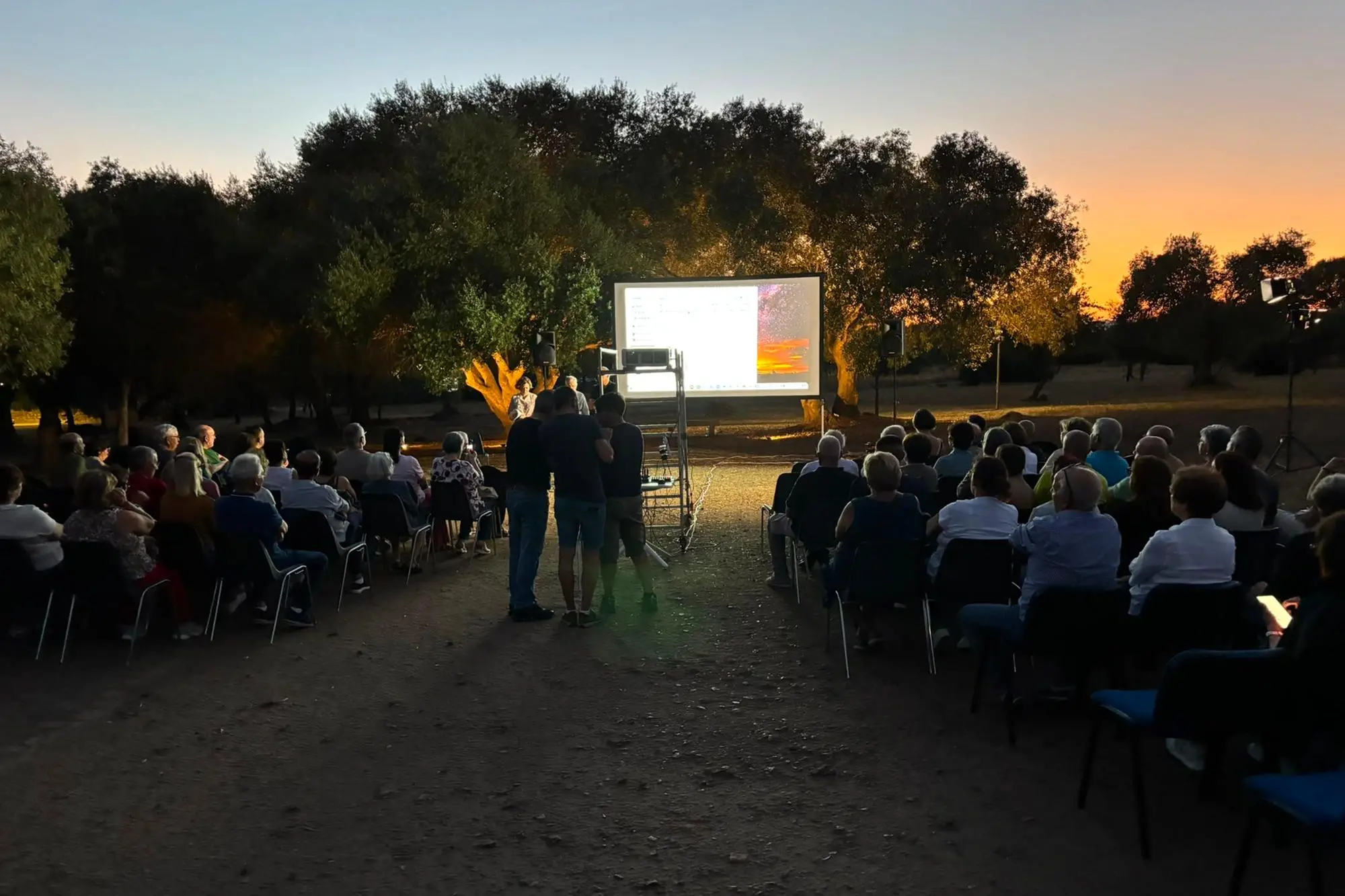
Per restare aggiornato entra nel nostro canale Whatsapp
An unforgettable evening, under the Sardinian sky, in one of the island's most evocative locations. On Saturday evening, the Santa Cristina Archaeological Park in Paulilatino hosted a highly attended screening of the documentary "Antonio Zara. The Man Who Loved Digging." The screening was warmly and emotionally welcomed by a large audience that filled the outdoor space to capacity.
"It was a deeply moving evening," says Massimo Muscas, director of the Paulilatino Archeotour Cooperative , which has been managing the site for 39 years. " Santa Cristina wasn't just an evocative setting: it's one of the places where Antonio Zara truly worked, excavated, and restored history to our community . Hearing such a close, attentive audience confirmed to us how much this story deserves to be told and heard." But what made the evening even more special was the presence of Giuseppe Mellai, known to all as Zio Peppino, in his nineties, the last surviving collaborator from that excavation season. Also present was Giuseppe Mura, known as Peppe, the excavation site guard at the time and assistant to a German technician who was responsible for some of the drawings. "This evening was not only a fitting tribute to Antonio Zara and his extraordinary legacy," Muscas explains, "we also wanted it to be a moment of recognition for Uncle Peppino Mellai, who is a direct and living witness to that excavation campaign."
The bond between Antonio Zara and Santa Cristina is profound and tangible. The restoration and rehabilitation of the famous Nuragic Sacred Well are among the most significant projects he participated in during his long career. This was also the case with the discovery, in Fluminimaggiore, of the celebrated bronze statuette of the so-called Sardus Pater, now housed in the National Archaeological Museum of Cagliari. These details were rediscovered by the audience, or experienced for the first time, with the knowledge of being in the very places of that history.
The documentary—49 minutes, shot in black and white and color, directed by Antonio Sanna from an idea by Sergio Zara—rendered all of this with restraint and intensity. The narration of Maria Giovanna Ganga and Gianni Cossu, the music by Mauro Usai with piano by Omar Bandinu, and the performances of Daniel Gomez and Paolo Tiddia as the young Antonio helped create an atmosphere that the audience truly engaged with. Many, after the evening, lingered long enough to exchange impressions, ask questions, and hear a few words directly from Peppino Mellai. An ArKaosfilm and Società Umanitaria Cineteca Sarda production, made with the support of the Autonomous Region of Sardinia and the Fondazione di Sardegna, and the collaboration of the Municipalities of Carbonia and Paulilatino, the Superintendency, and numerous local organizations.
"The audience that chose to be here last night gave us the most beautiful response," Muscas concludes. "The credit goes above all to the city administration, which championed this important initiative, led by Mayor Gallus, Deputy Mayor Delmoro, and Culture Councilor Ilaria Urgu, who hosted the evening. Antonio Zara's story is an example of how you can love a place so much you dedicate your entire life to it. And the presence among us of Uncle Peppino Mellai, who discovered one of the bronzes and is still moved today when he recounts that moment, and of Peppe Mura reminded us that that story isn't over yet: it lives on in those who lived it. As long as there are people like him, we still have so much to learn ."