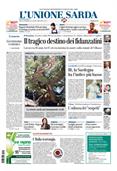


"The Wrong Man" a huge success for Pablo Trincia in Cagliari.
The rerun will be held this evening at the Sassari Municipal Stadium.There is a moment, in the theatre, when silence becomes more eloquent than any word.
This is what happens during “The Wrong Man – A Live Investigation,” the show in which Pablo Trincia brings judicial reporting to the stage, transforming it into a civic experience.
Last night at the Teatro Massimo, in front of a deeply engaged and enthusiastic audience, something was performed that transcends the traditional confines of theater.
Not a simple narration, but an investigation that takes shape before the spectators.
Trincia, assisted by Debora Campanella on the writing, constructs a layered narrative that interweaves videos, court documents, testimonies, and archival materials, drawing the audience into one of the darkest chapters of Italian justice.
At the center is the story of Tunisian serial killer Ezzeddine Sebai, whose belated confessions have undermined already concluded trials and revealed devastating miscarriages of justice.
The result is a show that gives no respite.
The stylistic hallmark is that of the narrative journalism that has made Trincia one of the most recognizable voices on the Italian scene: a fast pace, precise documentation, but above all a rare ability to restore dignity to victims, all victims, including those of justice.
The theatre thus becomes a place of verification, almost an emotional courtroom in which the spectator is called to judge, to question, to doubt.
The strength of “The Wrong Man” lies precisely in its fertile ambiguity: it doesn’t offer definitive answers, but rather opens cracks.
And in these cracks creep the most uncomfortable questions, those concerning the very functioning of the judicial system and the fragility of the truth.
It's no coincidence that Trincia speaks of a "journey into the shadows of injustice," with the stated goal of leaving the audience "with their heads full of questions and their hearts filled with indignation."
In this sense, the Sardinian stage of the show takes on an even more significant value.
Trincia brought his theatrical investigation to a region, Sardinia, marked by one of the most serious miscarriages of justice in Italian history: the case of Beniamino Zuncheddu, who remained in prison for 33 years before his trial was retried. This retrial was made possible thanks in part to the courageous action of the Attorney General of the Court of Appeal, Francesca Nanni, and the support of an enlightened, scrupulous, and tenacious lawyer, Mauro Trogu. An implicit yet powerful reminder, it amplifies the ethical significance of the play and anchors it in a memory that is still alive.
From a scenic point of view, the choice is essential but effective: few elements, a calibrated use of images and voice, and a presence, that of Trincia, which supports the entire structure.
There's no complacency, no spectacularization of pain. Rather, there's a constant tension between narrative and responsibility, between information and participation.
Following the success of its Cagliari dates, the show arrives tonight, Wednesday, May 6th at 9:00 PM, at the Teatro Comunale, continuing a tour that is selling out across Italy and shaping up to be one of the season's most significant theatrical events.
“The Wrong Man” is not just civil theatre: it is necessary theatre.
One of those shows that doesn't end with applause, but continues to work inside the spectator, long after the lights have gone out.
At the end, after greeting the readers of L'Unione Sarda, this time in "limba," an interminable line of fans in the theater foyer gathered to meet the protagonist for a selfie, a dedication in the book, or a simple handshake, in memory of an evening that will remain etched in the audience's memory for a long time.
LP
