

"The Faces That Made Palau": A journey through memory lane in black and white through the shots of Maiore and Angeli
Fragments of past life that tell the story of the country and its origins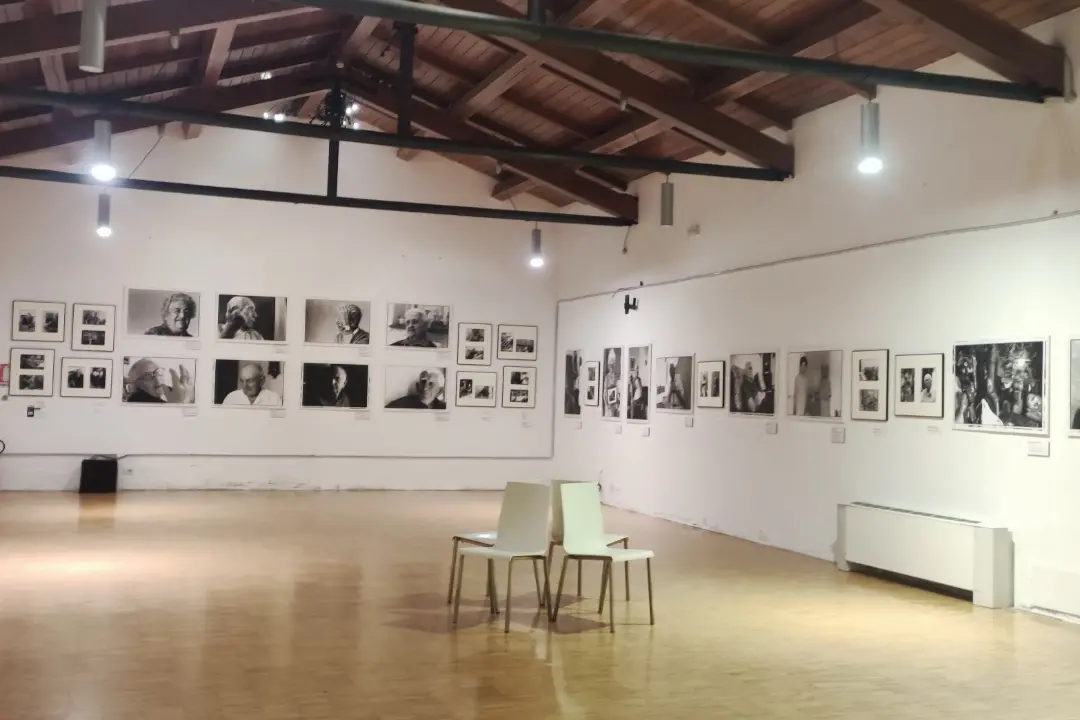
Per restare aggiornato entra nel nostro canale Whatsapp
There are just a few days left until the closing of an exhibition in Palau that is truly worth a visit. "Palau and its memory... and walk me," held at the Cineteatro di Montiggia and open until January 31st, is a black-and-white story of faces, hands, postures, and silences. Tatiano Maiore and Nanni Angeli's shots capture a town when it was still a cluster of houses around the landing stage for La Maddalena and the military servitude, before tourism reshaped its skyline.
Ordinary men and women, captured in their gaze, people "whose lives began between the first and second decades of the twentieth century," protagonists of a short and harsh century, "full of sudden changes, hardship, violence, and joy, who worked with their hands all their lives." The photographs dialogue with the words. Some remember that "it was a calm country but there was poverty, workers competed to come and build the road," and others sigh: "You have no idea what life we led, it was a miserable life." The war resurfaces in dry sentences: "There was anti-tank fire on the bridge... There were seven of us, three of us survived." Travel was slow, almost epic: "Back then, the road wasn't like today's, it took six hours by horse." Some saw the world from the sea: "I've been to America, I've been to Japan, I've been to Australia, and in 1928 I went to China, a 34-day journey." Others experienced hardship early: "We came as shepherds... from the age of seven," or "I was 13 when I went down to Palau every morning to learn a trade." And there are those who remember a time-honored, domestic healthcare system: "They never went to the hospital; my mother helped me; she was the midwife." In this interweaving of images and voices, there's the town, Palau, which can be recognized in its history written during the 20th century. A community transformed today, but one that remembers its past. Behind the lens, two different perspectives (one living, the other deceased) that appear complementary: that of Nanni Angeli, a photographer from Palau and the cultural soul, with his brother Paolo, of the international festival "Isole che parlano," with important activities and publications, in Italy and abroad, and exhibitions; and that of Tatiano Maiore, a photojournalist from La Maddalena who has covered the world for major Italian newspapers. A documentary and sentimental archive that gives dignity to the past and the lives of the men and women who shaped the country's history.
