

"Patriarchy in the New World Order": Claudia Sarritzu's new essay is now available in bookstores.
A journalist from Cagliari, the author has been studying language, gender politics, and social transformation for years.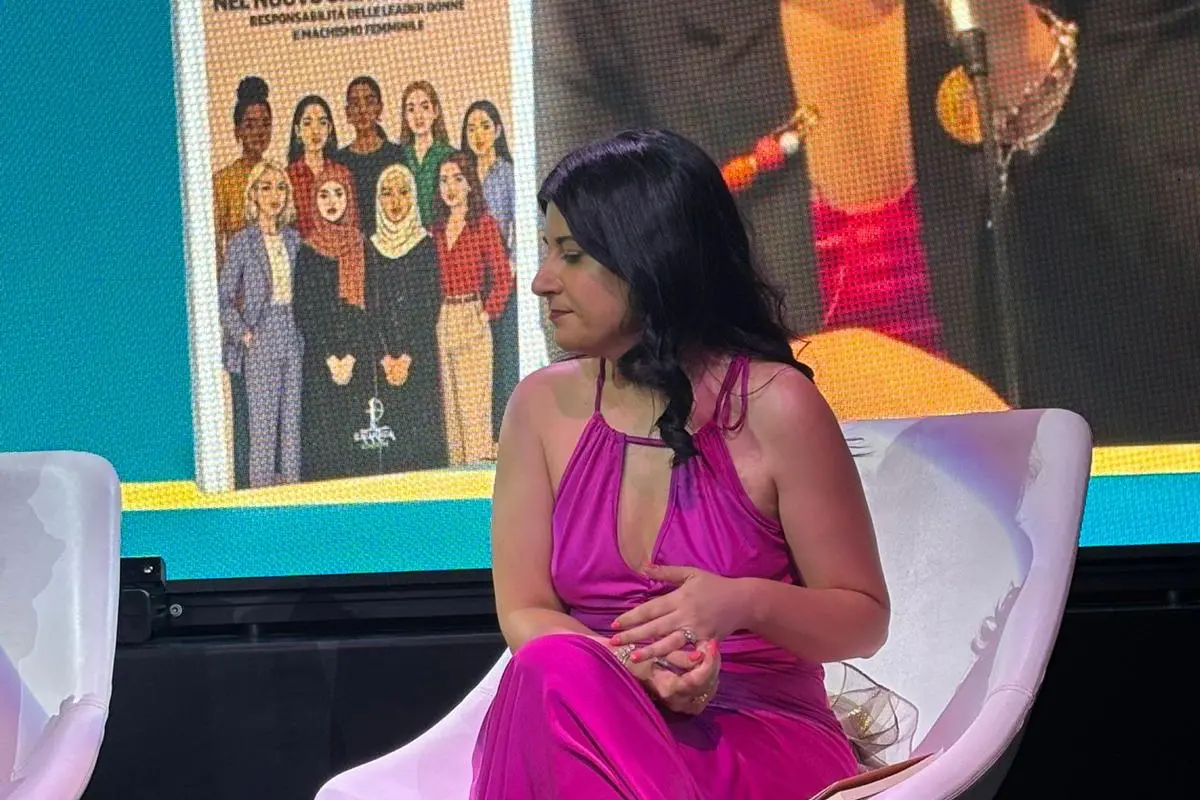
Per restare aggiornato entra nel nostro canale Whatsapp
The patriarchy doesn't need to keep women out of power. It can let them in, even (sometimes) put them at the top, as long as they don't change the rules of the game. This is the thesis underlying Claudia Sarritzu's "Patriarchy in the New World Order: Responsibilities of Female Leaders and Female Machismo" (Catartica Edizioni, Ziggurat series, 2026, 168 pages): the presence of women in positions of power doesn't coincide with a transformation of power, but with the adaptation of those who wield it. In short: a woman can shatter the glass ceiling, but once she rises to power, the walls of the house will remain intact.
A journalist from Cagliari, Sarritzu has been researching language, gender politics, and social transformation for years. She has written about national and international politics for Globalist, worked in radio, and edited video interviews for Tiscali. She is the author of the essays "Sardinia is another thing" and "Words ahead, feminism of the third millennium," winner of the 2019 Giuditta National Prize for Nonfiction.
The essay begins with a painful and concrete image: the red-painted nails of Irina Filkina, killed in 2022 by Russians in Bucha, and contrasts it with the bodies of Palestinian women, toward whom Western empathy is more uncertain. Are we therefore capable of recognizing violence only when the victim resembles us? Sarritzu thus broadens the scope of feminism, removing it from the confines of equal opportunities to understand it in its intersectional dimension, where gender, racism, colonialism, class, homophobia, and ableism act as cogs in the same hierarchy of power.
There is no story in the strict sense, but rather a web of arguments constructed in concentric circles: from family and sexual-emotional education, we move to law, work, literature and language, and finally geopolitics. The chosen format is that of a polyphonic investigative essay: the author's militant voice is accompanied by interviews with scholars, writers, jurists, and witnesses. These interviews go beyond documentary purposes, becoming a system of counterweights, introducing cautions and preventing the thesis from turning into dogma.
The most insistent semiotic device is that of the body as territory. The female body is a space to be covered or uncovered, disciplined, conquered, used as the biological and symbolic boundary of a community. The veil, painted nails, the womb, the glass ceiling, the pyramid of power: Sarritzu constructs a constellation of immediately legible signs, translating complex categories into powerful images. Patriarchy becomes a virus, a distorting lens, an invasive plant, an old game with rigged rules.
The writing is direct, oral, and combative, proceeding through rhetorical questions, anaphora, emotional buildups, and accelerations. It doesn't seek neutrality, it seeks a stance. In the best passages, anger becomes method, interrogating the words and dismantling the simplistic equation between woman in command and feminist power.
"Patriarchy in the New World Order" is therefore an uneven, lively essay, necessary more for the questions it raises than for its definitive answers. Its merit is shifting the discussion from biology to structure: it doesn't matter who wields power, but the grammar they employ. Because a woman at the top can be a symbolic victory; political victory begins when the very way of ruling, distributing resources, describing bodies, and imagining freedom—or rather, freedoms—changes.
