

"Despite the long time that has passed...": Documents and films on Nazi-Fascist crimes on display in Olbia
The exhibition curated by the prosecutor De Paolis, with four sections that tell of massacres, deportations and trials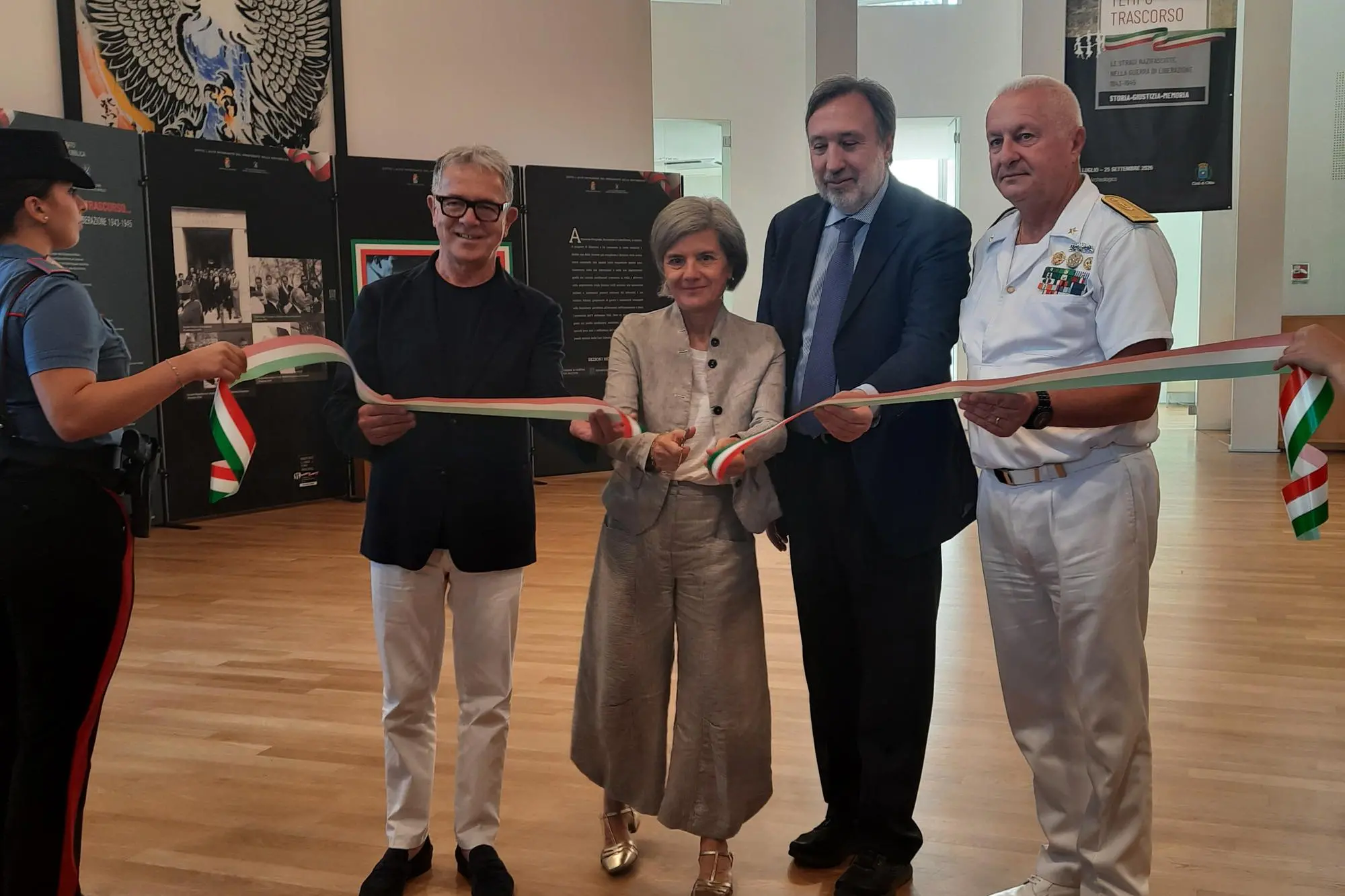
Per restare aggiornato entra nel nostro canale Whatsapp
Photographs, documents, films, and a few objects have been displayed to shed light on one of the most complex chapters in twentieth-century history: the Nazi-Fascist crimes committed in Italy and abroad against the civilian population and Italian soldiers after the armistice of 1943. The exhibition, titled 'Despite the long time that has passed...' , opened this morning at the Archaeological Museum of Olbia. Curated by the military prosecutor general, Marco De Paolis, who in 2002 launched the most fervent judicial season of war criminal trials, reopening 659 files that had been archived in 1960 under an illegitimate order and hidden in the so-called "closet of shame" until 1994, when those responsible for the Nazi-Fascist massacres committed during the War of Liberation were brought to justice.
Organized by the Attorney General's Office at the Military Court of Appeal and the Defense General Staff, under the high patronage of the President of the Republic, the exhibition was presented in Olbia in the presence of civil and military authorities: cutting the ribbon alongside De Paolis were the mayor of Olbia, Settimo Nizzi; the prefect, Grazia La Fauci; the commander of the Navy's Western Autonomous Maritime Command, Rear Admiral Enrico Pacioni; and the director of the Innovation Department at the University of Sassari, Lucia Giovannelli.
"The exhibition was born from my professional experience, which I've conducted since the 1990s on numerous war crimes, and I thought it was necessary to document them to raise awareness of the sacrifice our country had to make to become a democratic state," explained De Paolis, who still gets emotional when he talks about murdered children and slaughtered soldiers.
The exhibition is divided into four sections : one dedicated to war crimes committed against soldiers, with interactive video stations including maps of the sites where the massacres took place and information on the main episodes; the second, dedicated to the history of the deportees, with graphic panels on the themes of internment in concentration camps and forced labor; the third, dedicated to war crimes committed against civilians, and the last to trials, from the post-war period to the present day, in the three historical phases, with information on the proceedings and sentences and the faces of the historians and jurists.
After fourteen stages, the first in 2021 in Rome, at the Altare della Patria, the exhibition arrives in Olbia and will be open to visitors free of charge until September 25 .
"We are delighted to host this exhibition and will do everything we can to invite local governments to visit, giving all young people the opportunity to discover what was done and understand what should not be done," commented Nizzi.
