

Nuraghi on the way to UNESCO: DNA doesn't lie, Sardinians are the offspring of a thousand different peoples.
In Carbonia, Paolo Francalacci, professor of genetics at the University of Cagliari, gave a lecture: the islanders have "ancestors" from Africa and the Middle East, with some Northern European lineages.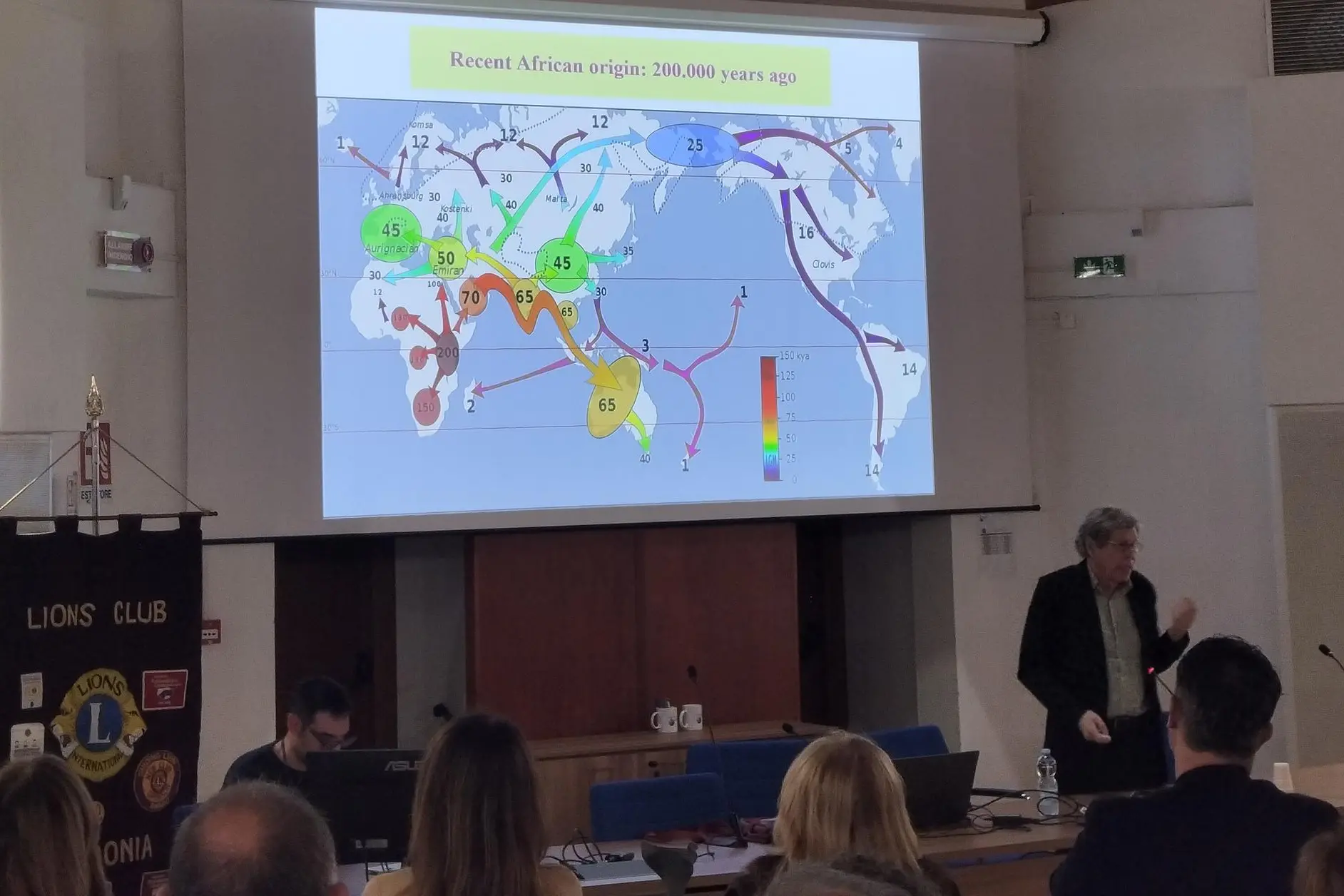
Per restare aggiornato entra nel nostro canale Whatsapp
People came from all over North Africa, but also from the Near East, Northern Europe, and the Iberian Peninsula. The DNA of the Sardinians and Nuragic peoples contains a wealth of evidence, the result of migrations thousands of years ago.
The first of the conferences, "Nuragic Dialogues: Sardinia towards UNESCO," offered this interesting glimpse into the islanders' distant origins, in support of the Nuragic heritage's candidacy for UNESCO's World Heritage List.
In 2021, the government included the request in the Italian "tentative list." And Carbonia, home to the precious Sirai nuraghe, which has been the subject of excavations and studies for years, is offering its contribution with three events. The first was titled " On the trail of our ancient DNA, traveling across the Mediterranean."
Paolo Francalacci, professor of genetics at the University of Cagliari, gave a lecture in a crowded Sotacarbo conference center. From an examination of the genome, examining various options, including mitochondrial DNA and possible genetic mutations, he emphasized that "Sardinians derive from obviously African, but also Mediterranean and Middle Eastern, lineages, with even some Northern European lineages due to the need for post-glacial repopulation."
Among the first evidence of man in Sardinia, the Carbonia area also boasts a small record: the presence in the Su Carroppu shelter, in Sirri, of people dating back to the Mesolithic (11,000 years ago), as demonstrated by the late researcher Carlo Lugliè.