

Meloni-Merz summit, Italy and Germany reach agreement: "The EU must be the master of its own destiny."
The two leaders signed an agreement at Villa Pamphili on common defense, economic agreements, competitiveness, support for Ukraine, and Trump's plan for Gaza.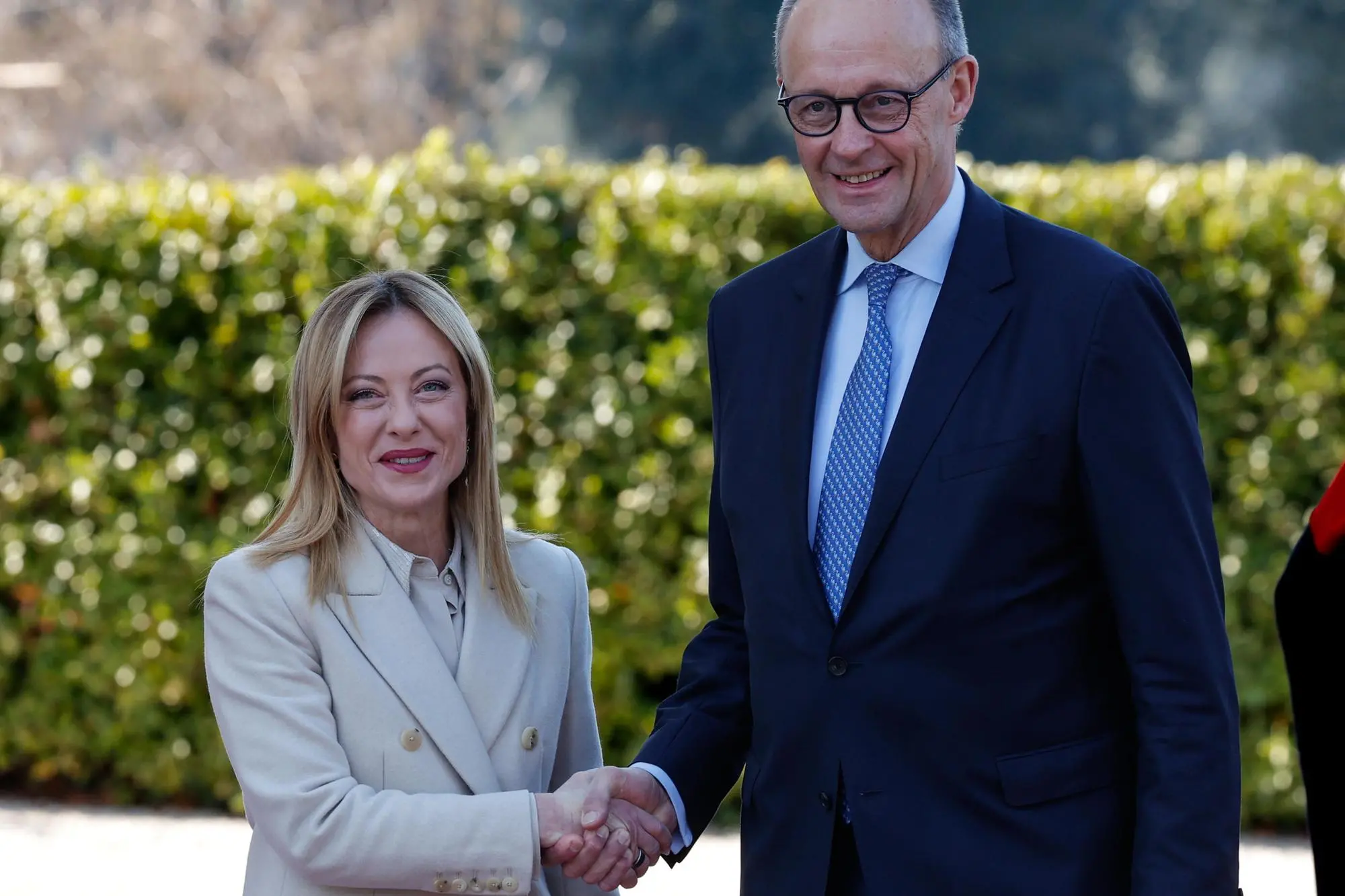
Per restare aggiornato entra nel nostro canale Whatsapp
"Italy and Germany are closer today than ever. This is good news for our people and for Europe as a whole."
This was stated by Prime Minister Giorgia Meloni in joint statements to the press together with German Chancellor Friedrich Merz , after the Italy-Germany intergovernmental summit in Villa Pamphili where they signed an agreement.
THE STATEMENTS
"We are at a particularly complex juncture, which forces Europe to choose whether to be the protagonist of its own destiny or rather to suffer it ," the Prime Minister added. "From our perspective, this is a phase that requires clarity, responsibility, courage, and above all the intelligence needed to transform crises into opportunities. I personally am convinced that at this turning point in history, Italy and Germany have a particular responsibility, clearly because of their history, their influence, and their leadership ."
Furthermore: "A very important issue on which we agree with Chancellor Merz is that a decisive change of pace is needed in Europe regarding the competitiveness of our businesses, because it is now a well-established fact and evident to anyone with an intellectual integrity that a certain ideological vision of the green transition has ended up bringing our industries to their knees , consigning Europe to new, dangerous strategic dependencies without, however, managing to make a real impact on the global protection of the environment and nature."
On foreign policy: " We have always been in strong agreement on Ukraine and the Middle East. We will continue to do our part both to achieve a just and lasting peace in Ukraine and to build a stable framework of security and prosperity in the Middle East."
Merz 's words: "At the last European summit, there was a very strong convergence between Italy and Germany: the EU must strengthen industrial competitiveness and do more for security . It must focus on essential issues, such as working for peace in Ukraine."
Greenland Chapter: "Europe must and will do more for Arctic security. We intend to support the talks between Denmark, Greenland, and the United States on the basis of territorial sovereignty ."
"Italy and Germany are closer than ever before," added the Chancellor. "Seventy-five years of diplomatic relations—this is the anniversary we celebrate in 2026. This shows that we truly have a long history of close collaboration, because, together with four other states, we are also the founding members of the European Community, and the Treaties were signed here in Rome."
THE PROTOCOL
The two leaders signed the Protocol for an Action Plan on Enhanced Strategic Cooperation, an understanding on security, defense, and resilience, and a joint paper on competitiveness, which will be submitted to the European Commission ahead of the informal meeting on competitiveness on February 12. This agreement "is not legally binding and does not constitute an international treaty." The meeting also led to the exchange of a dozen government agreements.
In the Protocol on the Italian-German Action Plan, Rome and Berlin "reconfirm the fundamental importance of a strong transatlantic bond between Europe and the United States , based on common values and shared interests" and commit themselves "to respect international law, including the principles of territorial integrity and sovereignty".
The two governments also share "the responsibility, as founding states of the European Union, to work to promote European integration , enabling the EU to act effectively to protect European values and interests."
"Strengthening the EU's competitiveness is and remains a top priority for us, to avoid unnecessary administrative burdens and ensure an innovative level playing field," the two leaders said, calling for "structural reforms, a consistent simplification agenda, legislative self-restraint, non-bureaucratic and business- and SME-friendly implementation of EU initiatives, as well as improving framework conditions without compromising policy objectives and relevant standards."
The Protocol also affirms "support for the implementation of the US Plan to End the Conflict in Gaza." The document states: "In our dialogue, we will closely coordinate our ongoing efforts in response to Russia's war of aggression against Ukraine , including sanctions, support for Ukraine's resilience and reconstruction, and efforts to achieve a just peace, as well as support for the implementation of the US Plan to End the Conflict in Gaza, with the aim of alleviating the suffering of the civilian population and paving the way for a two-state solution."
The governments of Rome and Berlin then agree "to further develop a comprehensive and innovative approach to migration, combining strengthened external action and internal aspects, mutually beneficial global partnerships with countries of origin and transit, more effective protection of the EU's external borders, and stepped up returns, in compliance with international and EU law."
Again, on the topic of security and defence: «Coordinate a joint response to threats to Euro-Atlantic security and strengthen NATO's European pillar to further strengthen NATO's deterrence and defence posture» .
Support for Ukraine reaffirmed. Meloni and Merz affirmed their support for "a just and lasting peace in Ukraine" and pledged to provide Kiev with "solid security guarantees as soon as conditions allow." The agreement provides for bilateral coordination "in international fora on ways to support Ukraine in its defense against Russia's war of aggression."
The commitments also include continuing "to firmly support Ukraine through the training of Ukrainian forces under the auspices of the EU Military Assistance Mission" and "through donations from military stockpiles, bilateral industrial supplies, the promotion of defense industrial cooperation with Ukraine, as well as industrial procurement, including joint procurement and financing mechanisms such as the Enduring Action on Air Defence (EAAD), the European Peace Facility (EPF), the European Defence Industrial Programme (EDIP), and the Ukraine Support Instrument (USI), as well as relevant NATO instruments."
(Unioneonline)
