

Maria Carmen Salis, the painter of silence who conquers Italy
«Sardinia is one of the main sources of inspiration for my work»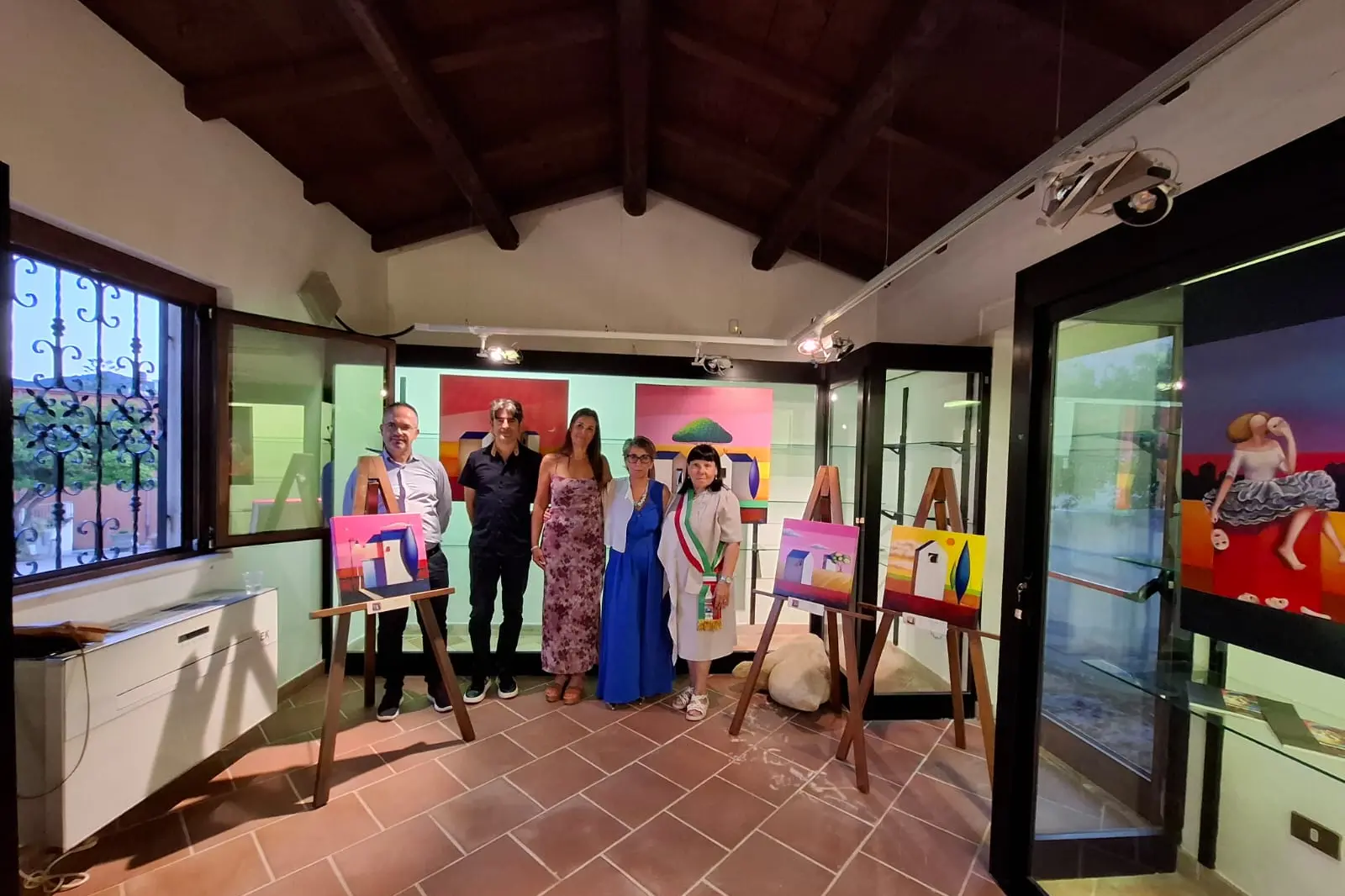
Per restare aggiornato entra nel nostro canale Whatsapp
From Domus de Maria to galleries throughout Italy . This is the artistic journey of Maria Carmen Salis, 59, painter and teacher, who over the years has exhibited her works in numerous national exhibitions and festivals, often finding greater recognition outside of Sardinia than in her homeland.
"Ever since I was little, when we were made to draw at school, the teachers were amazed by the way I could represent shapes," Salis says. This predisposition emerged early in life, but due to a strong shyness, it didn't immediately translate into an artistic career.
I hesitated for a long time before enrolling in high school. After two years, Francesco Colacicchi, son of Giovanni Colacicchi, director of the Academy of Fine Arts in Florence, convinced me. His words of comfort and appreciation for my early work encouraged me to continue studying. From there, I enrolled at the Foiso Fois Art School in Cagliari, a restoration course in the Sardinian capital, and later at the Academy of Fine Arts in Carrara.
The teacher
In addition to her artistic career, Maria Carmen Salis has also pursued teaching. She currently teaches Art and Image at a middle school in Pula. "I always try to encourage students to observe what's around them, to pause and not immediately say, 'I don't understand.' Superficiality destroys, but observation fosters understanding."
Art and Sardinia
Born in Angera but, as she likes to describe herself, Sardinian "to the core," Salis credits the island with being a major source of inspiration for her artistic output: "The culture, history, and especially the landscapes of Sardinia are a great source of inspiration. The orange of the sunset or the blue of the sea are very present in my paintings." The artist also discusses her relationship with painting techniques: "At the Academy, I learned to use egg tempera. Working with this ancient technique also helped me when I returned to oil painting, which allows me to work faster and achieve more nuance."
Inspiration can strike at the most unexpected moments: "When I'm on my way back to Domus de Maria, I look and observe, especially the rocks. Just one detail is enough to spark something. I already see the composition in my head, and then, as I'm creating the work, I add more details."
A deep connection with Sardinia, which, however, doesn't translate into a traditional representation of the island: "I don't convey my Sardinian identity through recognizable symbols. There's almost always something reminiscent of the island, but I tend to analyze, synthesize, and transform everything in my own way. I try to go beyond the classic Sardinian tradition. If I hadn't had this vision, I would have always stayed here, cultivating my own little garden. I want to transcend boundaries."
A philosophy rooted in his formative years. Salis still remembers the words of one of his professors at the Carrara Academy: "Think, observe, and explore. You have great qualities and potential. Believe that you can reach the top. Never give up."
This encouragement has accompanied her throughout her career and, according to the artist, also explains part of her success outside the island: "I'm appreciated above all for the messages I convey. In Italy, I'm among the few who paint metaphysical and surreal art. Here in Sardinia, there's little room for these things, and I often feel restricted. There are few opportunities to showcase myself and stand out, not just for me but for other painters as well."
The Painter of Silence
In the art world, Maria Carmen Salis is also known as "The Painter of Silence," a term coined by her gallery owner and dealer Nazzareno Verdesi. "It was referring to my works, where everything seems immobile, almost frozen. And yet, those compositions speak. Each observer can interpret them differently, even if they often return to my initial interpretation."
Exhibitions and displays
Following the Lanciano exhibition in Abruzzo, which ran from May 9th to 23rd, starting June 6th, the artist will be present at the sixth edition of the WAB - Women Art Bra Creativity Biennial in Piedmont with three works. Other exhibitions will follow throughout Italy this summer. No events are currently planned for Sardinia: "There's no hope," she says with a wry smile. "Commerce in Sardinia is based on tourism and the immediate future, not on culture. Setting up exhibitions and galleries is expensive, and the island doesn't yet have a strong enough network. Sardinia isn't just the sea and Sant'Efisio. There's so much more."
