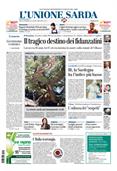


Marco Arrais: "Workplace safety isn't a document. It's a culture."
The Sardinian consultant, already the subject of an article in a national newspaper, returns to talk about safety in companies: between ignored regulations, recurring errors and a professional model that combines law and technology in a single approach.Per restare aggiornato entra nel nostro canale Whatsapp
In Italy, in 2024, INAIL recorded over 585,000 reports of workplace accidents. This number regularly makes headlines, fuels debates, and generates new circulars, but struggles to translate into real change in corporate practices. Marco Arrais, founder of the Legal & Technical Consulting firm in Sardinia and the subject of an article in a national newspaper, has a clear idea of where the real problem lies.
"Because too often, safety is seen as a formal obligation," he explains. "We think about the document, the signature, the course to take. But real safety is something else: it means truly understanding how a company works, where the risks lie, and how to concretely prevent them."
Lots of rules, little substance
It's natural to wonder if the problem lies in the quality of Italian legislation. Arrais's answer is clear: "Absolutely not. Italy has very advanced legislation. The challenge is applying it correctly. And to do so requires skills that aren't just theoretical. You need to be able to read the law, but also understand production processes, machinery, work organization, and operational dynamics."
A fundamental distinction that makes all the difference in everyday practice. Knowing the standards isn't enough: you need to know how to apply them to the specific reality of each company, with its spaces, machinery, and operating habits. This is precisely the leap that many companies fail to make, often relying on standardized solutions that don't reflect their reality.
The double competence that changes everything
At the heart of the Arrais method is a clear choice: to integrate legal and technical expertise in a single professional, rejecting the traditional separation between legal advisor and security manager.
"Security is a meeting point between law and technology," he explains. "If one of these two aspects is missing, the system will fail. A purely technical approach risks neglecting responsibilities and regulatory aspects. A purely legal approach risks being disconnected from operational reality. I chose to integrate both skills precisely to bridge this gap."
A vision born from direct observation of how companies function—or fail—when faced with fragmented compliance management. Two consultants, two different languages, two visions that rarely communicate. The result, too often, is a system that appears compliant on paper but in reality presents real shortcomings.
Three mistakes that expose companies
In his work in Sardinia, Arrais faces the same recurring challenges. He summarizes them in three specific points: "Standardized risk assessments, poorly structured delegations, and training that is often more formal than substantive. All elements that, in the event of an inspection or accident, can expose the company to very serious liabilities."
Three mistakes with a common denominator: treating safety as a procedure to be completed, not as a system to be built and maintained over time. Documents compiled in bulk, courses undertaken out of obligation, and delegations assigned without a real organizational structure. An approach that can persist until the first inspection or, worse, until the first incident.
Added to this is a particularly common mistake: intervening only after the damage has already been done. "It's the most expensive option," says Arrais. "When you arrive after an accident or an inspection, the damage is already done: financially, legally, and to your reputation. Prevention makes the real difference. A good consultation beforehand allows you to avoid critical issues and work with greater peace of mind."
No standard model: every company is different
When faced with those seeking quick, one-size-fits-all solutions, Arrais is straightforward: "You need to rely on a qualified professional and build a customized security system. There are no standard models that work for everyone. Every situation has its own specifics and must be analyzed in detail."
This principle is even more true for small and medium-sized businesses, the backbone of Sardinia's productive fabric, which often lack dedicated in-house staff and find themselves navigating increasingly complex regulations without a reliable compass. Having a stable professional, capable of interpreting both legal and operational dimensions, becomes, in this context, not a luxury but a concrete necessity.
An investment, not a cost
The message Arrais is sending to entrepreneurs is also the most strategic: "Don't consider safety a cost, but an investment. A safe company is a more solid, more credible, and even more competitive company. And above all, it's a company that truly protects the people who work there."
This perspective overturns the way regulatory compliance is too often viewed: not as a burden to be minimized, but as an opportunity to build a more robust, more responsible, and more attractive organization for customers, partners, and the people who work there every day.
In a landscape where workplace safety is increasingly under the spotlight in courtrooms, in inspections by regulatory agencies, and in the public eye, the model proposed by Marco Arrais, already praised in the pages of a national newspaper, continues to respond to a real and growing demand. It's not about being compliant. It's about being truly safe.