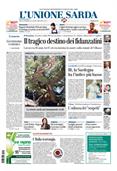


Malagò: "I'll bring the Azzurri to the "Gigi Riva" stadium in Cagliari."
The president of the Italian Football Federation: "The city, Sardinia, and the Rossoblù club deserve a new stadium."Per restare aggiornato entra nel nostro canale Whatsapp
He stressed that he could not comment on the events surrounding the selection of the new national team coach, partly because negotiations, negotiations, and—perhaps—considerations are ongoing. Giovanni Malagò agreed to discuss the state of Italian football, which he has been governing since June 22 from the main office on Via Allegri in Rome, the headquarters of the Italian Football Federation, thanks to his first-ballot election with 68.58% of the vote, after leading the CONI from 2013 to 2025. His analysis focused on the Cagliari stadium, for which he has already requested that deadlines be met in a letter to the Municipality, the Region, and the Rossoblu club: "We want to bring the national team," says the FIGC chief, "to play in the facility dedicated to Gigi Riva."
President Malagò, how did you find our football?
"There's a problem of international competitiveness, some structural criticalities to resolve, and a process of technical re-foundation that we're already addressing with a greater sense of unity and, above all, greater sharing. But overall, it's a vibrant movement, brimming with opportunities."
In the federal elections he united all the components of the movement, including amateurs.
It was a significant success, because the support extended far beyond those who had supported my candidacy. But the situation that convinced me to break the deadlock and embrace such a complex and fascinating challenge was the persistence with which they sought me out, believing I might be the right person to bring about a change. It was certainly a responsibility, but also a personal satisfaction, because I came from a historically very divided, if not downright contentious, world.
Is football really so low in popularity that it is almost overtaken by tennis?
"In truth, television ratings, the growing trend in stadium attendance, the steady number of registered members, and the attention of the media and fans demonstrate that football enjoys great appeal. As president of the Italian National Olympic Committee (CONI), I have reiterated this many times: it's a positive thing that fans are passionate about different sports; it's profoundly wrong to pit them against each other. It's a good thing that in a large country like ours, there's an ever-growing sports culture."
Now we need to bridge the gap with other international players: infrastructure first.
"Facilities are crucial, both at the highest levels and at local level and in training centers. I wrote it in my manifesto: the Federation must promote a truly national plan for football facilities, in coordination with the Government, Parliament, Regions, Municipalities, Sport and Health, and the Institute for Sports and Cultural Credit. During a recent hearing before the VII Commission of the Chamber of Deputies, I also called for these powers to be extended or expanded to include both stadiums and training centers with a capacity lower than that currently permitted by UEFA parameters."
Another sore point is youth development. How can we encourage them?
"It's one of the fundamental aspects. I've set myself priorities, and youth development is a crucial issue. The Federation and the clubs must do their part; we discussed it during the meeting with Maldini and Leonardo last Thursday in the Serie A league. But politics can support us with measures aimed at guaranteeing investment in youth sectors, such as the approval of regulations that allow young players to have the time necessary to foster technical development and generate value."
In Cagliari, after ten years of pressure from president Giulini's club, the process for the new stadium appears to be near completion.
Cagliari deserves a new, modern, and functional stadium. The citizens and all of Sardinia deserve it, for the history and, above all, for the future of the rossoblù colors and of the club presided over by Giulini. We want to bring the national team to play in the stadium named after Gigi Riva, a true hero of Italian sport.
Will it be able to compete to host the 2032 European Championships or will it remain on List B?
Nothing is finalized; they're all in the running. We're waiting for the July 31st deadline to assess how many and which projects will be officially submitted. Then we'll analyze the parameters and guarantees. Only then can we evaluate a list of eligible cities and stadiums.
Is it normal for bureaucracy to block essential works for the redevelopment of cities?
The Euro 2032 bid has already yielded a crucial milestone: extraordinary momentum has been achieved, and numerous organizations have stepped up to work for the benefit of their respective communities. We're seeing several administrative processes begin and end in less than a year, demonstrating that effective work is possible only when done together and in a coordinated manner between local governments and clubs.
In other countries, stadiums are built quickly. Are there perhaps a lack of sponsors or less efficiency here?
"Internationally, they're certainly ahead of us, but it's not true that infrastructure projects arise spontaneously. They're all the result of vision and planning between private individuals, local authorities, and the government, which is what the FIGC also requires for our country."
In Taranto, the new Iacovone was built in a year and a half. A virtuous example from the South.
The Iacovone Stadium was redeveloped thanks to the Mediterranean Games, confirming what I've long maintained: Italy needs major sporting events to make a leap forward in terms of infrastructure. This has been the case since the 1960 Rome Olympics. Although most of the investment with Euro 2032 is private, the same thing has happened: the candidacy has set in motion a virtuous cycle that will benefit several regions.
Lega Pro chief Marani pointed out that the money given to agents each year could be used to support Serie C clubs in developing their Under-15s.
The issue of agents is always a hot topic; there are FIFA rules and a state law to follow. To change an established system, however, the clubs must first be fully committed, because they are the ones who rely on the services of agents and intermediaries.
Another topic is the development of women's football in club teams. Does professionalism actually exist?
"Choosing professionalism was a momentous turning point, a major social and cultural achievement. The real challenge now is finding the balance to make that choice sustainable. Beyond government intervention on a minimal percentage of the Melandri Law, we must create the conditions for full commercial development and public interest."
Will Italian football ever regain its former glory?
We're working towards that. We need enthusiasm to carry us through this entire process, which will necessarily be long and complex. With Maldini and Leonardo, we want to be ambitious, as demonstrated by our attempt to hire the best coach in the world. The important thing, however, is to rebuild our movement from the ground up, starting with technique and quality. In the meantime, we must immediately revive the fortunes of the senior national team, with our sights set on the 2028 European Championships and the next World Cup.