

Looking Beyond Appearances: Francesca Speranza's Winning Message
The writer from Siniscola won first prize with her collection "Seven Stories at the Heart's End"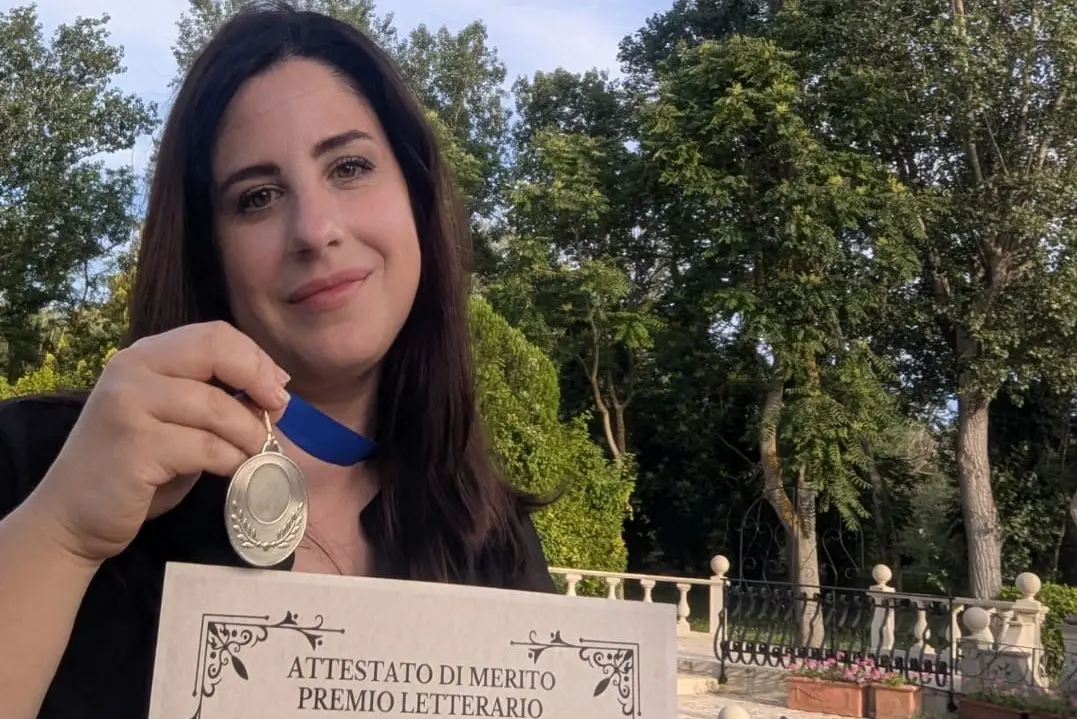
Per restare aggiornato entra nel nostro canale Whatsapp
Francesca Speranza flew to Misano Adriatico for the closing ceremony of the 2025 "Brothers Grimm" Award, organized by the Cirqo Association.
The Siniscola-born writer won first prize with her collection "Sette racconti in punta di cuore," a particularly significant achievement for the Baroni-born author and a testament to her talent in the field of children's and adolescent literature. The collection offers seven stories that speak to both young people and adults, addressing universal themes through a simple, poetic, and unrestrained style. It was precisely this stylistic signature that won over the jury of the "Brothers Grimm" Award, which sought to recognize a work that combines literary quality and educational value.
The story "The Transparent Child" was particularly well received, considered the emotional heart of the collection. Through the story of a boy convinced he is invisible to the world and his encounter with a blind girl, Francesca Speranza delicately addresses timely themes such as youthful loneliness, the need to be listened to, and the importance of acknowledging others.
A powerful metaphor that invites us to look beyond appearances and rediscover the value of an inward gaze. Francesca Speranza's writing is rooted in her homeland, Sardinia, and in a personal journey born from a passion for reading and developed during her experience of motherhood. What began as a gift to her daughter Aurora has transformed over time into a literary production capable of reaching readers of all ages and gaining recognition far beyond the region's borders. Francesca Speranza brought her Siniscola home to the awards ceremony in Misano Adriatico, an event that also represented an important opportunity for authors from across Italy to meet and share; the public readings of the finalist works highlighted the fundamental role of literature as a tool for growth, dialogue, and inclusion.