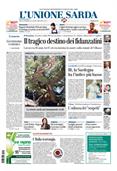


Meloni: "I was shocked by Trump, but I won't fuel the conflict: bilateral work with the US must return to normal."
After a heated exchange with the American president, the prime minister said: "Foreign policy isn't Temptation Island; it will remain the same as it has been for the past 80 years."Giorgia Meloni publicly calls for a truce with Donald Trump. She has no intention of fueling "confrontation," and while she says she is "genuinely shocked" by the American president's behavior, she does not intend to break the Rome-Washington axis.
For this reason, her family will not miss the July 4th celebrations at Villa Taverna. The prime minister defends Deputy Prime Minister Antonio Tajani's hastily made decision to cancel the mission to Miami for the Italy-US Business Forum, but the government will not disrespect Ambassador Tilman Joseph Fertitta, "who is a figure who works hard to maintain strong relations between Italy and the United States," she explains in an interview with "Il giorno de La Verità." "I have not changed my mind about how important it is to maintain a solid relationship between the United States and Europe," she reiterates.
According to the Prime Minister, no economic repercussions will follow the disagreements with Trump: "It seems to me that our business and our relations have been going well in recent weeks and also in recent months, both at an institutional and economic level," she notes, recalling that Italian exports have grown despite the American tariffs, "demonstrating that our products are very well received by American consumers."
In short, the intention is to bring foreign policy terms back to the "depth" they belong in: "Sometimes we really do talk about foreign policy as if it were Temptation Island," Meloni quips, commenting on the countless memes that have flooded social media in recent days depicting the two leaders sitting around the bonfire during the TV show. "Foreign policy is more complex than that," she emphasizes.
He says he's "fairly optimistic" about the US-Iran negotiations, despite them being "complex": "I think our optimism shouldn't be static; we need to take action on the diplomatic level and make ourselves available for a mission." Rome's stance on Tehran remains unchanged: "We cannot allow the regime to equip itself with nuclear warheads when it has demonstrated it has long-range missiles. We cannot afford that; the terms of the agreement on this must be clear. No country in the region," he added, "can or should feel threatened; this applies to Israel as well as the Gulf countries."
But the issue closest to Meloni's heart is freedom of navigation: "We've seen how the closure of Hormuz has impacted the economy. We must ensure full restoration of navigation, not only because of the crucial role Hormuz represents but also because of the precedent that controlling the Strait of Hormuz sets." If we allowed Iranians to pay a toll, she warns, "we would find ourselves in a world where every crossing could be considered a weapon. This is why we have agreed, in a peaceful context, to a mission to guarantee freedom of navigation: Parliament's authorization would be needed, but I believe Italy should do its part."
At home, the prime minister is committed to final approval of the enabling law on civil nuclear power before the summer recess. Meanwhile, the government is already working on implementing decrees: "I don't want to waste a single day," Meloni says, noting that the legislative session is just over a year away. "I would like to reach the end having concretely offered Italy something that I consider extremely important. Because nuclear power allows us to be independent at a time when we have understood how dangerous it is to depend on others, how dangerous it is, and because it allows our companies to compete on equal terms."
(Unioneonline)