

Ian Anderson and Jethro Tull, the legend on stage in Cagliari, performing classics and songs from the new album "Curious Ruminant."
The "Curiosity Tour" stops in Sardinia: meet at 9:30 p.m. at the Arena Fiera.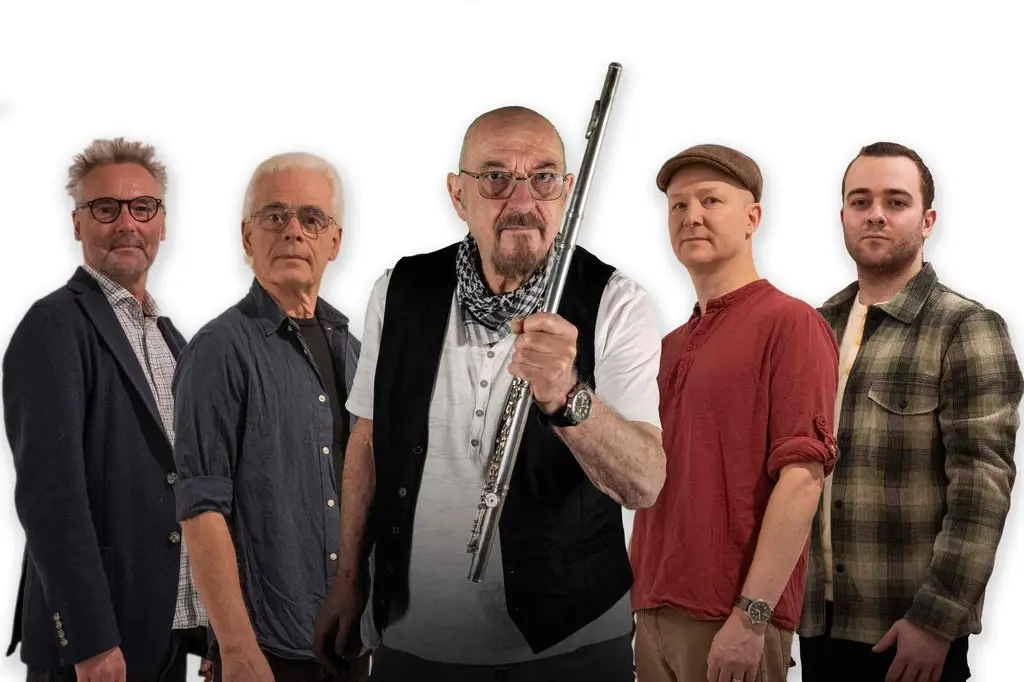
Per restare aggiornato entra nel nostro canale Whatsapp
At 9.30 pm this evening, the legend returns to perform in Cagliari: Ian Anderson and Jethro Tull, a world-renowned progressive ensemble, will take to the stage at the Arena Fiera in Cagliari for a date on the "Curiosity Tour", the journey that accompanies the release of "Curious Ruminant", the 2025 album.
Alongside the current members – David Goodier, John O'Hara, Scott Hammond – are keyboardist Andrew Giddings and newcomer Jack Clark on guitar.
The event is part of the first edition of the Frequenze cultural festival, promoted by the Suoni Diversi Association.
After a career spanning nearly sixty years, what do you feel you have defended most stubbornly: sound, creative freedom, or a certain way of being on stage?
"All three, of course. But musical independence and freedom have always been granted to me by the various record companies, to which I'm very grateful. On stage, everything comes naturally to me; I'm spontaneous. I have my own way of performing, and it's too late to change now."
Many listeners immediately associate you with "Aqualung." Is that the song you feel most connected to, or is there another that better tells your story?
"Aqualung is one of what I call the 'highlights' of our repertoire and is a prime example of well-crafted music and lyrics. But there are other songs from that album that still touch me deeply, along with many others that have come and gone from the setlist over the years."
Your musical language has always combined rock, folk, blues, and an almost theatrical approach to composition. Does this fusion arise more from musical instinct or from a conscious artistic vision?
My influences are many and varied, spanning different musical styles and eras. I've always been intrigued by music, art, and religion. Most of my songs are born from visual images, usually still, black-and-white images. I try to bring them to life and give them a temporal duration of a few minutes. Not to tell a story, but to expand the visual image and provide context within an act of observation.
What kind of relationship have you built with the Sardinian public over the years, and what memories do you have of your previous performances on the island?
"We've been there a couple of times, but I've never had time to play tourist. I'd love to have more time to explore the region's history and culture, but I have to limit myself to the few hours I spend there, complementing it with some reading before bed."
During the concert, you'll also perform some songs from "Curious Ruminant." How does this 2025 album connect to Jethro Tull's legacy, and how does it continue to evolve it?
We'll be performing two songs from the album, and I hope they convey a sense of the album as a whole; especially the title track, which describes my general state of mind and my journey through study and observation.
For a young listener who only knows you by reputation, which three albums would you recommend to understand Jethro Tull's journey?
The Best of Jethro Tull. The Second Best of Jethro Tull. And Jethro Tull's Greatest Hits… Seriously, collections are a great starting point and allow potential listeners to get a general idea before choosing specific albums. That's what I do when I discover a new composer or artist I'm unfamiliar with. Recently, for example, I've been exploring the works of Bob Dylan and Miles Davis.
For those who have followed Anderson's career, this return to Sardinia is an opportunity to recognize Tull's unmistakable stylistic signature in their compositional complexity. This isn't nostalgia, but rather a conscious continuation of a career-long musical exploration. And it's not over yet.
