

Grand finale for Florinas in yellow with Ranucci, Avoledo and Basso
Swedish writer Sara B. Elfgren: "Writing novels means creating an entire world."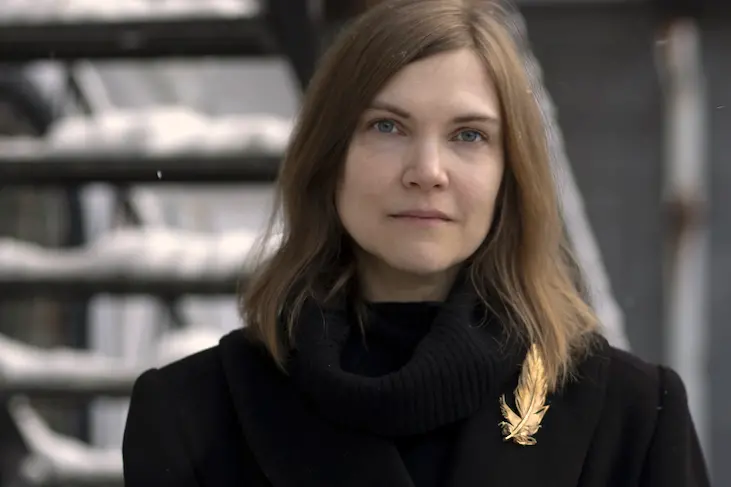
Per restare aggiornato entra nel nostro canale Whatsapp
An intense day full of unmissable events: the last of Florinas in giallo , scheduled for Sunday. The event kicks off at 11:30 a.m. with Aperitivo in Giallo , featuring Silvia Sanna presenting L'ombra del padre (The Father's Shadow) with Stefano Resmini. At 1:30 p.m. , the traditional A pranzo col delitto (Lunch with Crime), curated by Giovanni Fancello and the Ena 'E Littu Association.
In the afternoon, Piazza del Popolo will host the final literary meetings: at 6 pm, Tullio Avoledo will present Ultimo valzer di una ragazza perbene (The Last Waltz of a Respectable Girl) in conversation with Cristina Nadotti; at 6:45 pm , Alice Basso will present Le ottanta domande di Atena Ferraris (The Eighty Questions of Atena Ferraris) , interviewed by Raffaele Sari; at 7:30 pm, Sara B. Elfgren will present Cose di famiglia (Family Things) together with Luca Crovi, translated by Sara Blasina. The festival will close at 9 pm in the open-air space of the Municipal Amphitheatre with the monologue Diario di un trapeze artist —written and performed by Sigfrido Ranucci —preceded by a performance by the Florinas Choir .
The Swedish author Sara B. Elfgren is the foreign guest star. Translated into 30 languages, in addition to numerous children's books, she has written graphic novels, plays, television, film, radio, and video games. She has received numerous literary awards and has been nominated for the August Prize and the Nordic Council Literature Prize.
You've been writing for children and young adults for many years. What changed when you switched to adult fiction?
"Many adults read my children's novels. So it wasn't such a big change. But every new novel is a new challenge in itself, regardless of the age group."
In Family Matters , the danger comes from within the closest relationships. Why were you interested in exploring this particular type of fear?
I think it's fascinating to understand and show how emotions and our identities, our sense of worth and our sense of freedom can be affected by our closest relationships. I've noticed this in the people around me and in myself, especially in times of crisis. There's so much beauty in deep relationships... but if the wrong person gets under your skin, it can lead to great suffering, and it can become almost emotionally impossible to let go.
The novel explores themes of love, addiction, and violence. How did you balance psychological insight with suspense?
The novel is written from Mirjam's point of view, and we're very much inside her head. Since she's someone who's spent a lot of time thinking about these issues, it seemed natural to follow her thoughts. And, at least for me, this adds layers of suspense. There's much more at stake.
He has worked in many different fields, from film and television to radio and videogames: but what can a novel about fear do that other media can't?
If you can really get under the reader's skin, I think the reactions can be stronger than with other media, because the text can resonate with the reader's personal experiences in a unique way. I love writing novels because they allow you to create an entire world, and that, in turn, is what makes them so difficult to write. When I try to create a suspenseful or scary scene, I put myself in a certain state of mind. Of course, there's a certain technique, but it's as if I use it rather instinctively, and I've never really tried to analyze my method. But if you write crime novels, it's helpful to be able to shift from the role of writer to that of reader. What would I think, as a reader? What will happen here? These are questions I often ask myself. But then you always have to return to the text, to write it.