

Golden appointments at Cagliari Airport: new top manager's salary tripled
For Riccardo Kustermann 190 thousand euros per year against the 65 thousand of his predecessor plus a second assignment worth 40 thousand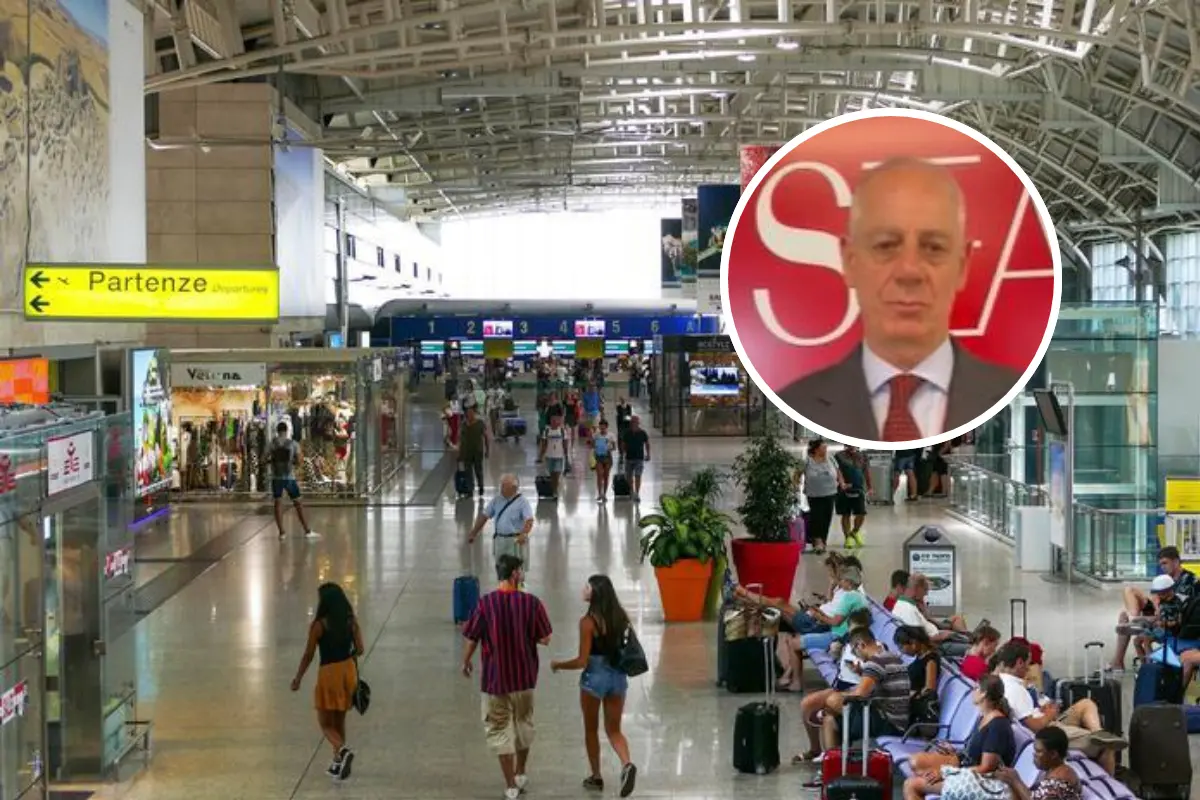
Per restare aggiornato entra nel nostro canale Whatsapp
Sogaer is not experiencing a crisis. The company that manages Cagliari airport—currently public but poised to be folded into the holding company of the private fund F2i Ligantia (this is the intention of the Chamber of Commerce, the 94.45% majority shareholder)—has tripled the salary of its newly appointed CEO. Riccardo Kustermann , a top manager arriving from SEA , the joint stock company that manages Milan's Linate and Malpensa airports, took over on June 3, where F2i holds a 44.3% stake (but the majority shareholder is the Municipality, with 54.8%). In short, the fund's new CEO is a regular.
Kustermann's arrival in Cagliari merely confirms a rumor first reported in May. What wasn't known was his compensation, which has skyrocketed this time around. According to official documents, published online on Sogaer's website, the new CEO has now secured a two-year agreement. Kustermann's salary schedule lists two years, 2026 and 2027, paid equally, although this year's appointment is for six months, having begun in early June. The top manager is paid a fixed salary of €150,000 (gross) plus a variable component of €40,000. Total: €190,000.
The Transparency section of the Sogaer portal also reveals that Kustermann has also been appointed CEO of Sogaer Security , the group's joint stock company dedicated to passenger and baggage screening. Security filters, indeed. For the former SEA executive, this represents an additional €40,000 per year, bringing his total compensation in Cagliari to €230,000. Online documents also reveal that Kustermann's predecessor at the parent company Sogaer, Sardinian-born Fabio Mereu, an entrepreneur and national number two at Confartigianato, earned €65,000 annually , three times less than the Milanese manager. The compensation change for the CEO role at Sogaer Security is also substantial: Gian Luigi Molinari, Kustermann's predecessor, earned €25,000 gross annually . Molinari, a beach resort entrepreneur now affiliated with Confindustria, was appointed on behalf of FIBA, the beach resort workers' union controlled by Confesercenti.
Seen from this perspective, the round of appointments at Cagliari airport reinforces Sogaer's position against privatization, a decision the Confederation itself expressed its opposition to in a ten-point document in 2023, led by provincial president Marco Medda. This act of opposition to the Chamber of Commerce's decision to sell the airport to F2i Ligantia, already a shareholder in Olbia and Alghero, and merge it into the single management holding company.
Roberto Bolognese, appointed chairman of the board of directors of Sogaer Security in July 2024 and also rejected, also adhered to that manifesto. Bolognese's position was awarded to Monica Pilloni, for €10,000 per year, for a two-year term. The same term was awarded to the chairmanship of the parent company Sogaer, where Pilloni was granted a continuation of her term, starting June 3, as Kustermann. Compensation: €50,000.
From the cleanup to the airport, the race against time to complete the privatization by the end of the year is on . The initial deadline, according to the preliminary agreement, is set for September. But the process must start from scratch, starting with the Court of Auditors' opinion, the major issue facing the Chamber of Commerce.
For two reasons: F2i's selection is being made through private negotiations, based on its non-fungibility—the legal uniqueness recognized for an economic operator—which, according to the accounting judges, is only verbally asserted. To sell the airport, the law requires a public tender. The other issue is territoriality: by statute, the Cagliari-Oristano Chamber of Commerce is required to operate within its own territory. The Olbia and Alghero airports are outside this perimeter. It goes without saying that the field is extremely vulnerable. The risk of an appeal is enormous.
