

Gesture becomes writing: the Biennale's "Alphabets" arrives at the Contini.
The presentation is scheduled for Friday, May 22nd at 6pm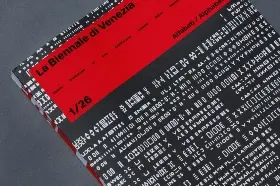
Per restare aggiornato entra nel nostro canale Whatsapp
A magazine dedicated to the word, reborn in an art gallery. It's hard to imagine a more appropriate place to explore the nature of language, the subtle boundary between the gesture that paints and the hand that writes. It's with this in mind that the Pinacoteca Carlo Contini in Oristano opens its doors, Friday at 6:00 PM, to the presentation of issue 1/2026 of the Venice Biennale Magazine, titled "Alfabeti / Alphabets." The event, organized in collaboration with the Oristano Municipal Library, will open with institutional greetings from Mayor Massimiliano Sanna and Councilor for Culture Simone Prevete. Speakers will include Pietrangelo Buttafuoco, President of the Venice Biennale, and Debora Rossi, Editorial Director of the Magazine and Head of the Historical Archives, in conversation with Silvia Loddo, Director of the Pinacoteca.
"I am very pleased that President Buttafuoco and Director Rossi have accepted my proposal to present the new Biennale Magazine in Oristano," says Silvia Loddo. "The Biennale archive has been an important place of study and professional development for me, preserving the history of this institution since 1895 through documents, photographs, films, scores, and works of art." The Biennale Magazine returns to print after decades of absence and is conceived as an open editorial laboratory, in which each monographic issue can establish a dialogue between the disciplines that animate the Venetian exhibition, from the visual arts to architecture, including dance, music, theater, and cinema, with forays into the fields of science, literature, and fashion. "'Alfabeti' places the word at its center as the original device for constructing thought and artistic experience," explains Debora Rossi. The issue opens with a quote from 'Parmenides'. by Martin Heidegger, in which the philosopher identifies the written and manual word as the very foundation of humanity, the place where thought and gesture coincide. Writing, from this perspective, is not a means of expression but an original practice of constructing meaning.
It's no coincidence that this first issue establishes an explicit dialogue with the one published in October 1951, in which theater and music occupied a central position. Those historic pages featured contributions by Igor Stravinsky and W.H. Auden on "The Rake's Progress," reflections on Carlo Goldoni's theater, and contributions dedicated to Bertolt Brecht's "Mother Courage." It was a context in which the written, spoken, and sung word emerged as both an artistic and political tool, capable of reflecting the cultural tensions of the postwar era. "The issue we're presenting, dedicated to Alphabets," explains Loddo, "comes after five thematic volumes dedicated to Diluvi vicini venturi, La forma del caos, Anteguerra, Materia prima, and Applicazioni. Each issue contains testimonies, interviews, dialogues, and previously unpublished contributions from both Italian and international artists and scholars, and is largely illustrated with iconographic materials from the Archive. A treasure trove of words and images that we are happy and proud to present in Oristano as well."
