


Gesico reconnects with its history: after 70 years, a 19th-century painting returns home.
For decades it seemed that this work had been lost.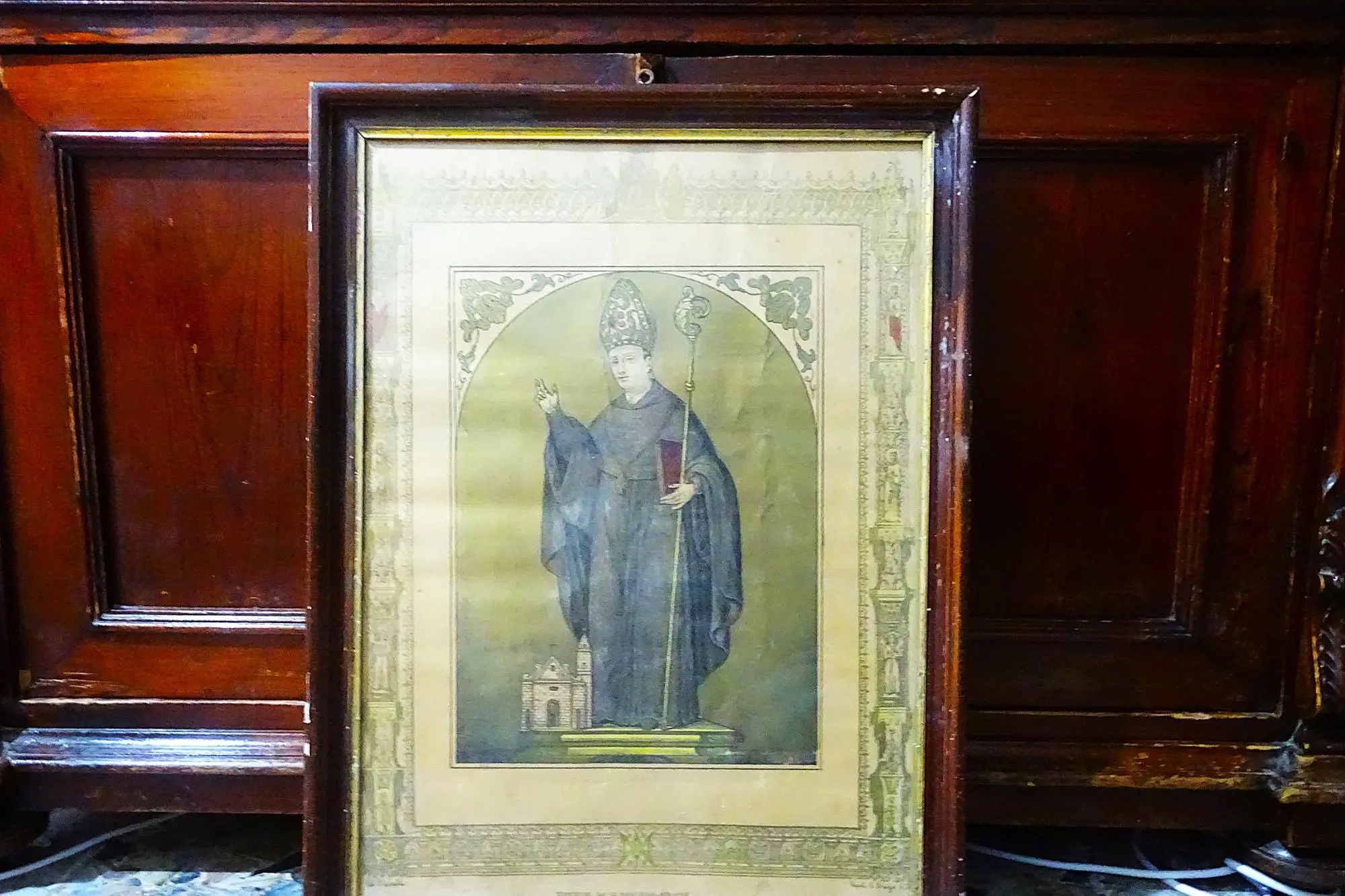
Per restare aggiornato entra nel nostro canale Whatsapp
After more than seventy years, one of the most significant pieces of Gesico's historical memory has returned home. On the eve of the 397th Feast of San Mauro, the town in Alta Trexenta welcomed back a 19th-century painting commissioned by the local Monte Frummentario di Soccorso from the renowned Neapolitan artist and printer Francesco Apiccella. The canvas had disappeared from circulation in the mid-1950s, following the demolition of the old 17th-century building that housed the Monte. Since then, all trace of it had disappeared. The painting, along with other old furnishings, had been moved from one warehouse to another, beginning a long journey that would eventually take it from Sardinia to Naples.
For decades, it seemed that the work had been lost. However, extensive research conducted by the Gesico Pro Loco allowed us to reconstruct its journey and, ultimately, bring it back to the village. "We never gave up on the idea that the memory of our town could be lost," says Carlo Carta, president of the Gesico Pro Loco. "No trace is ever definitively lost if you have the perseverance to search for it. This painting toured Italy for seven decades before ending up forgotten in a warehouse. Its return, on the eve of the feast of San Mauro, is a moment of great importance for the entire community." The recovery of the canvas was the result of research involving documents, testimonies, and contacts. The first step was to reconstruct the work's history and understand what happened to the objects located on the ancient Monte Frummentario after its demolition. An important role was also played by the people who shared memories and information on the painting's provenance. "We compared the testimonies and reconstructed the painting's journey. Knowing where he left from and knowing his story allowed us to follow his tracks to Naples, where we finally managed to find him,” explains Carta.
The painting's recovery thus represents much more than the restitution of a work of art. It is the tangible result of research into the history of Gesico and the dispersion of local heritage, a story that can now be retold in its home community. Apiccella's canvas will be housed in the Animas Identity Museum, currently under construction. "We're envisioning it as a true time capsule of our community," concludes the president of the Pro Loco. While the town prepares for the Snail Festival and the centuries-old Feast of Sant'Amadu (scheduled for next month), the community of Gesico can also celebrate the return of a part of its history.
Severino Sirigu
