

From Paulilatino to Cagliari to donate blood to two children with thalassemia: "Donor Day was a celebration for us."
The town rallied for Maria Candida and Alberto Urgu 50 years ago: "Immense gratitude."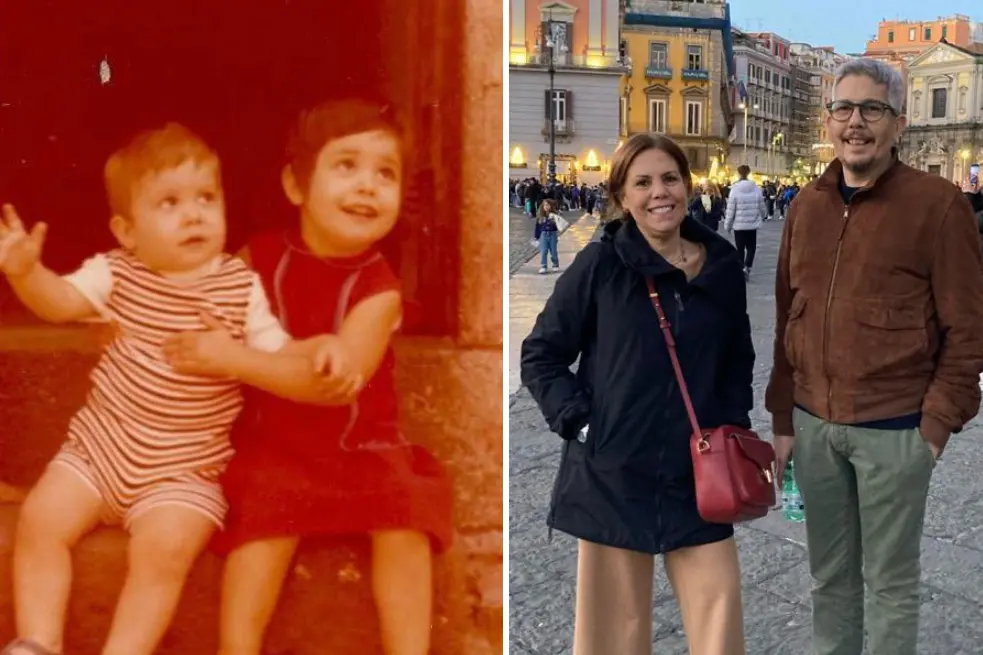
Per restare aggiornato entra nel nostro canale Whatsapp
"We feel immense gratitude." Decades have passed since Paulilatino donors slowly rode a bus along the Carlo Felice line to reach Cagliari and offer their help to two thalassemic children who had Guilcier blood. Maria Candida and Alberto Urgu , 55 and 53, are the children of Guido Urgu , a pediatrician from Paulilatino who moved to Cagliari for love.
For them—she a primary school teacher and he a journalist for La7—the Oristano village had been mobilizing since the 1970s: from that seed of hope in 1994, the chapter was born, which now boasts a full list of reservations every month, with one in four eligible residents donating. "At first, I think they even came in trucks from my uncles' company. Once—unable to find another means of transport—they arrived in a police bus: anything to avoid canceling the collection," says Maria Candida.
Remember those days?
Maria Candida: "Absolutely, for us it was 'donor day.' Dad would go and welcome them, announcing, 'Donors are here today,' and then there was always some social activity, a lunch: it was a celebration."
Alberto: "Donors have helped us right from the start, when we were born with this disease, which at the time had a very low life expectancy. There was this wave of solidarity in the village that started with our uncles Carlo and Lelle and then spread."
A detail that hasn't been lost?
MC: "The atmosphere of joy and enthusiasm seems to have remained, because even now the Paulilatino Avis continues to organize social activities."
A.: «It was a community moment, something spontaneous that now seems more structured to me».
Did you realize you were at the center of something special?
MC: "We knew there was this outcry, this gesture of love from the uncles, their friends, and so many others. We owe them infinite gratitude, a debt of gratitude that will never be repaid."
A.: "We understood it was important because the donors, along with the doctors and science, allowed us to continue living by giving us time to see how everything around us had improved. In addition to the transfusions, we used to have an infusion that lasted all night, a very heavy therapy. Now we take a pill and live a normal life."
How much did this impact your relationship with Paulilatino?
MC «Since we were little, we went to the village every other Sunday to visit our grandmother. We always felt part of a community.»
A. “It’s like a family, and the fact that one in four citizens in Paulilatino is a donor makes us very proud, happy that the town is so supportive even in carrying this thing forward. All our cousins have always donated.”
Have you tried to give back some of the love you received?
MC: «I am very reserved and if I agreed to talk about it it is precisely because of this immense gratitude, to be able to say a huge "thank you" to those who started and to those who continued to donate».
A.: "We try, we try to be there when they call us. It's a moving thought, it's moving because more than 50 years ago they nurtured a hope that turned out to be true, and thanks to it we were able to move forward."
Sardinia continues to import blood bags.
A.: "Unfortunately, the emergency is ongoing. We can say that anyone who donates does a wonderful thing for everyone, because blood is needed for so many diseases."
MC: "Even though the treatments have continued, transfusions are needed every two weeks, and only the generosity of people can guarantee them."