

Extreme heat, fires, drought, and dying bees: Sardinian farmers are sounding the alarm.
Coldiretti writes to the Region: "The situation is worrying; we need to strengthen protections and support tools."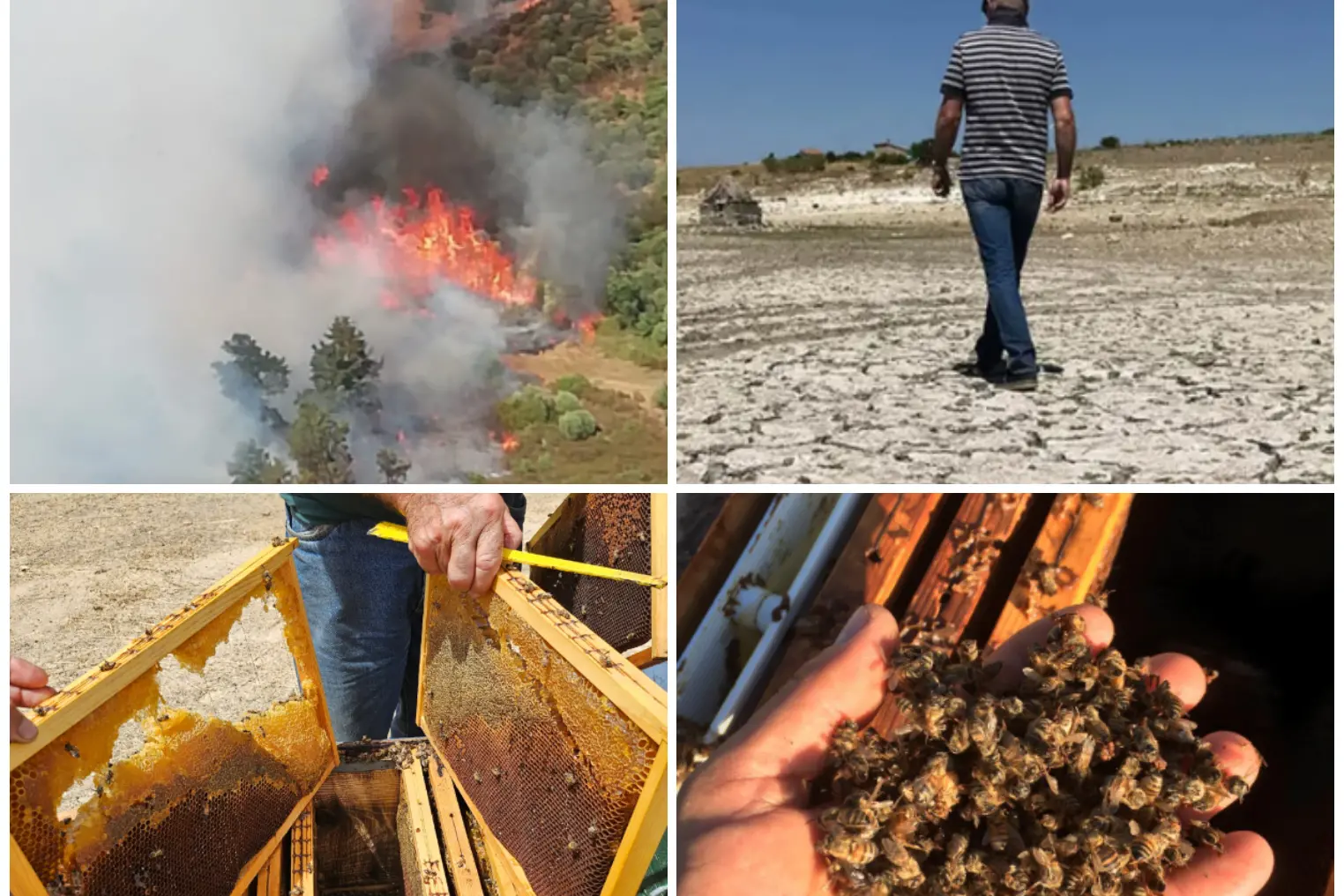
Per restare aggiornato entra nel nostro canale Whatsapp
The exceptional heatwaves currently affecting southern Sardinia are beginning to have their first effects on the agricultural sector. The record temperatures of recent weeks, combined with the persistent drought and numerous fires raging across the region, are raising concerns among farmers , who are closely monitoring the evolution of the summer season.
The alarm was raised by Coldiretti Cagliari , which also sent a letter to the Sardinia Region to ask it to "maintain high attention on the sector through constant monitoring of the evolution of the situation".
Among the sectors most affected and at risk is beekeeping, which, the association explains, "is registering the first signs of suffering in the hives."
"Our thoughts," Coldiretti explains, "inevitably turn to 2023, when extreme heat caused extensive damage to numerous beekeeping businesses, with thousands of bees dying and honeycombs damaged by the exceptional temperatures. Compensation measures were implemented at that time to support the sector , but they failed to cover all affected businesses or fully compensate for the damage suffered." For this very reason, Coldiretti Cagliari has asked the Region "to implement a rescheduling of interventions, so as to also provide solutions to businesses that were excluded and strengthen support tools in anticipation of any new critical issues."
"We are in daily contact with our beekeepers," emphasizes Giorgio Demurtas , president of Coldiretti Cagliari. "The initial reports are prompting us to raise our level of vigilance. This is precisely the time when we need to act preventively, because the memory of 2023 is still very much alive, and we want to do everything we can to ensure a similar situation doesn't happen again. Bees are an indispensable asset for agriculture, the environment, and biodiversity, and they deserve the utmost attention."
According to Coldiretti Cagliari, in addition to monitoring the situation, it is necessary to strengthen the research, innovation, and technical assistance tools available to beekeeping companies. Climate change requires new adaptation strategies, and it is increasingly important to support beekeepers in identifying techniques and solutions capable of reducing the effects of high temperatures on hives and improving the resilience of the sector.
"Climate change," emphasizes Giuseppe Casu, director of Coldiretti Cagliari, "is no longer an extraordinary phenomenon but a new condition that companies must confront. This is why we are calling for greater investment in applied research, experimentation, and technical assistance, alongside monitoring, enabling beekeepers to adapt to a profoundly changed climate," he adds. "Prevention also requires knowledge and innovation, and for this reason , we are calling on the Region to keep a spotlight on this sector, so that we can intervene promptly should conditions worsen. Prevention today means avoiding far greater damage tomorrow."
(Unioneonline/lf)