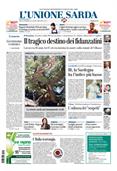


Einstein Telescope: Italy and Germany Form Pact to Beat the Netherlands
The agreement was signed in Rome by which the two countries propose the construction of a double gravitational wave detector: one in Sardinia, the other in Saxony.Per restare aggiornato entra nel nostro canale Whatsapp
It's an agreement. Formally defined as "strategic," but operationally it's seen as a guarantee of final victory: Italy and Germany are now joint candidates , no longer competing against each other, to host the Einstein Telescope (ET), the third-generation gravitational wave detector for which Sardinia is competing with the Sos Enattos mine . The agreement was signed yesterday in Rome. Representing Italy were Minister Anna Maria Bernini and Governor Alessandra Todde ; representing Germany were their counterparts from Saxony, Sebastian Gemkow and Michael Kretschmer (connected remotely). Also present was the president of the National Institute for Nuclear Physics, Antonio Zoccoli.
With the signed agreement, the two countries propose to build not a delta-shaped facility , as in one of the two design options, but a double interferometer, that is, two twin facilities. Remote and interconnected, one on our island and the other in Upper Lusatia, Saxony. This would defeat the Netherlands, the third candidate to host ET. For now, however, both technical configurations are viable.
The terms of the Italian-German pact are now being examined by the German Government Representative Council (BGR), which has the power to decide on the location of the Einstein Telescope . In addition to Italy and the Netherlands, the BGR includes Belgium, Croatia, France, Greece, Poland, Spain, and the United Kingdom. Germany and Austria are observer countries. The verdict is expected in early 2027.
Minister Bernini said: "The Einstein Telescope is a major research infrastructure and represents a strategic investment in the future of fundamental science, advanced technologies, and Europe's ability to remain competitive and attractive in a rapidly changing global context. The cooperation between Sardinia and Saxony demonstrates how territories with diverse histories, geography, and traditions can work together to build a shared scientific future, founded on excellence, openness, and mutual trust." President Todde described it as "a crucial day in the ambitious journey we have undertaken with the candidacy of the Sos Enattos site to host the ET. From the very beginning, we did not view Saxony's candidacy as a further obstacle in our path. On the contrary, we seized the opportunity to join forces to achieve a goal that, moreover, is also supported by the scientific community. Even the Nobel Prize winner in Physics, Giorgio Parisi (who chairs the Committee of Experts established by the Ministry of Education, Universities, and Research to support the Italian candidacy) supported this solution."
ET will be a thousand times more powerful than Virgo , the facility in Cascina, in the province of Pisa, where in 2015 the signal of a gravitational wave first reached Earth. So much so that the discovery was awarded the 2017 Nobel Prize in Physics. The officialization of the agreement was preceded by an informal summit between the two countries.