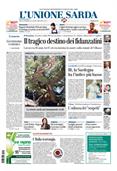


Economist Luigi Paganetto: "Sardinia needs to build a large data center and artificial intelligence infrastructure."
"Dependence on natural gas creates an unsustainable competitiveness gap in the medium to long term."A data center, in the inset Luigi Paganetto
Per restare aggiornato entra nel nostro canale Whatsapp
I have strong ties to Sardinia. I studied in Cagliari, then moved to Rome, founded an international institution at Tor Vergata, and traveled the world, always carrying with me a deep appreciation for the strong and loyal character of my Sardinian friends.
The interview with Genoese Luigi Paganetto can only begin on the island that captivated him. His long career in economic studies at the highest levels includes academic work, particularly at the University of Tor Vergata in Rome, his role as vice president of Cassa Depositi e Prestiti, and his work for the creation and consolidation of the Group of 20, a laboratory of ideas and thought on Europe, also fueled by former ministers Brunetta and Tria.
This is a historic moment in which the economy is once again being affected by war. What's happening?
The perspective we must adopt must be a European one. We live in a world where force and conflict are the cornerstones of international confrontation, both commercially and militarily. Europe is in trouble, partly because contemporary democracies have become highly vulnerable to "easy" arguments, losing their ability to respond to stereotypes and emotions that are tools of populist consensus. But it's also true that these difficulties are a result of the "global disorder" created by the United States' abandonment of the main rules of the order it established in the postwar period.
What remains of the NRRP? How were the resources used?
Contrary to prevailing opinion, I believe that Europe has recently demonstrated a remarkable capacity for resilience, as evidenced by the adoption of the NextGeEu (the PNRR for Italy) and the firmness with which it is responding to Ukraine's aggression to protect the values of the Old Continent. It should be remembered that the NextGeEu is a set of national development projects covering approximately €800 billion of European debt. The PNRR has provided Italy with a significant infusion of resources (€194.4 billion, of which €68.9 billion in non-repayable grants and €122.6 billion in long-term loans), essential for recovery after the Covid shock. It is a program for which, in hindsight, it must be noted that our administration did not have its drawers full of highly profitable projects, partly because it had long since lost the habit of planning and programming.
High energy costs are a brake on business development.
"Our dependence on natural gas, which accounts for 46% of electricity generation in our country, exposes the Italian economy to higher levels and higher price volatility than its European counterparts and creates a competitiveness gap that is unsustainable in the medium to long term."
How to reduce energy dependence?
It's clear that renewables today produce clean energy at a relatively lower cost, but in the transition between now and 2050, natural gas and oil (71% of energy consumption), despite their decreasing share, will continue to play a dominant role. I consider the European Commission's recent move to electrify energy consumption important. Not only because it favors reduced gas consumption (heat pumps instead of gas, increased use of electricity in industrial processes), but also because it ties in with the technological shift driven by digital technology and artificial intelligence, which requires a dramatic increase in the availability of electricity to power data center and quantum computing infrastructure. The ongoing debate in Sardinia on wind turbines offers an opportunity to reflect on the potential new opportunities this decision opens up for the island. We certainly need to focus on the least polluting options for the landscape, which are likely offshore turbines, while fully complying with environmental standards.
Offshore turbines are also a topic of discussion.
In exchange, we must demand the creation of a large data center and artificial intelligence infrastructure, which is currently lacking in Italy, and a digital training center where young people who are leaving the island today can find new opportunities at all skill levels. It would be an extraordinary opportunity to connect the country's interests with those of Sardinia, with a forward-looking industrial policy.