

Demographic decline and inaccessible territories: for the mountainous and inland areas of the island the challenge is existential
Confartigianato Imprese Sardegna report: 3,600 small businesses (€680 million in turnover and 7,500 employees) at risk of "desertification"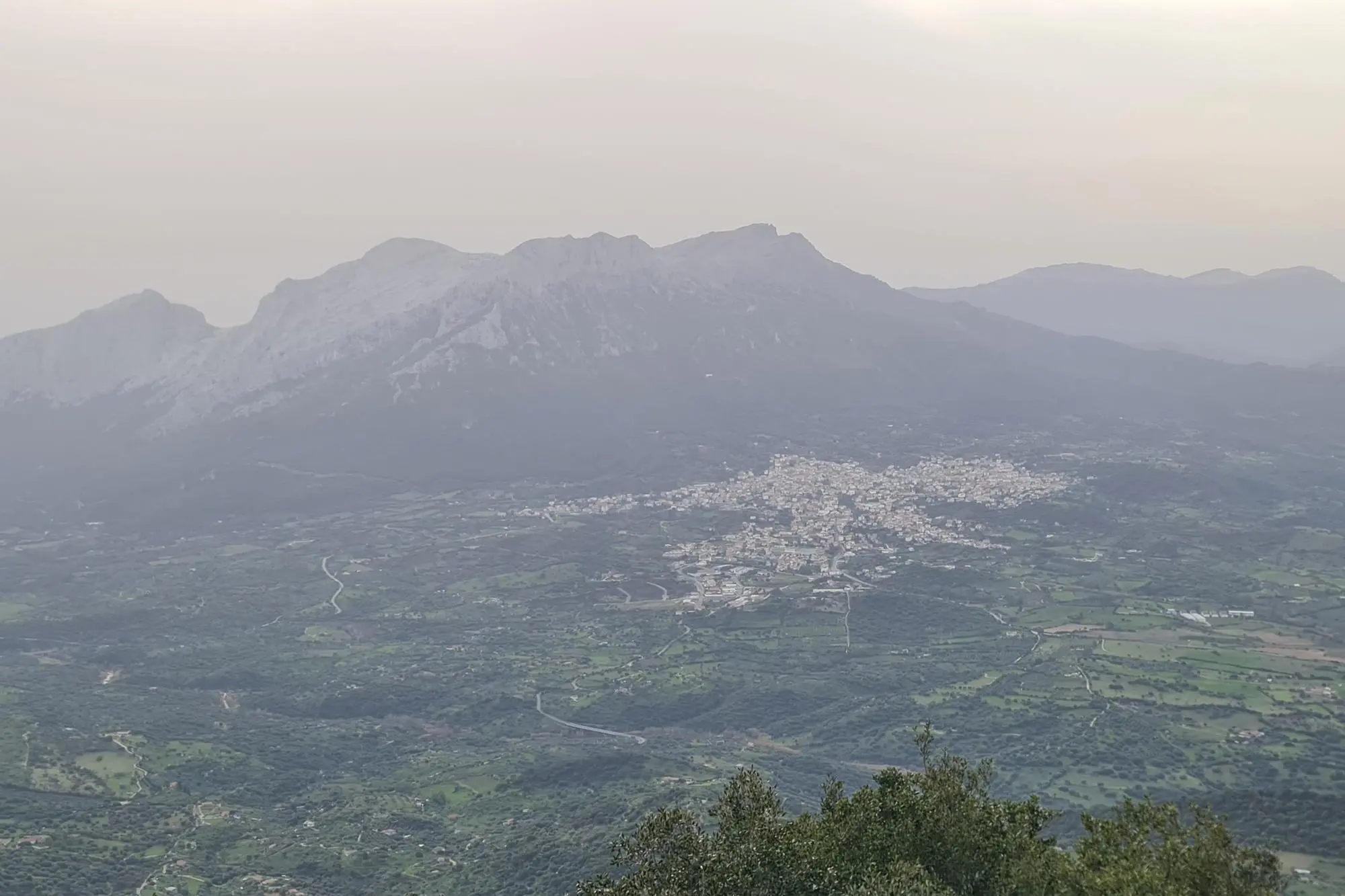
(photo courtesy)
Per restare aggiornato entra nel nostro canale Whatsapp
There are 3,600 small and medium-sized businesses, with over 7,500 employees and a turnover of €680 million, operating in Sardinia's 34 mountain municipalities. Their existence is made difficult by the challenging infrastructure situation, with the greatest gap compared to the lowland, hilly, and coastal areas. This, in short, is the finding of the analysis by the Research Department of Confartigianato Imprese Sardegna, through the report "Economy and businesses in Sardinia's mountains: perimeters, trends, and economic policy," which analyzed the structure and dynamics of artisan businesses in the island's mountain municipalities and inland areas, using ISTAT 2023-2025 data.
The analysis depicts an island caught between an unprecedented demographic decline, which will severely impact production capacity, and chronic difficulty accessing primary infrastructure, exacerbated by a high hydrogeological risk that threatens the future of the territory but also the ability of businesses to "support" those areas.
"The data confirms that inland Sardinia is facing a major existential challenge," comments Giuseppe Pireddu, President of Confartigianato Nuoro-Ogliastra. "In fact, the combination of a severe demographic decline and infrastructural barriers threatens to economically desertify the heart of the island. Amidst all this evolution lies the energy of the productive activities that remain in the territories, a bulwark of the local economy and its decline." "This requires a public investment plan that focuses not only on maintaining the territory against hydrogeological risks," adds Pireddu, "but above all on reducing travel times and promoting small artisan businesses as social and demographic assets. Without structural interventions, the 'demographic glaciation' will become irreversible within the next twenty years."
Specifically, Sardinian mountain SMEs (non-agricultural) number 3,619, representing 3% of all those registered on the island, compared to the national average of 11.5% and 16.9% in the province of Nuoro. Their 7,527 employees represent 2.5% of all non-agricultural workers in Sardinia, compared to the national average of 11.4% and the average for Nuoro of 14.6%. These include 1,564 artisan businesses (18.7% of all mountain businesses) with 2,705 employees (39.1% of mountain workers). In the Nuoro area, there are 2,480 businesses, of which 1,089 are artisan businesses; in the Sassari-Gallura area, there are 915, of which 408 are artisan businesses; and in Southern Sardinia, there are 224, of which 67 are artisan businesses. Revenue from the mountains reaches €679 million, 1.5% of Sardinia's total, with an added value of €203 million (1.6% of the total). 6.6% of Sardinian manufacturing companies operate in the mountains, compared to the Italian average of 9.1%; 10.7% are involved in construction (14% Italian average) and 26.6% in services (national average 58.5%), while the remaining 56% is divided into other activities.
An analysis of data on the accessibility of Sardinian municipalities to the nearest major transport infrastructure shows that those coming from a mountain municipality take an average of 44 minutes, 24 minutes more (+123%), compared to the 19 minutes it takes those coming from a non-mountain municipality, to reach the nearest access point to a highway, train station, port, and airport. Specifically, from a mountain municipality, it takes 66 minutes to reach a port (35 minutes more than the 31 minutes of other municipalities), 78 minutes to reach the airport (41 minutes more than the 37 minutes of other municipalities), 51 minutes to reach a train station (33 minutes more than the 18 minutes of other municipalities), and 32 minutes to access the highway (17 minutes more than the 15 minutes of other municipalities).
"These data are a tangible reminder that inland areas are fragile territories, distant from the main centers offering essential services," Pireddu continues, "but they cover a significant portion of the population, and we must remember that 'inland area' does not always coincide with mountainous territory . This requires policies and laws tailored to different contexts, considering that doing business in the mountains is more costly and more difficult to maintain than in other areas. Let's not forget that the demographic crisis also impacts the health of the entrepreneurial and social fabric of the mountains."
This significant gap also impacts individual added value. Sardinia, in fact, has the lowest added value per worker nationwide: €27,306, equivalent to a 23.7% gap compared to non-mountain workers. In the national rankings for added value per worker, Trentino leads with €63,631, compared to a national average of €49,131. The tourism rate in Sardinia's mountain areas is 1.1%, compared to 17% nationwide. Mountain businesses potentially threatened by landslides represent 61% of all businesses in those areas; the national average is 26.4%, while in the province of Nuoro, the figure is 76.7%. Areas affected by high flood risk in the mountains account for 1.3%, compared to the national average of 5.1%. The data, however, demonstrate that, despite all the challenges, many businesses believe in the development of mountain and inland areas.
"These data demonstrate how it's possible to do business even under unfavorable conditions," emphasizes Pietro Mazzette, Secretary of Confartigianato Nuoro-Ogliastra, "with challenges, beyond infrastructure, stemming from the recruitment of skilled workers, partly due to the demographic decline we've seen in recent years. To counteract the increasingly widespread depopulation of both people and services, it's necessary to invest in the local area, in the quality of the offerings, and in the breadth of opportunities. As an association, our mission is to promote the culture of self-employment, especially in those areas, such as the mountains, where there are realistically interesting opportunities. Naturally, a unified effort is needed among all the participating organizations to invest and thus reverse this trend, which affects the entire province but is most pronounced in mountainous areas."
In conclusion, Confartigianato Imprese Sardegna believes a development strategy is needed that works and invests in all internal areas at risk of depopulation, placing businesses at the center of development and job creation, and enabling them to improve. Public resources are necessary, but it is even more necessary, indeed fundamental, to understand the true needs of entrepreneurs and communities.
(Unioneonline)