

Cagliari: Sports and tourism in the spotlight: the stadium, the hotel project divides
The construction of a 126-room hotel is planned, the debate among economic operators is underway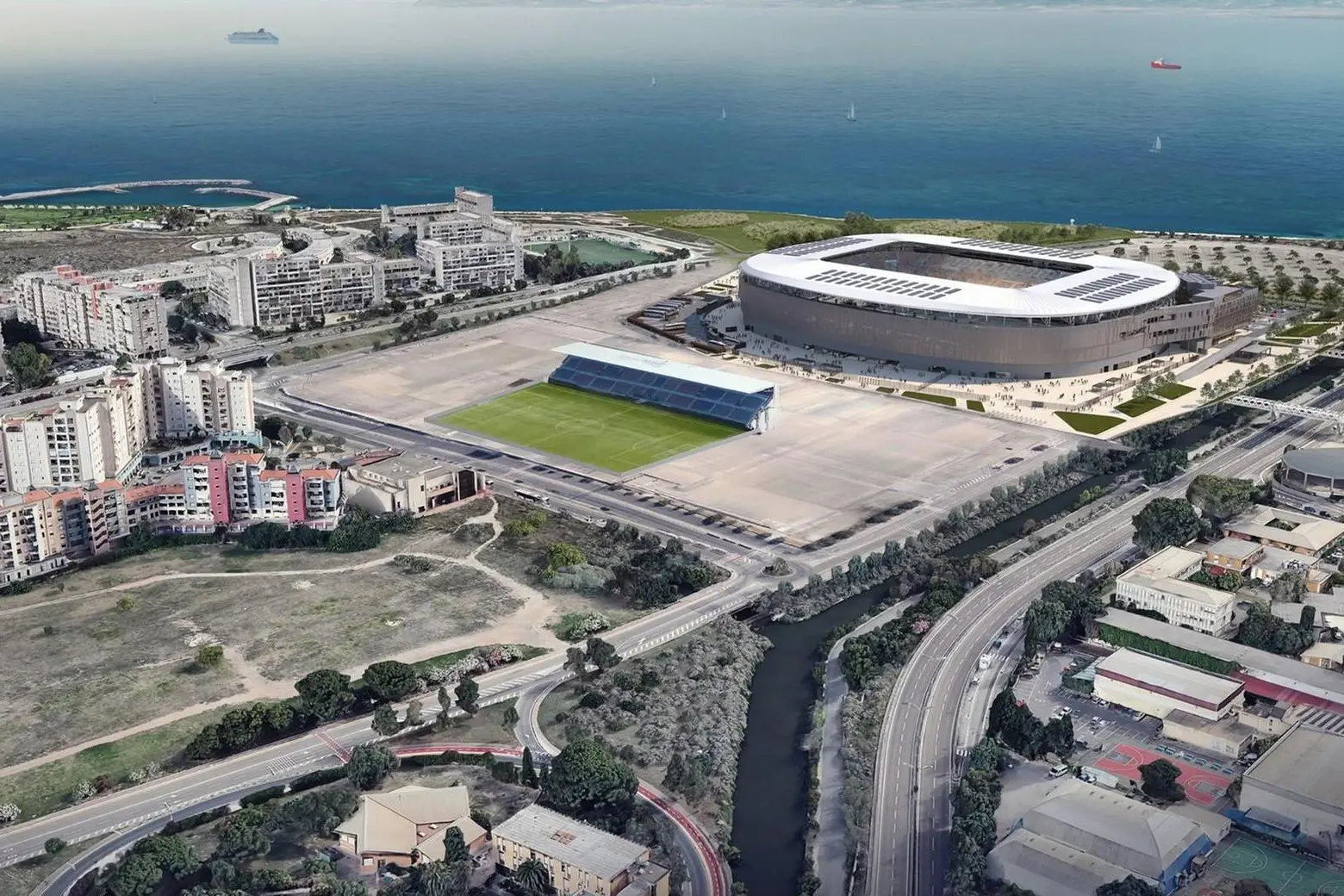
Per restare aggiornato entra nel nostro canale Whatsapp
This new Sant'Elia seems to have grown too large, with its 126 ultra-luxury hotel rooms, twenty or so food and beverage kiosks, and 4,200-square-meter wellness center. The project's ambitions aren't at issue, which are never overly ambitious in a city that has branded itself provincial yet feels European. "The central issue," trade associations and experts ask, "is the investment coverage: what is the public interest in building the non-sports facilities envisioned in the project?" A weighty question, awaiting an answer. There's a lot of money at stake: 50 million from the Region and 10 million from the Municipality. Plus the project bond from SFIRS, the Sardinian safe, a subsidized loan worth another 30 million.
The warning
Fausto Mura, president of Federalberghi Sud Sardegna, immediately makes it clear where he and his associates stand. "Cagliari," he says in the introduction, "needs a new stadium, not only for football, but also for events that can boost tourism. However, we cannot hide our concerns about the planned ancillary works." A facility similar to those in Turin and Düsseldorf, Manchester and Paris, is unconvincing. "Building a hotel with public funds distorts competition. The damage to the Cagliari and Sardinian markets would be enormous." Federalberghi is demanding "transparency: we also understand that the management contract would be awarded without a public tender. This is another aspect we contest." The designated candidate, barring any pre-contractual revisions, is Accor, a French hospitality giant with 6,000 properties in 110 countries, which would land in Cagliari with the Swiss brand Mövenpick, acquired in 2018. Management of the wellness center is also French, and its fate will be sealed by the Snow Group. Sant'Elia's turnkey package is worth €218,621,208. It creates an SPV, a special purpose vehicle, bringing together Giulini's Cagliari Calcio and the Costim Re Group. But considering that building a stadium, whether traditional or modern, costs an average of €3,500 per site, the Cagliari facility, authorized for 30,076 fans, costs just over €150.2 million. The rest, practically half of the total cost, is spent on non-sports facilities.
Line of action
Mura has a clear strategy and the steps to take. "We will proceed according to the policies that the government allows us. But we don't even rule out an audit by the Court of Auditors, because we're impressed by the possibility that a private operator could obtain this undeniable advantage of public support, as evidenced by the Economic and Financial Plan." The president of Federalberghi Sud Sardegna is pressing: "We urge a further audit of any potential urban planning concessions during construction, especially in a premium area like Sant'Elia, even if it isn't considered as such in the Economic and Financial Plan."
Costs and revenues
Another minefield is the business surrounding the new Sant'Elia stadium. The breakdown of revenues and expenses, also contained in the Economic and Financial Plan, was analyzed by tax lawyer Pierpaolo Murgia. "What is striking in this economic and financial plan," he explains, "is the quantification of revenues. Although real, they are calculated according to a method designed to make public funding indispensable, almost by definition." For the lawyer, this is a distortion that must be corrected, in favor of "a Economic and Financial Plan that allows for transparent verification of all revenues." In the document on the new Sant'Elia stadium, entrusted to the British firm Deloitte, "the stadium is being leased to another entity, as are the hotel and other services." Indeed, Cagliari Calcio is the tenant for €2.3 million annually; the goal is to draw an equal amount from the hotel in the initial phase, reaching €2.9 million once fully operational. "The result," Murgia emphasizes, "is that the SPV appears paradoxically poor, in need of contributions from the Municipality and the Region. But not because the project itself isn't capable of generating revenue, but rather because of the decision to allocate the proceeds elsewhere."
The alternatives
The lawyer puts it bluntly: "No one is asking to halt the stadium project or question the promise of a non-repayable grant. The goal, rather, is to rewrite the proposal in accordance with the standards established by public-private partnership regulations: a legally sound Economic and Financial Planning Document (PEF) indicates the concrete benefits of an investment in exchange for the funding provided." The lawyer urges the Municipality to "add the revenues from the first and second levels," and then "assess, based on the numbers, whether or not financial support is necessary." A suggestion also arises regarding the collection of the fee, increased to €100,000 for the first twenty-five years from the initial €50,000, while for the remaining fifteen years it will rise to €200,000. Murgia believes "it should be measured differently," especially since it represents "the only income for the municipal coffers, in addition to the acquisition of the stadium as part of the entity's assets, once the fifty-year concession expires." The lawyer suggests several counter-arguments, starting with "a request for days of exclusive use of the facility, for example, for organizing concerts. But the municipality could also request a percentage of the overall turnover." Murgia sees no room for maneuver on one point: "The construction of the hotel should have been ruled out from the outset, given the provision of public funds."
The doubts
Maria Sias, an engineer from Cagliari, also weighed in on the fee issue: "It's perplexing that the private sector is collecting, from the stadium rent alone, twenty-three times more than the fee agreed with the municipality. I trust in the ability of our administrators to defend the interests of Cagliari and its fans." Roberto Bolognesi, president of Confesercenti Sardegna, frowned at the thought of those twenty kiosks inside the stadium: "Local shops throughout the greater Cagliari area have already paid a very high price for competition with large-scale retailers. Authorizing a large number of new businesses risks worsening the already precarious balance of the system." Bolognesi summarizes the stadium operation thus: "It seems to me that we are witnessing a collectivization of costs and a privatization of benefits."
