

Cagliari, a cutting-edge hip replacement procedure at Brotzu Hospital.
A 3D-printed “custom” implant restores autonomy to a patient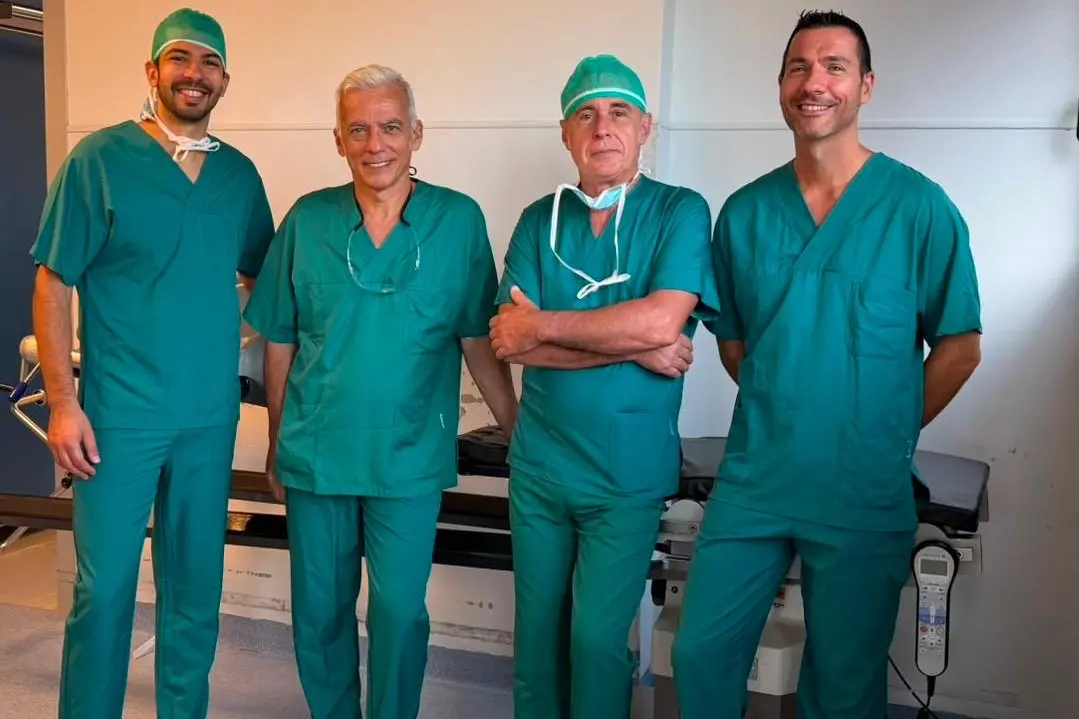
Per restare aggiornato entra nel nostro canale Whatsapp
At Brotzu Hospital in Cagliari, one of the most complex hip replacement revision surgeries in Italy is underway: a custom-made 3D-printed implant restores independence to a patient. "This procedure confirms the level of excellence achieved by our national health service and the role of our hospital as a point of reference for highly complex orthopedic surgery," emphasizes Anas Brotzu General Manager Maurizio Marcias.
As stated in a press release, "There are procedures that represent a surgical challenge, while others, until a few years ago, would have been considered nearly impossible. This is the case with the revision hip replacement performed by the team at the Orthopedics and Traumatology Unit of Arnas Brotzu Hospital in Cagliari, led by Giuseppe Dessì, which restored mobility and independence to a 63-year-old patient thanks to the implantation of a completely customized acetabular component, designed based on his anatomical characteristics and manufactured using 3D printing technology."
The clinical history
The surgery was performed on June 6th at San Michele Hospital "on a patient with a particularly complex medical history. The man had undergone an initial left total hip replacement in France in 1985 and, subsequently, in 2000, a revision surgery due to the failure of the prosthesis. Over the years, the progressive loosening of the implant due to aseptic loosening had led to a severe loss of bone substance in the pelvis, resulting in a significant acetabular defect. This condition rendered traditional commercially available revision prostheses unusable and required a completely customized solution."
The planning
After an in-depth clinical and radiological study, Giuseppe Dessì and his team planned a highly specialized procedure, based on the design of a custom-made acetabular implant, developed exclusively for the patient's anatomical characteristics. The procedure, as explained in the statement, involved the removal of the loosened prosthesis, reconstruction of the severe bone defect using a bone graft, and subsequent implantation of the customized component, allowing for the stable reconstruction of the joint and the restoration of the correct hip rotation center. The collaboration with Permedica, an Italian company specializing in the development of high-tech orthopedic devices, was crucial. The bioengineers worked closely with the surgical team to design the implant, which was made of titanium alloy using additive manufacturing (3D printing) and features a highly osseointegrative surface achieved using patented Traser® technology, which promotes biological integration with the residual bone. Planning was also supported by the creation of a full-scale three-dimensional model of the pelvis and implant, used to pre-emptively simulate the procedure and precisely define the positioning of the fixation screws according to trajectories studied on the three-dimensional reconstruction of the pelvis.
The rehabilitation process
"The surgery," Brotzu explains, "went without complications, and the postoperative course was uneventful. After the rehabilitation process, the patient gradually recovered the functionality of the operated limb, returning to normal daily activities independently, a condition that had been severely compromised in recent years by the progressive loss of joint function."
The decision to make this experience public "came only after the completion of the first follow-up and confirmation of the implant's clinical, mechanical, and radiographic stability. This choice reflects the approach of the Orthopedics and Traumatology department at Arnas Brotzu, a leading center for complex revision prosthetic surgery, which is geared toward communicating results only after concretely verifying their effectiveness. This is the first procedure of its kind performed in Sardinia and one of the few in Italy using a fully customized acetabular reconstruction. This result confirms how the integration of highly specialized surgical skills, bioengineering, and additive manufacturing technologies is opening up new therapeutic prospects even in the most complex cases."
Technology and professionalism
"3D printing technology is now consolidating its role in orthopedic surgery and allows us to address clinical situations that until a few years ago presented enormous technical difficulties," comments Giuseppe Dessì, Director of the Orthopedics and Traumatology Unit . "This case demonstrates how today it is possible to manage extremely high levels of complexity thanks to growing professional skills and close multidisciplinary collaboration. I thank Permedica for their entirely Italian support, which allowed us to develop a customized solution. The design process was long and complex: surgeons and bioengineers worked together in various phases, until a three-dimensional replica of the bone defect and the implant was created, used as a true pre-operative simulation. This step made the work in the operating room safer and more precise."
An excellence for Sardinia
"Today, a Sardinian patient, even faced with an extremely challenging case, can find in their own region the expertise, technology, and professionalism to provide solutions that until just a few years ago would have required transfer to national or international centers," adds Anas Brotzu General Manager Maurizio Marcias. "This achievement is the result of teamwork, continuous investment in expertise, and collaboration between diverse professionals, united by a single goal: to offer patients the best treatment options. We chose to share this experience only after verifying its clinical effectiveness, because we believe that the best communication is based on results, and we want to instill confidence and hope in those facing complex treatment paths."
(Unioneonline)
