Blue Monday, the most depressing day of the year has arrived: here's why
A commercial gimmick from over twenty years ago, which somehow survives and still works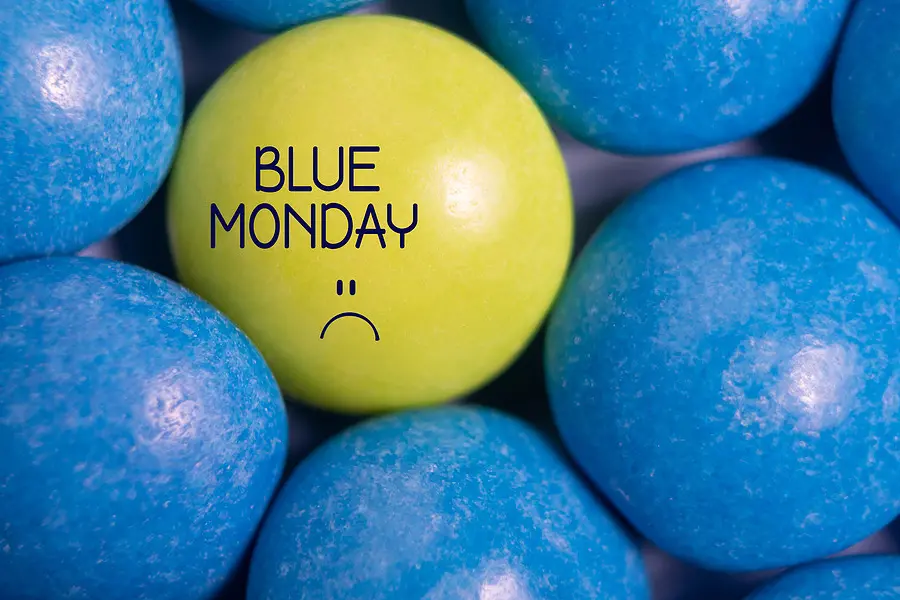
Per restare aggiornato entra nel nostro canale Whatsapp
The most depressing day of the year seems to have very specific coordinates : it's called Blue Monday and falls every year on the third Monday of January, so today. Its origins date back over twenty years, when the travel company Sky Travel launched a campaign in 2005 to "convince" its customers that any sadness they might be experiencing could have a scientific basis. And to combat it, coincidentally, the best option would have been to book a nice vacation.
Psychologist Cliff Arnall was asked to develop a formula to identify the saddest day of the year, combining arbitrary variables such as the weather, post-holiday debt, declining motivation, and the feeling of having to "start over." The formula has never been validated or replicated, and over time, even its author has admitted the purely commercial nature of the operation.
However, there are other reasons that might make people feel sadder in January, such as the end of the Christmas season and the subsequent return to work. Or the feeling of not being in perfect physical shape and having a list of resolutions yet to be completed. Add to this the winter climate and shorter days, and it's easy to see why the marketing campaign was so successful.
Advertising gimmicks aside, January is truly a special month for our emotional balance. There's a clinically recognized condition, Seasonal Affective Disorder, which demonstrates how for a portion of the population, the change of seasons isn't just a passing sensation. According to a global analysis, approximately 5% of the world's population suffers from Seasonal Affective Disorder, with symptoms that tend to appear in the winter months and subside with the return of light and spring. Prevalence varies based on latitude and diagnostic criteria, but the data remains significant and reveals a real vulnerability that's often underestimated.
This doesn't mean that feeling down during the colder months is the equivalent of a diagnosis, nor that Blue Monday coincides with clinical depression. It does, however, mean that this is a more emotionally delicate time of year, when the body and mind are more sensitive to change. Accepting this is the first step to feeling better.
Finally, a small linguistic note: the use of the color blue to indicate sadness dates back to the 14th century, when the English writer Geoffrey Chaucer inserted the line "with tears of blue and a wounded heart" into his poem The Complaint of Mars. Languages have also adopted this convention to express sadness and anguish. In English, we say "feeling blue," while in French, the equivalent expression is "avoir le blues," literally "to have the blues."
(Unioneonline/D)