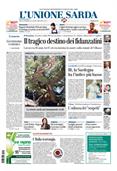


Arianna Meloni: "Italy has recovered, housing, jobs, and security."
The assembly in Cagliari with the head of the Fratelli d'Italia secretariatPer restare aggiornato entra nel nostro canale Whatsapp
The instinct is the same as always. That of someone who has come from afar, years of politics behind the scenes, and now, in government, knows that the foundation of everything remains there: in the presence in the territories, in the contact with the people. Arianna Meloni, head of the political secretariat of the Brothers of Italy party, is leading a regional tour with the party's local leaders in Cagliari, but the message for her supporters is meant to be reassuring: there's no need to panic; the referendum outcome isn't a prediction for the next general election.
But the election campaign is already underway: and the prime minister's sister's political instinct and experience suggest it's best to close ranks before the exercise of power wears down those who hold it. She naturally doesn't say this, just as she elegantly deflects questions about nervous allies and reckless ministers, and avoids the topic of the Italian government's relationship with Donald Trump. But the reflections she expressed during her visit to Sardinia confirm that Meloni is clear-eyed about her primary objective: the FdI cannot abandon its grassroots roots. "For us, it's natural to be among the people and value ideas that come from the grassroots," she says. "I think Italians have understood this."
What is the purpose of the regional tour? How is FdI doing?
We will never lock ourselves away in our palaces. FdI is a party that thrives on roots, and our relationship with the local community is fundamental to us. In recent weeks, we've gathered a lot of enthusiasm, but also many interesting ideas for government action. After three and a half years in government, we're still growing in support, a rare occurrence. This already says a lot about the health of the party, which remains the nation's leading party, with polls showing us steadily at 29%, which is more than we received at the polls in 2022.
And how is the center-right doing? Are you worried about the tensions within Forza Italia? Are you worried about neo-centrist moves?
The governing coalition is also healthy. This is the second-longest-serving government in the history of the Republic. And do you know why? Because it's not the result of a backroom deal, but of a coalition that has embraced a strong, shared agenda. And that agenda guides our decisions. Of course, we may have differing opinions between parties and even within the same party, but these are entirely natural dynamics. When it comes to deciding the nation's future, we are capable of setting aside party interests to pursue the common interest.
What do you think is the best result achieved in these three and a half years of government?
Italy has recovered, and I believe this is its greatest achievement. Three and a half years ago, we found a nation in disarray: the deficit/GDP ratio was at 8%, we brought it to 3.1%, the spread was hovering at 230 basis points, and now it's steadily below 80. We've put the finances in order and supported employment: today we have 1.2 million more jobs and stable contracts are growing. With the May Day decree, we introduced the principle of fair wages. And despite the complex times we're experiencing, burdened by tariffs and conflict, exports have grown. We're the world's fourth-largest exporter, we've overtaken South Korea and are competing with Japan. Foreign investors have returned. And we've become a model at the European level: we were at the bottom of the class, today we're leading the way in implementing the National Recovery and Resilience Plan (NRRP), and the ninth installment is about to be paid. And it's not just about economic stability, but also about political stature: Italy has returned to the center of the international scene. We could say, to the place it deserves.
And what could you have done better?
We can always do better. Of course, we could have done more if we hadn't had to manage the Superbonus abyss left us by the left: €174 billion, almost as much as the NRRP funds. We'll finish paying it in 2027, practically at the end of the legislature. Do you know how many homes we could have built with €174 billion? 1.6 million. We certainly could have done better, but here's what we definitely won't do: we won't pile up debt on our children's shoulders. The era of electoral handouts is over.
Some points of the electoral platforms (such as the excise tax cut) were not implemented. Why?
Meanwhile, the legislative session isn't over yet, and we've already reduced excise taxes. But we've achieved three-quarters of our program. This is the government that has done more than any other in the last decade to lower taxes: with tax reform, the restructuring of personal income tax, the increase in the flat tax for self-employed workers, and the reduction in social security contributions for hiring young people and women. Not to mention the single Special Economic Zone (ZES) for Southern Italy, which has allowed us to cut taxes and bureaucracy and brought investors back to the South. We've fought illegal immigration; today we have 60% fewer arrivals, and this government has carried out 81,000 repatriations in three years. And on the Albania Protocol, so strongly opposed by the left and some in the judiciary, Europe has agreed with us, and many countries are following suit. I could go on, mentioning the over 40,000 new law enforcement positions and the fight against urban decay in the suburbs. There is still a lot to do, of course, but we have never given up and we will continue until the last day."
Did the referendum ring alarm bells for the majority?
"If anything, it has led us to step up our pace to complete the other interventions needed to make this nation more modern, attractive, and competitive."
Giorgia Meloni said that geopolitical tensions could impact growth. Is it possible that the war unleashed by Trump shortly before the referendum also affected you?
The government intervened promptly to support families and businesses. Through the energy decree, fuel price cuts, and taxing companies that profit from conflicts, this freed up resources to support the most vulnerable. Giorgia Meloni was the first leader to personally travel to the Gulf countries to ensure energy supplies for our nation. But it's undeniable that conflicts have far-reaching repercussions beyond what a single government can do. And fear is a very powerful factor to leverage at the ballot box. There remains a certain bitterness over the missed opportunity for justice reform. But we never stopped; we went further, implementing the program for which citizens voted for us and continue to place their trust in us.
What are the priorities for the end of the legislature?
I'll mention three: housing, security, and healthcare. We haven't abolished poverty, and we're not giving away homes, but we have implemented a massive Housing Plan: €10 billion over 10 years that will make 100,000 apartments available, including affordable housing and rent-controlled housing. Because housing isn't a luxury, but a basic necessity. We're addressing the issue of security in our cities seriously and decisively: with the latest decree, we've introduced stricter regulations against crimes involving even the youngest people. And we've tightened the screws on healthcare: in 2026, the National Health Fund will reach a record €148 billion, and we've planned to hire over 7,000 medical, nursing, and technical staff. Much has been done to reduce waiting lists: there are still inconsistencies across Italy, but today, 81% of specialist visits are delivered on time: we've reversed the trend after 20 years.
Is it true that the Giuli case caused a lot of annoyance to FdI?
"It was above all a media sensation, to the extent that the press hyped it up with gossip. We're not interested in gossip; we're used to looking at results."
How do you evaluate the work of the Todde Council?
"It's not up to me to judge the Todde administration's actions. The citizens of Sardinia will evaluate them and draw the appropriate conclusions at the ballot box."
In the last regional elections, FdI elected the center-right leader. Will it be someone else's turn next time, or will you still claim that role?
We're not thinking in terms of flags to plant in this or that territory. As always, we will embark on a process together with our allies to choose the best candidate, who will also be the best regional president. Starting with a well-prepared and locally rooted leadership that is already working for the future of Sardinia.