

Archbishop Baturi at Easter Mass in prison: "One can be free inside and a prisoner outside."
Director Borruto: "We house 745 inmates, when the maximum capacity is 561, and 80% have psychiatric problems."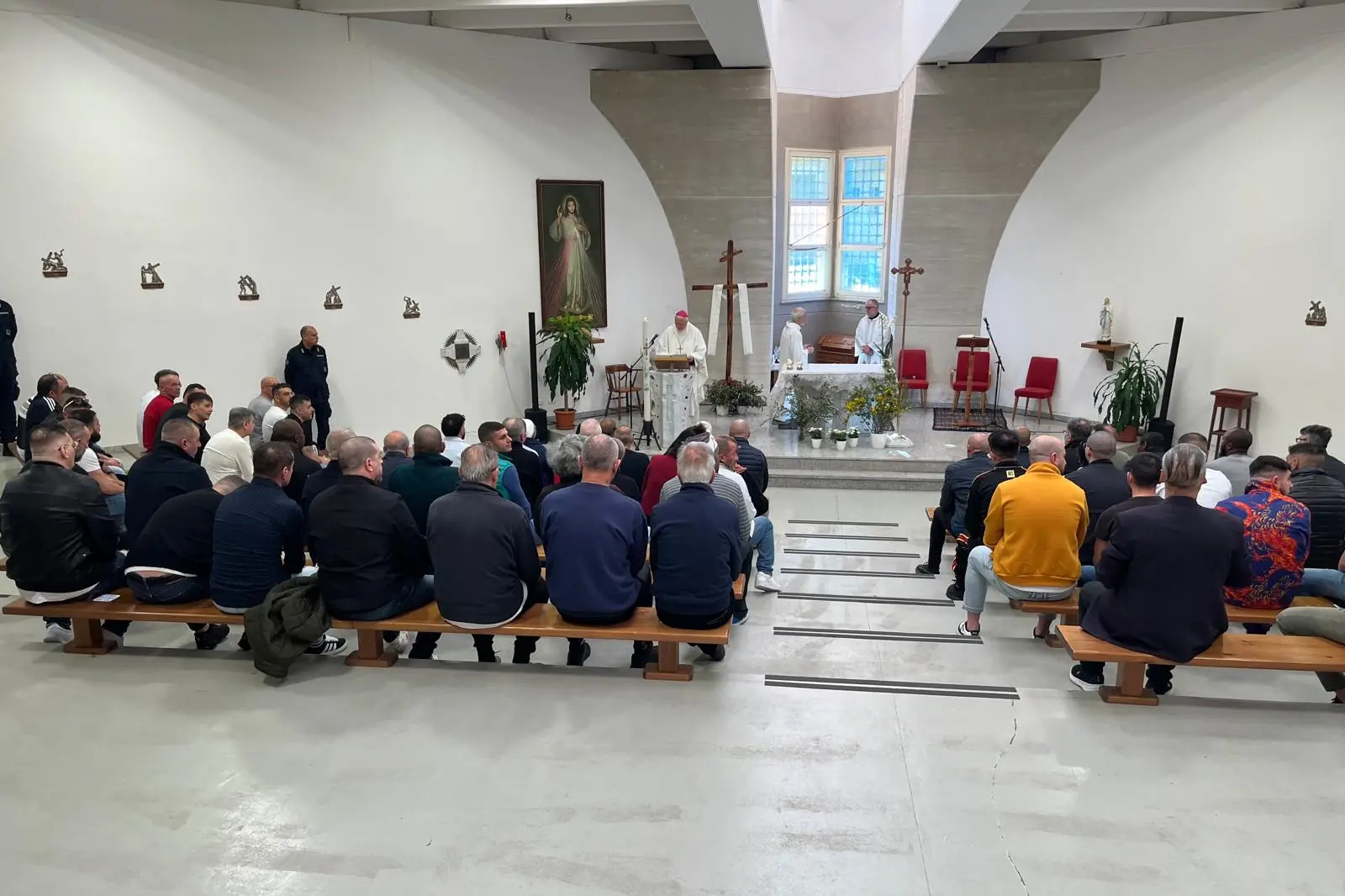
Per restare aggiornato entra nel nostro canale Whatsapp
In Uta Prison, every day is Easter. Every time the sun rises, a man or woman tries to rise again and find the strength to hold on until the reinforced doors of the prison, filled with too many inmates and too few officers, open for their sentence or release. In the desolate yard—without even a spot of shelter from the sun, rain, or wind—wives, partners, mothers, fathers, or children anxiously await passage to the Registration Office to collect the items left behind before their detention. Then they embrace and leave, promising never to return. It won't be like this for everyone.
On Easter Sunday, as on all major religious holidays, the Archbishop of Cagliari, Giuseppe Baturi, visited those deprived of their most precious possession. He arrived at the Ettore Scalas prison alone, without a retinue of priests or lay people. He was welcomed by Director Pietro Borruto and the Commander of the Penitentiary Police, Alessandro Caria.

The prison chapel is packed: the men in the central stalls, the women in the upper right box, and the Capoterra choir on the left. The officers are keeping watch to ensure the celebration doesn't take unexpected turns.
Archbishop Baturi's homily is filled with hope. A feeling not easy to attain behind bars. "The Son of God, after his martyrdom, is risen and continues to walk to reach all men, no matter how deep: He reaches us. There is something deeper than evil and pain: it is God." The archbishop focuses his speech on the stone from Jesus Christ's tomb, removed on Easter morning, which symbolizes the victory over death and resurrection. "No stone can prevent the encounter with the Father. Because one can be free inside and a prisoner outside. Even in prison, there is something you can do to build history and improve the environment. Courage, face the future with hope. Best wishes."
At Uta, Article 27 of the Constitution is often disregarded. And certainly not through the fault of the officers or the director. The cells could hold 561 inmates (including 20 women and 50 high-security prisoners); on Sunday, there were 745, a full 178 more. "Technically, we're adding a fourth bunk," explains Borruto. That's not the only problem. "About 80% of the inmates have psychiatric problems, and many have dual diagnoses due to drug addiction. We do what we can with recovery programs thanks to the valuable collaboration of Caritas, Domus de Luna, Rotary, and the Giulini Foundation." Then there's the shortage of officers. "We're severely understaffed, with fewer than expected staff, partly because many are seconded." When will the 41 bis regime be implemented? "I don't know; the matter falls under the jurisdiction of the Rome Department of Penitentiary Administration."