


After the amendment on preferences was rejected, the opposition attacked Meloni: "Shameful."
FdI: "Between an instrumental proposal and maintaining agreements with the majority, we have no hesitation; we'll keep our word."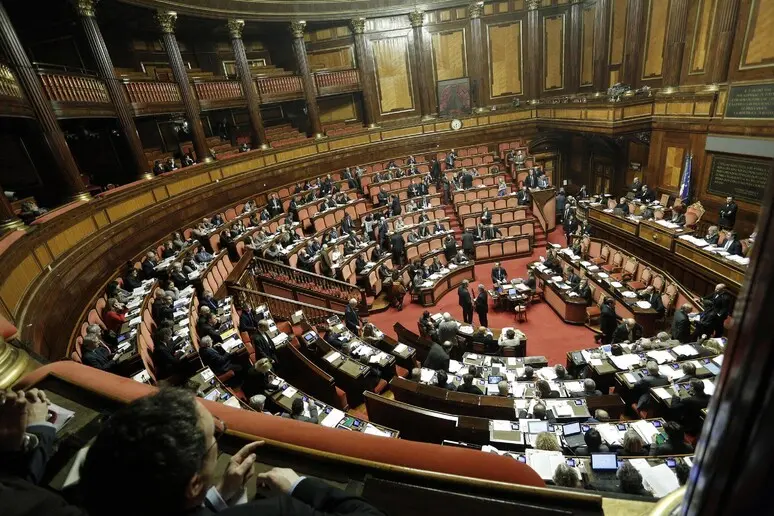
(Handle)
Per restare aggiornato entra nel nostro canale Whatsapp
The Senate rejected, by 68 votes to 99, the sub-amendment first-signed by Democratic Party member Dario Parrini to eliminate blocked front-runners and introduce preferential voting in the general elections . The government had deferred to the Senate on the proposed amendment to the majority amendment to the electoral law. After the vote, chants of "Shame!" were heard from the opposition benches.
The FdI had announced its vote against with a speech in the Chamber by group leader Lucio Malan : "We have always been in favor of preferences, but between an instrumental amendment from the opposition and maintaining the majority agreements, we have no doubts: we will keep our word and vote against this amendment."
"The Democratic Party," he added, "has voted for laws that didn't include preferences, except for the Italicum law, promoted by the Renzi government, which included the blocked top candidate—imagine that. But at the time, it was fine; now, it's not; it's unacceptable. So we understand the manipulation of this amendment. If you had wanted to approve preferences, there were several occasions in the Chamber, particularly when they were defeated by a single vote. At the end of that vote, we remember the opposition's celebrations."
He then concluded by recalling the opposition's jubilation when the center-right split and lost in the Chamber precisely over preferences: "You can't celebrate the rejection of preferences and then propose them. It's quite clear that the attempt is to split the majority. But between an instrumental amendment and maintaining the majority agreements, which have allowed for the reintroduction of preferences since '92, we have no doubts: we'll keep our word on preferences and vote against this amendment."
The opposition
The opposition attacks, highlighting Giorgia Meloni's contradictions and the split within the majority.
Matteo Renzi read in the Chamber a 2014 speech by the Prime Minister in favor of preferences, in which she stigmatized, among other things, the fear of those who do not support them for fear of subjecting themselves to the voters' verdict and added, in view of the upcoming elections: "You should be ashamed!"
"This is the most blatant charade, the most fraudulent charade. Giorgia Meloni is once again contradicting herself and, hiding behind 'loyalty to the majority,' is voting against allowing citizens to express real preferences in choosing parliamentarians," Giuseppe Conte lashed out. "Two months ago, they were defeated in the Chamber of Deputies on a bogus amendment of theirs that proposed fake preferences, and they tried to shuffle the cards by accusing the opposition of not wanting preferences. Now in the Senate, they are clearly saying no to our amendments and those of the other opposition forces that proposed real preferences, starting with the front-runners. Meloni is proving to be completely consistent on one aspect: she is systematically betraying all the commitments she made to the voters . She is extraordinarily consistent in her total inconsistency."
The Democratic Party posted a video on social media on January 22, 2024, in which Meloni stated: "We are willing to vote for any electoral law, we ask for one thing: that there be preferences." Alessandro Zan added: "Giorgia Meloni has argued for years that citizens should be able to choose their representatives and accused the opposition of being afraid of the Italian vote. Today, by rejecting the Democratic Party's proposal to introduce free preferences into the electoral law, her majority has done exactly the opposite. A choice that is not only inconsistent but shameful. When preferences are just a slogan, Meloni defends them tooth and nail. When they reach Parliament and threaten to split her majority, she sacrifices them without hesitation."
The modification
However, a change to the electoral law approved by the Chamber of Deputies has been made. The minimum number of signatures that new political groups not currently represented in Parliament must collect to run for election has been increased from 1,500 to 9,000 (up to a maximum of 10,000). Those with two groups in Parliament remain exempt, as per the current law, as do those with at least one group formed by December 31, 2025, such as Iv or Azione. For those, such as +Europa or FnV, with a member in at least one of the two chambers of Parliament, the number of signatures required remains between 1,500 and 2,000. The amendment, authored by Alessandra Zedda, will be presented tomorrow.
(Unioneonline)