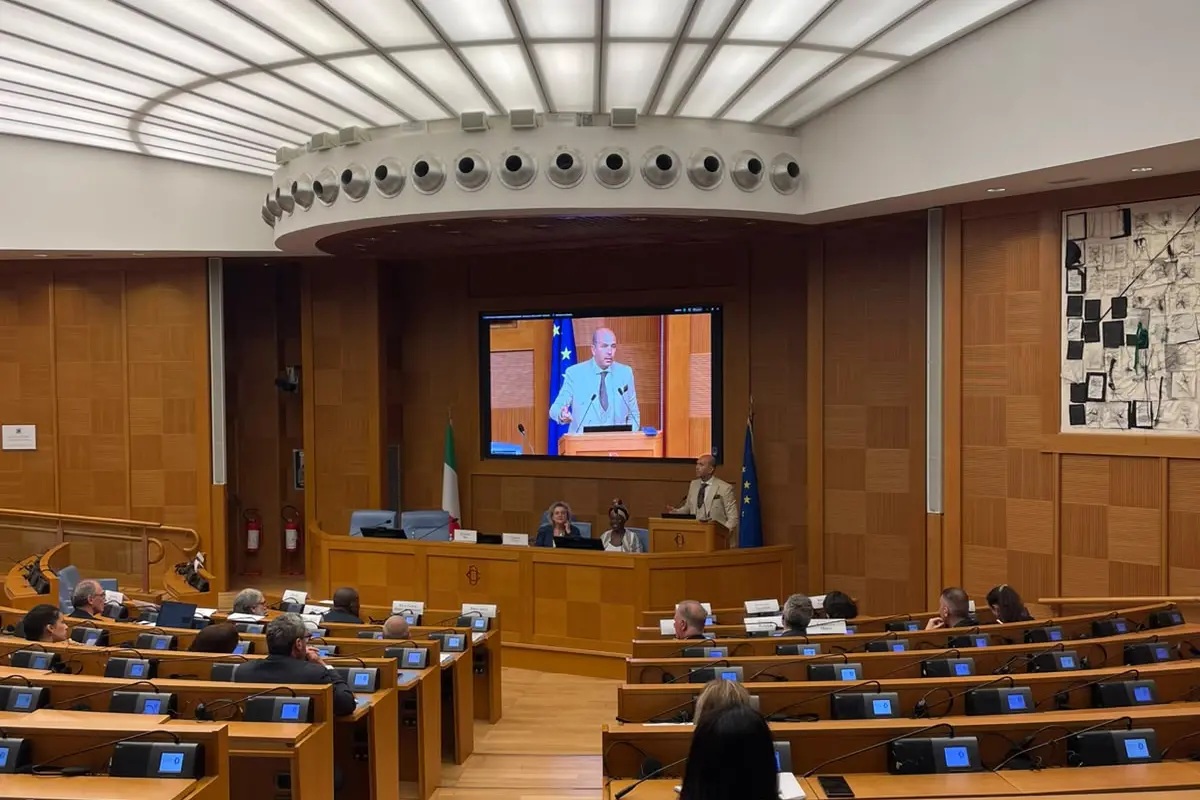


A large crowd attended Cecilia Sala's performance at the Doglio Theatre.
The tour of presentations for "Children of Hate," the essay by the foreign policy journalist, begins in Cagliari.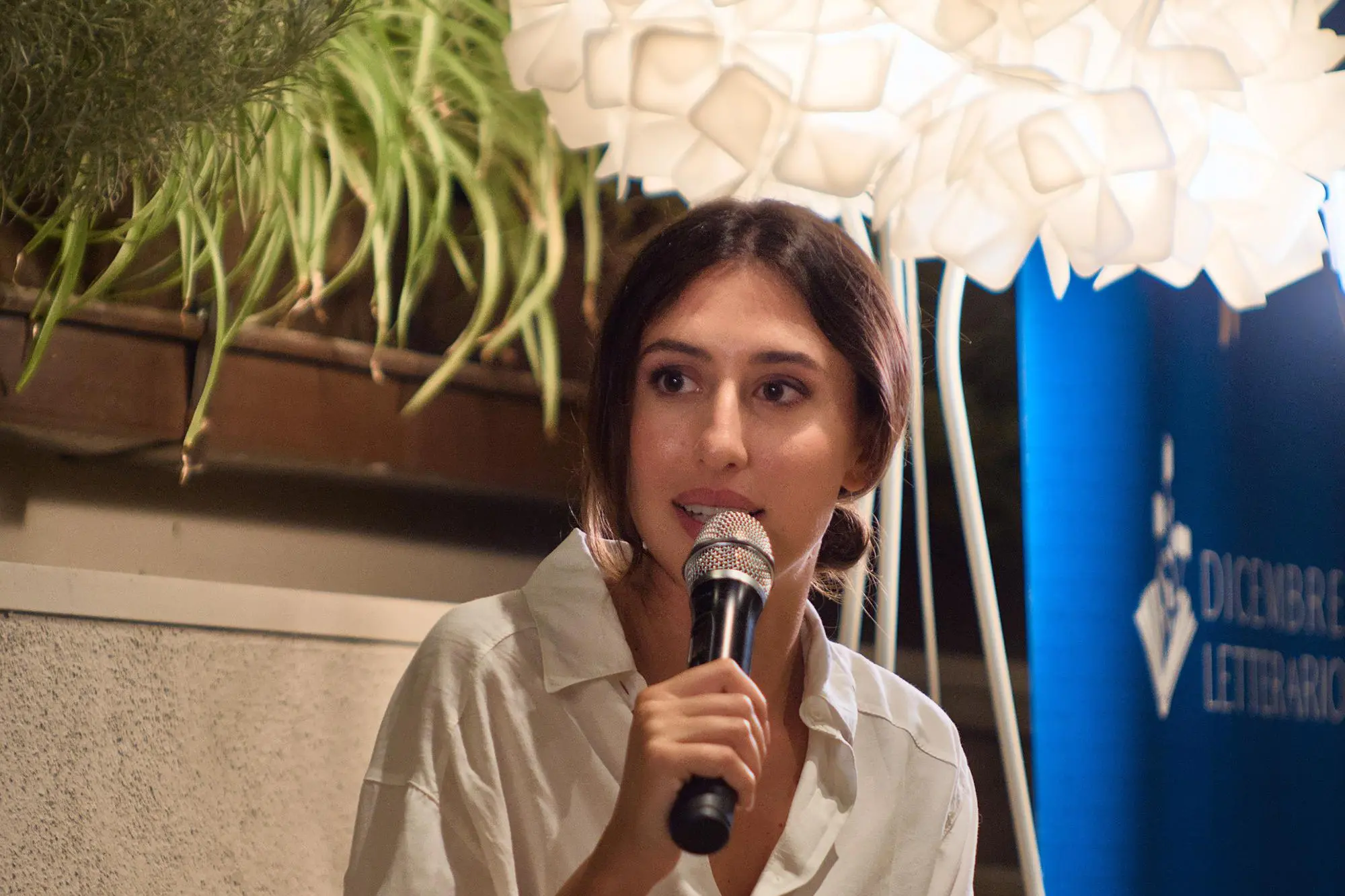
Per restare aggiornato entra nel nostro canale Whatsapp
The tour of presentations for "I figli dell'odio," the nonfiction book by Cecilia Sala, a foreign policy journalist and well-known figure in Italian television journalism, a contributor to the daily newspaper "Il Foglio" and the voice of the Chora Media podcast "Stories," begins in the conservatory of the Teatro Doglio in Cagliari.
In a room packed to capacity for the event organized by the Jane Austen Club Sardinia as part of the "Literary December" series, the audience witnessed a heartfelt and engaging conversation about some of the book's themes, starting with the title: who are these children of hate?
The portrait that the Milanese author, in conversation with journalist Laura Cappon, paints of the Middle East is of a region where children have learned to hate more forcefully and vehemently than their parents; young Israelis are the most staunch opponents of an autonomous Palestinian state, and are often more radical in their aversion than their peers in the West Bank and Gaza. "They grew up when the walls had already been erected and the Oslo Accords had failed," Sala says, explaining one of the reasons why this hatred was able to take root and grow like a weed. She recounts her meeting and interview with Israeli investigative journalist and Pulitzer Prize winner Ronen Bergman, who explained to her how Israeli intelligence services were able to contain the external enemy but not the internal one, represented by armed Kahanism and messianic currents. These forces brought Ben Gvir and Bezalel Smotrich to government and to leading roles in the country's politics. On the Palestinian front, the most harrowing account is told by Firas Abu al-Wafa, a sixty-year-old man who had to bury his son Samih at just nineteen. This is the clearest representation of these generations unable to communicate; while his father, after participating in the first intifada and enjoying an amnesty, supports diplomatic action and the pursuit of the Oslo Accords, his son becomes radicalized and dies a martyr, a hero of the Palestinian resistance, the emblem of an irreparable generational divide.
The third part, the journalist explains, is dedicated to Iran, where hatred is generational, but there is disenchantment on the one hand, from a ferocious dictatorship willing to exterminate them rather than give way, and on the other, from the awareness that Israeli and American bombs will not represent a path to freedom.
Cappon passes the baton to two young people, Niccolò Dessì and Rebecca Pisanu, for the final questions, almost as if giving voice to a generation that wants not only to listen but to participate: "How can we stay informed in these times when news travels so fast?" and "What concrete things can we young people do?"
"We're witnessing a veritable infodemic that affects everyone," Sala explains. "We must learn to select the sources we deem reliable and take the time to obtain accurate information, trying as much as possible to eliminate the background noise, also due to the extreme polarization of public debate." Finally, he responds to young Rebecca that he's less pessimistic on this point, "because if public opinion and now all European governments have changed their minds about what's happening in Gaza, and are less willing to a priori support the Trump and Netanyahu governments, it's also thanks to all the street protests that have spontaneously filled up in recent years, forming a mass that couldn't be ignored."
After a long signing session, it's off to Oristano, where the "Propagazioni" festival, organized by the Heuristic association, opens at 9 pm. Because, as this year's theme for the Arborea festival says, "And Yet the Wind Still Blows."