

A gene that protects against malaria has been discovered in Sardinian people.
Identified by an Italian study published in Nature: the gene "kills" the parasite responsible for the disease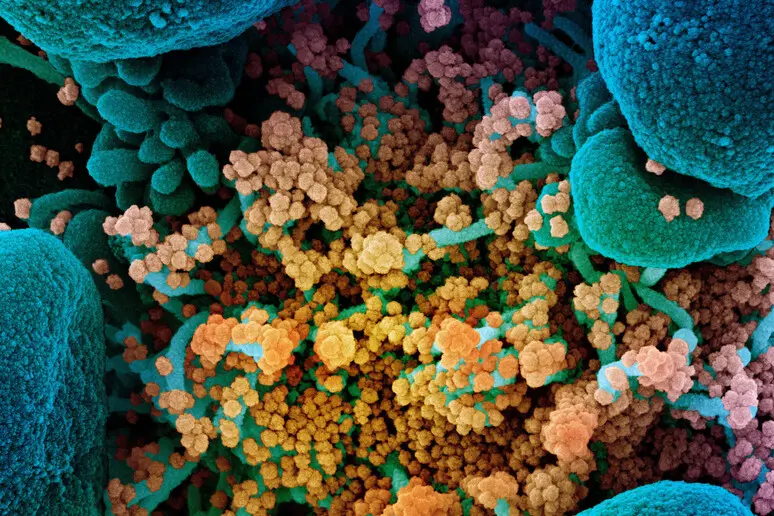
(Handle)
Per restare aggiornato entra nel nostro canale Whatsapp
Many Sardinians carry in their DNA a variant of a gene capable of hindering the growth of the parasite responsible for malaria : it probably evolved for protective purposes, since the disease had once become endemic on the island.
The variant was identified thanks to the Italian study published in the journal Nature , which also dedicated an editorial to it, led by the Institute of Genetic and Biomedical Research of the National Research Council (CNR) in Cagliari and the University of Sassari .
The research, which also involved the University of Turin and several international institutions, paves the way for the development of new drugs inspired by human evolution, capable of replicating the same defense mechanism. Researchers coordinated by Francesco Cucca of the CNR-IRGB and the University of Sassari analyzed the DNA of approximately 7,000 volunteers who participated in the large population-based study called Sardinia: a project aimed at understanding how the genetic makeup of the island's inhabitants influences thousands of health-related variables.
Among the many variants, one linked to the CCND3 gene caught the attention of the study authors: this gene regulates the development of red blood cells, the cells in which the malaria parasite lives, and the variant leads to the production of larger red blood cells with particular characteristics . When cells from individuals with that variant were infected in the laboratory, the parasite failed to proliferate and eventually died .
This variant, now common in Sardinia, is however absent in regions of the world where malaria is still widespread. This indicates that it likely evolved after Homo sapiens left Africa. "Human genetics," Cucca concludes, "preserves traces of past diseases."
(Unioneonline)