









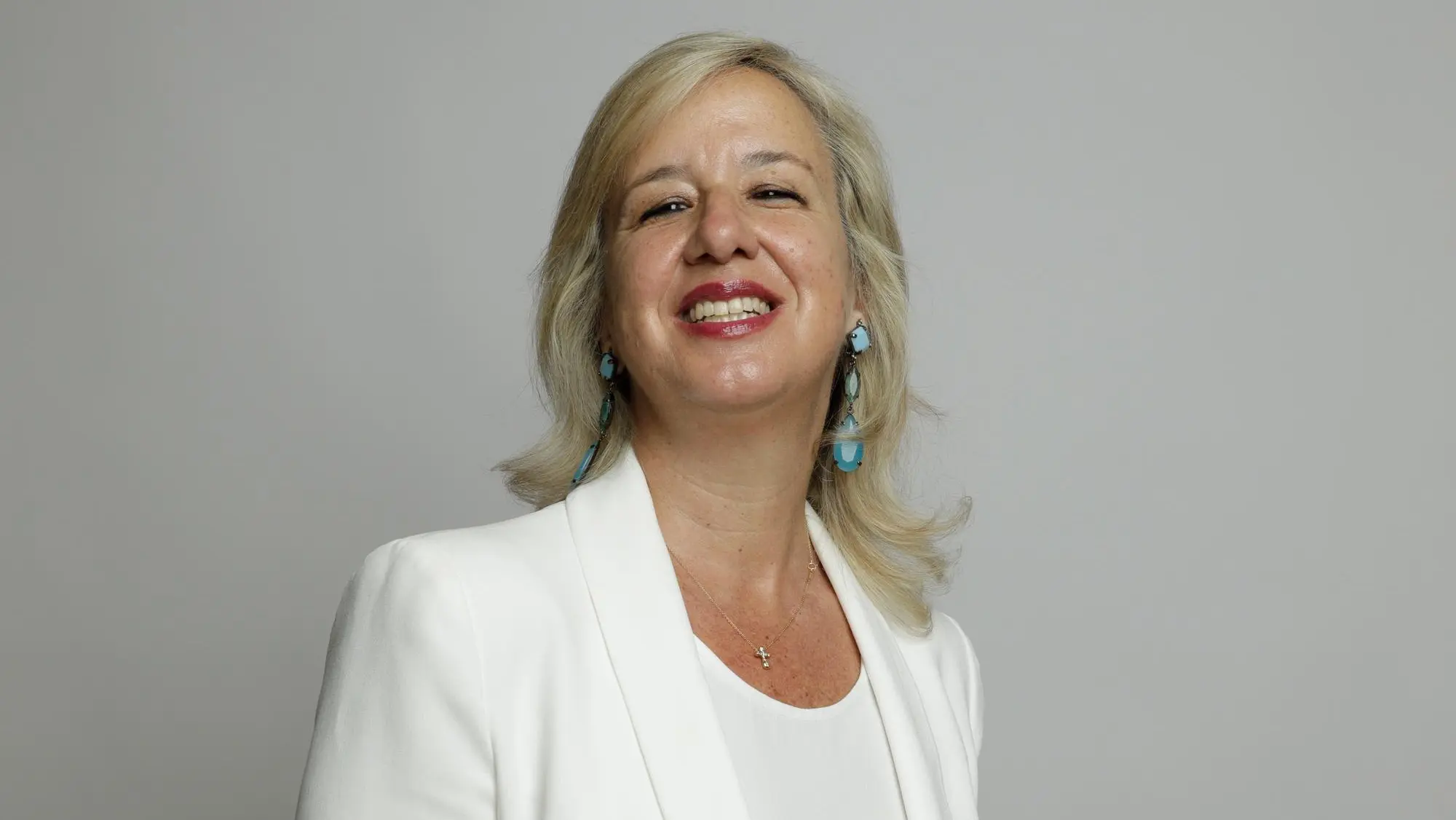





Alessandra Necci has long since accustomed us to a very personal way of telling the story and its protagonists. An evocative, engaging way, capable of bringing out the personalities, virtues and defects of the great protagonists of the events narrated in his books. In short, a modality that is that of those who love history and the great figures who have determined it and know how to transfuse this feeling in their writings.
This also works in the latest work by Alessandra Necci , " The queen and the empress" (Marsilio, 2022, pp. 528, also e-book), a portrait of two famous and discussed women, Maria Theresa and Marie Antoinette, mother and daughter, Empress of Austria the first, Queen of France the second. A volume that is a reconstruction of a tumultuous era , with the passage from the Ancient regime to the French Revolution, and at the same time a psychological fresco that masterfully traces the opposite but intertwined destinies of the wise and far-sighted empress and of her daughter, an icon of her time overwhelmed by the revolutionary fury.

We ask Alessandra Necci where the choice to parallel two apparently very different female figures such as Maria Theresa and Marie Antoinette comes from:
“Let's make a premise. Over the years, I have written and talked a lot about both great women and great rulers. Sometimes, the two things coincide. Others don't. I have written books and biographies, but also articles and I keep a weekly column in the newspaper 'Il Messaggero' entitled 'Women and History'. I have dealt a lot with female figures, but not because I have an inspiration, a specifically 'feminist' vocation - I have never felt ideologized battles as 'mine' - but because of an education, an approach and a strongly meritocratic nature . So I especially like to talk about the skill, the merit, the talent. Maybe unrecognized, ignored, forgotten. And I also love to tell the misunderstood, slandered figures, surrounded by a black legend. In all of this, history is a gold mine. Both in the masculine and in the feminine. It must be said, however, that it was much more difficult for women to emerge in different fields. Furthermore, many of them have been forgotten or are not well known enough. Instead, the story is full of extraordinary female figures, who have established themselves in spite of everything and everyone. And I think it is important to tell the world of women with examples, rather than slogans ".
Maria Theresa and Marie Antoinette, therefore, attracted her interest, they were figures that had to be told ...
“At first, I confess, I was a little reluctant to write about Marie Antoinette, a well-known and far too much narrated figure, for better or for worse. And then there was the magnificent biography of Stefan Zweig, which is truly a milestone. Maria Teresa intrigued me more, but I found her a bit 'woody', not very empathetic. Then I deepened both figures and I got passionate. I almost always write double biographies, in which one is a bit of a mirror of the other. In this case, it was also a mother and daughter. The challenge, therefore, was particularly interesting. Above all by looking for lesser-known aspects, changing the perspective, reversing the way we look at them and see them ".
What intrigued you about these two famous women?
“It was the two symbolic women of the eighteenth century, the exponents of the most important courts in Europe, Versailles and Vienna, those who 'set the tone' for an infinite number of things. Therefore, they are two powerful women, even if the mother dominates and manages the power, while the daughter does not use it, she lets herself be used. Of course, we are talking about incomparable powers: that of Maria Theresa is effective, that of Marie Antoinette is above all a question of trappings and privileges. However, I was intrigued by the way they related and understood power. Also because both reached the top young and unprepared. The difference, therefore, was made by character and behavior. Then there is the more private sphere, perhaps the most surprising. Maria Teresa is more fragile than she seems, Marie Antoinette stronger and undoubtedly better than what we have been told for a long time. In short, I tried to show the two sides of the coin ”.
But who was Marie Antoinette really?
“Perhaps, it is easier to say who 'was not” Marie Antoinette. Defining his figure, fixing its features is difficult, as if it were reflected on the water. It seems to imprison the wind, a difficulty that all biographers have encountered. Its essence, of course, is movement - which is also at the root of its charm - but it is a perpetual motion that leads nowhere. Therefore, Marie Antoinette is undoubtedly a fascinating woman, even if not beautiful, endowed with grace, sweetness (when she wants), generosity and charisma, but unable to put them to good use. In short, a fairytale princess who is unable to become a true queen, a prisoner of her inability to understand the world around her, of her stubbornness, of her whims. Strong-willed, but in a sterile, petulant way. In fact, he uses the will, the assertiveness to get things of no account. It wastes the gifts received from destiny, it wastes the great popular consensus it received at the beginning. And then, in the end, when all is lost, she demonstrates temper, courage, dignity, strength in the most dramatic and atrocious circumstances, to the point of dying as a true sovereign on the gallows. Only when the Revolution tears the crown from her head does she bring out the best in herself. Too late to be a great sovereign, but just in time to make history ”.
And how would Maria Teresa describe us?
“The speech, for Maria Teresa, is completely different. Although she too, like her daughter, arrives unprepared and very young in power, she studies, prepares herself, works… she is a true workaholic, a workaholic, she surrounds herself with excellent advisors. He takes many responsibilities on his shoulders, follows everything personally, does not leave out a detail. She learns for herself what the profession of king is and wants to be the 'mother of the subjects', before being that of her children. He understands and masters the art of realpolitik, of reason of state. He has great courage and sense of the scene, of the scenography. Then he has private frailties: he suffers from depression; she is very much in love with her husband and suffers a lot for his betrayals. The death of her beloved Francesco Stefano throws her into despair. She does not have an easy relationship with the heir to the throne, her son Giuseppe, who is often unbearable, nor with her daughters, who do not honor her. His interventionism - in public, in private, with his children - sometimes turns out to be harmful. But she continues to insist, to fight. Until the end of his life he fought for Austria, the Empire, his beloved peoples. He baptized an era, a time, as Elizabeth I of England did and Queen Victoria will do. What more could you ask for? ”.
What divided them?
“Maria Teresa is queen in everything she does, her every gesture has the value of a propagandist image. Even the much-vaunted simplicity of the Habsburgs in private has a practical and comfortable value - one cannot always be a slave to ceremonial - but it is also a way to bring subjects closer to the monarchy. But she is a woman in her passion - even physical - for her husband, in her being flirtatious and attractive. As well as in her maternal concern for her children, especially when they get sick, in her pain when she has the misfortune of losing one. A woman, she is also so in the furious anger, in the fury for the betrayals for Francesco Stefano, against whom she cannot and does not want to do much, for which she ventures by closing Vienna in a bubble of moralism. Marie Antoinette wants to be a woman and a queen at the same time. Like modern day princesses, like Lady Diana, she wants the delights, the tranquility, the possibilities of private life and at the same time the trappings, the privileges, the popularity of royalty. Rights without duties, privileges without obligations. The result is disastrous. Queen really, perhaps, becomes one only at the end. But she is delightfully woman in her being a fashion icon, highly imitated, in her love for her children, in her passion for Axel Fersen. And it must also be said that, with its glamor, its grace, its charm, it embodies a feminine ideal that enchants for a long time. In this, yes, she is a queen, but only as an image ”.
Tell me the truth ... which of the two would you like to have tea with?
“I would like to have tea with Maria Teresa to discuss prosaic issues such as the art of government, reforms, power. I would also like to take a walk with Marie Antoinette in her beloved Trianon, above all to see her in her world, in her context and observe that grace, that flexibility of movement that everyone praised ”.