
















LEGGI IL QUOTIDIANO
LEGGI IL QUOTIDIANOOggi 13 novembre
L'Unione Sarda.it
Abbonati
ITA|ENG|DEU|RUS|CIN
videolina Linkradiolina linkSardegna 1 linkVai online linkPBM link
Temi caldi di oggi:
Stadio CagliariAllarmi bombaTentato omicidioSos Sardegna
Leggi il quotidiano
L'Unione Sarda.it
Abbonati
L'Unione Sarda

Iniziative Editoriali

  • Biblioteca dell'identità

Account

  • Gestisci il tuo abbonamento
  • Sfoglia il quotidiano
ABBONATI A L’UNIONE SARDA

SCARICA L'APP L'UNIONE DIGITAL

Download GoogleDownload apple
videolina Linkradiolina linkVai online linkPBM link

2021 L'Unione Sarda S.p.A. Tutti i diritti riservati. É vietata la riproduzione, anche parziale e con qualsiasi mezzo, di tutti i materiali del sito. | Indirizzo della Sede Legale: Piazzetta L'Unione Sarda nr. 24 | Capitale sociale 11.400.000,00 i.v. | Codice Fiscale ed iscrizione presso l'Ufficio Registro Imprese di Cagliari 01687830925 (P.I. 02544190925) | REA: CA-136248

Cookie e Privacy PolicyModifica impostazioni privacyInformativa commentiCorporate
L'Unione Sarda

News

  • Cronaca Sardegna
  • Economia
  • Salute
  • Cultura
  • Sport
  • Gossip
  • Turismo

Servizi

  • Necrologi
  • Annunci
  • Pubblicità

Bella Sardegna

  • Spiagge

Iniziative Editoriali

  • Biblioteca dell'identità

Account

  • Gestisci il tuo abbonamento
  • Sfoglia il quotidiano
ABBONATI A L’UNIONE SARDA

SCARICA L'APP L'UNIONE DIGITAL

Download GoogleDownload apple
videolina Linkradiolina linkVai online linkPBM link

2021 L'Unione Sarda S.p.A. Tutti i diritti riservati. É vietata la riproduzione, anche parziale e con qualsiasi mezzo, di tutti i materiali del sito. | Indirizzo della Sede Legale: Piazzetta L'Unione Sarda nr. 24 | Capitale sociale 11.400.000,00 i.v. | Codice Fiscale ed iscrizione presso l'Ufficio Registro Imprese di Cagliari 01687830925 (P.I. 02544190925) | REA: CA-136248

Cookie e Privacy PolicyModifica impostazioni privacyInformativa commentiCorporate
Home
To know more

“The incredible story of snow and its disappearance”: the story of the cold as a privilege, even in Sardinia

In the town of Aritzo, in the Nuoro area, the collection and marketing of ice has represented an important source of income for centuries
Roberto Roveda
13 ottobre 2022 alle 14:48Aggiornato il 13 ottobre 2022 alle 17:02
“The incredible story of snow and its disappearance”: the story of the cold as a privilege, even in Sardinia
Alberto Grandi (foto concessa)
Resta informato su WhatsApp
FacebookXLinkedInWhatsApp
Argomenti similiSLOT_12
  • Sull’attenti, Pete
    Caffè Scorretto

    Sull’attenti, Pete

    Celestino Tabasso

Articoli correlati

X Factor: Mad-Dog's Italian debut was a success, now it's time for a new song.
the talent

X Factor: Mad-Dog's Italian debut was a success, now it's time for a new song.

The four Moors of Sassari reach their most anticipated milestone. First the joust, then the challenge with Gianni Morandi (and Paola Iezzi's Sardinian idea).
Angelica D'Errico
Nations League: Italy beats France 3-1
soccer

Nations League: Italy beats France 3-1

The Azzurri conceded a goal from Olise, but Pio Esposito (a brace) and Frattesi turned the match around. Former Cagliari player Sebastiano Esposito missed a penalty.
"Bombs at School": New emails to 3,778 schools, only 77 evacuated.
the alarm

"Bombs at School": New emails to 3,778 schools, only 77 evacuated.

Palazzo Chigi: "The instructions to prefects and principals have worked. We're working to prevent unfounded threats from blocking essential services."
Wind power: The Constitutional Court confirms the state's role in determining suitable areas. But it bans "unauthorized" installations in UNESCO sites.
The sentence

Wind power: The Constitutional Court confirms the state's role in determining suitable areas. But it bans "unauthorized" installations in UNESCO sites.

The Constitutional Court: "Strategic interest in renewable energy cannot always prevail over landscape protection." The case of Su Nuraxi and the Domus de Janas
Diver dies in buoy field: investigation into employer. Rope mystery
Santa Teresa Gallura

Diver dies in buoy field: investigation into employer. Rope mystery

Investigations are ongoing following the death of Sassari native Fabio Farina. The Prosecutor's Office has opened a manslaughter investigation.
Andrea Busia
Microsoft down worldwide: Outlook unreachable, issue being resolved
technology

Microsoft down worldwide: Outlook unreachable, issue being resolved

"Part of the infrastructure is experiencing heavy load in several regions," the company said on its social media profiles.
Orroli, the Municipality praises the Civil Protection Department
the ceremony

Orroli, the Municipality praises the Civil Protection Department

Rewarded for efforts to address weather emergencies and fires across the region
Sonia Gioia
Serie D: Striker Nino Pinna Returns to Cos
Soccer

Serie D: Striker Nino Pinna Returns to Cos

Mutual termination of contracts with Cabiddu and Rossi
Antonio Serreli
Alghero pays tribute to Elio Pulli
the appointment

Alghero pays tribute to Elio Pulli

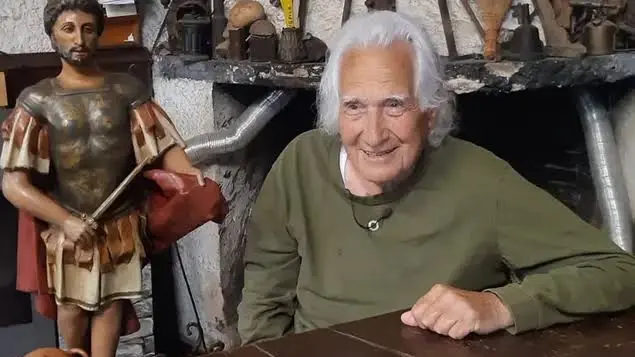
Ninety-two years of art and craftsmanship to be passed on to new generations, an event to remember it at Casa Gioiosa

Going around the bookstores often means being literally overwhelmed and getting lost among the covers, titles, faces of authors. It is difficult, however, not to be intrigued by a book entitled " The incredible story of snow and its disappearance " (Aboca, 2022, pp. 200). And the author, Alberto Grandi , really offers us a surprising epic for us accustomed to the cold of our refrigerators and the ice of our freezers.

For millennia, in fact, the snow, the ice, in short, everything that allowed to "cool" have been real treasures. In all the great civilizations of history - from the Assyrians to the Egyptians, from Nero's Rome to Imperial China, from the refined courts of Renaissance Italy to the Versailles of the Sun King - having the opportunity to take advantage of the cold was a luxury and a privilege for a few. . From here arose the need for an enormous production, collection and trade activity dotted with logistical challenges that presented considerable technical problems and which were completely overcome only in the second half of the nineteenth century, with the invention of the machine for artificially producing. ice.

Those who controlled the cold chain thus ensured a privileged social position and also great wealth . One example among many is also found in Sardinia . In the town of Aritzo , in the Nuoro area, the collection and marketing of ice represented for centuries an important source of income for the families who managed it, under a regional monopoly. Those involved in these activities, called niargios , filled the neviere by carefully pressing the snow, until the end of March, then covering them with ferns and branches. This ice was then recovered, from May onwards and throughout the summer, transported by horse, donkey and mule during the night. The caravans left in the late afternoon, supplying the residences of the lords, hospitals and inns of much of Sardinia.

“The incredible story of snow and its disappearance”: the story of the cold as a privilege, even in Sardinia
La copertina del libro

Events like this are present in large numbers in Alberto Grandi's essay to which we ask to summarize why ice and snow were so sought after until not so many decades ago:

“The cold was for a long time the only medical device that was really effective in controlling body temperature. Since ancient times it has also been one of the simplest means of storing perishable food, even if it was an expensive system because it was not always and not everywhere easy to find snow and ice. It was therefore preferred to conserve by resorting to salting and smoking and drying ".

Snow and ice were synonymous with luxury at the time, right?

“Ice and snow also served to refresh food and drinks. And this could only be afforded by those who were very rich, given the difficulty of finding and storing the "raw materials" for cooling. Ice was a real status symbol, as were spices in the Middle Ages. A further element to take into account is that snow and ice were also used to prepare particularly sought-after gastronomic specialties such as sorbets, granitas and then ice creams ".

At some point, ice and snow become part of a thriving industry ...

“It happens especially since the nineteenth century when the first technologies for producing and storing ice in an artificial way were developed. A thriving refrigeration industry was born, which responded to the growing needs of the food and hospital sectors. Industrialization and technological innovations had made it possible to finally overcome the great problem linked to the ice market: its instability. In fact, we had to submit to the vagaries of the climate and it was not easy to transport ice over long distances or store it for a long time ”.

But all this cold that we produce industrially, even with our home refrigerators, what impact does it have on the environment?

“The impact is there, it is undeniable. The cold industry is energy-intensive and the paradox is that in order to have so much artificial cold we are risking losing the natural cold, as evidenced by the almost disappearance of snow at certain altitudes and the melting of glaciers. The hope is that the cold industry will intervene to reduce its impact on the environment. In the past, it has already succeeded in eliminating, starting from the 1980s, chlor-fluoro-carbides (CFCs), the compounds widely used as refrigerant gases and among the main causes of the ozone hole "

But today is the cold still an industry and is ice a status symbol?

“It may be surprising, but it is. Snow must be artificially produced if we want to ski. It is therefore now a playful product. The ice market is then expanding after decades of stopping as everyone produced it at home. Now it has returned to being synonymous with ostentatious well-being and an element of refinement. Presenting a dish immersed in ice is considered chic and now you can find it again in the supermarket as it has not been used for years. There are hotels made entirely of ice and competitions for sculptures made of the same material. Indeed, in Japan it has come to offer not only cubed ice, but also in spheres made by hand by very skilled artisans… in short, ice spheres, I imagine, with exorbitant costs ”.

© Riproduzione riservata